Best raised beds & planters for growing veg (2026)
A raised bed is the single easiest way to start growing your own food: you fill it with good soil, weeds and slugs have a harder time, there's far less bending, and it works on grass, paving or a patio. Here's how the main types compare — and why what you fill it with matters more than the bed itself.
By Tom Calder · Updated 20 September 2026 · 6 products, 1 of 6 price-tracked
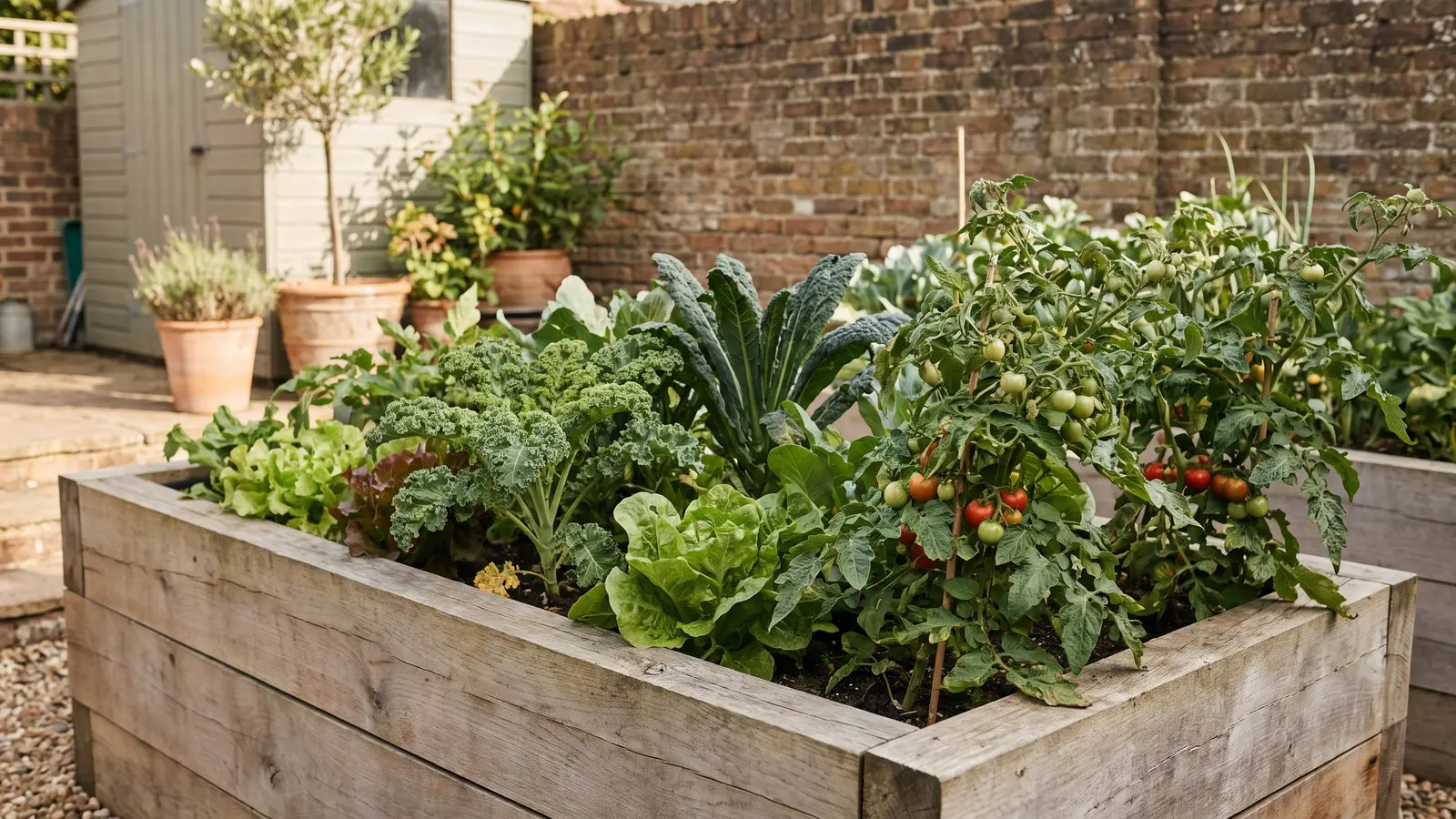
Before you buy
Pick the material for your spot and budget. Untreated or FSC timber looks natural and is easy to build but rots over years; galvanised steel beds are long-lasting, modern-looking and warm the soil earlier; fabric grow bags and pots are the cheapest, most flexible option for a patio, balcony or small yard. All grow the same veg — it's looks, longevity and cost that differ.
Go for depth. Most vegetables are happy with about 30cm of soil, and deeper (40cm+) suits carrots, parsnips and potatoes. A bed on top of soil can be shallower (roots go down into the ground); a bed on paving needs to hold all the depth itself. Keep beds no wider than about 1.2m so you can reach the middle from either side without treading on the soil.
Budget for the filling, because it's the real expense. A raised bed needs a lot of soil — a mix of topsoil and compost, ideally with some homemade or bought compost worked in. Buying it all in bags is convenient but adds up, so a nearby supplier of bulk topsoil, or your own compost bin, saves a lot. Line the base with cardboard to suppress weeds and let worms in.
Top pick: VegTrug Classic Raised Planter. A well-made, genuinely ergonomic raised planter that suits small gardens, patios and gardeners who struggle to bend. It is on the expensive side for what is essentially a wooden trough, but the build quality and V-shaped depth are a step up from flat-pack raised beds.
| Bed | Material | Size | Type | Price | |
|---|---|---|---|---|---|
| VegTrug Classic Raised PlanterTOP PICK | FSC-certified cedar/softwood, water-based preservative, fabric liner | 1m: 103 x 76 x 80cm, ~210L soil (1.8m/~420L version also sold) | Freestanding V-shaped raised planter, waist-height | £159.99as of 20 Sep 2026, 12:29 BST · DetailsProduct prices and availability are accurate as of the date/time indicated and are subject to change. Any price and availability information displayed on Amazon.co.uk at the time of purchase will apply to the purchase of this product. | Check price → |
| Galvanised Steel Raised Garden Bed | Galvanised steel (typically 0.6-0.8mm corrugated panels, often powder-coated) | Approx 180 x 90 x 30 cm (6ft x 3ft x 1ft), oval — sizes vary widely | Bottomless raised planter bed, flat-pack bolt-together kit | — | See price on Amazon → |
| Heavy-Duty Fabric Grow Bags (pack) | Nonwoven polypropylene fabric (approx. 300gsm), reinforced handles | Typically a 5-pack, ~26L (7 US gal) each; larger 38L options common | Breathable fabric aeration grow bags with handles | — | See price on Amazon → |
| Keter Easy Grow Self-Watering Planter | Weatherproof resin (plastic) | 114 x 49 x 76 cm; ~113L capacity | Elevated self-watering raised bed | — | See price on Amazon → |
| Deep Root Wooden Raised Bed Kit | Pressure-treated FSC softwood (redwood/spruce) | ~1.2m x 0.6m, ~40cm deep | Flat-pack deep raised bed kit | — | See price on Amazon → |
| Forest Garden Wooden Raised Bed Kit | FSC-certified pressure-treated softwood | 184 x 93 x 14cm (holds approx. 200L) | Flat-pack rectangular raised bed kit | — | Check price → |
ⓘ As an Amazon Associate, PreparedBritain earns from qualifying purchases. We may earn a commission when you buy, or a fee when you request a quote, through our links — it never affects what we recommend. Amazon prices come from Amazon's own product data and show the date and time they were retrieved. Prices at other retailers are checked by us, less often. Prices and stock can change at any time, so always check the retailer's price before you buy.
VegTrug Classic Raised Planter
4.0Who it's for: Growing your own veg and herbs at waist height without kneeling or digging a plot.
A well-made, genuinely ergonomic raised planter that suits small gardens, patios and gardeners who struggle to bend. It is on the expensive side for what is essentially a wooden trough, but the build quality and V-shaped depth are a step up from flat-pack raised beds.
- Waist-height V-shape means no kneeling and good rooting depth for deep and shallow crops alike
- FSC-certified timber with a food-safe preservative and included liner; sturdy once assembled
- Compact freestanding footprint works on patios, balconies and hard standing where a ground bed is not possible
- Pricey next to timber you could source and build yourself for a fraction of the cost
- Softwood frame and liner need reproofing and eventual replacement to get many years of life
Don't buy if You have open ground to dig or are on a tight budget — a simple sleeper or scaffold-board bed grows the same food for far less. Skip it too if you want serious food-security capacity, as one unit holds only a modest amount of soil.
as of 20 Sep 2026, 12:29 BST · Details
Product prices and availability are accurate as of the date/time indicated and are subject to change. Any price and availability information displayed on Amazon.co.uk at the time of purchase will apply to the purchase of this product.Galvanised Steel Raised Garden Bed
4.0Who it's for: Starting a grow-your-own veg patch as a low-effort step toward household food resilience.
A galvanised steel raised bed is a sensible, long-lasting way to grow your own veg and salad, sidestepping the rot, warping and repainting that timber beds eventually demand. Generic kits vary a fair bit in quality, so it's worth checking the steel gauge and edge finish rather than simply buying on price.
- Won't rot, warp or harbour pests the way timber does — a decade or more of outdoor service is realistic.
- Deep, bottomless design lets roots reach the ground below, which suits vegetables, herbs and salad crops.
- Flat-packs down and bolts together in under an hour with basic tools; easy to store or reconfigure.
- Thin panels on cheaper kits can bow once filled with wet soil unless braced, and cut edges are sometimes sharp — gloves advised during assembly.
- Metal warms in full sun and dries the soil faster than timber, so it needs more frequent watering during a heatwave.
Don't buy if Don't buy if you only have a balcony, patio or other hard standing — these are open-bottomed and need open ground or a very deep fill; a self-contained planter with a solid base is the better choice there.
Heavy-Duty Fabric Grow Bags (pack)
4.0Who it's for: Cheap, space-saving way to grow potatoes, tomatoes and veg on a patio or balcony.
A low-cost, genuinely useful bit of grow-your-own kit that stores flat when not in use. The heavy-duty nonwoven fabric drains and aerates well, though bags do need watering more often than solid pots in hot spells.
- Excellent drainage and root aeration, which helps avoid waterlogging and circling roots
- Fold flat for storage and are reusable season after season
- Very inexpensive and widely stocked, so easy to replace or scale up
- Dry out faster than plastic or ceramic pots, so need more frequent watering in summer
- Lightweight and can topple when plants are small or top-heavy in wind
Don't buy if You want a permanent, tidy raised bed or a decorative garden feature. These are practical, utilitarian sacks that look like what they are and won't outlast a proper timber or metal bed.
Keter Easy Grow Self-Watering Planter
4.0Who it's for: Patio and balcony growers who want a back-friendly, low-effort bed for herbs, salads and shallow-rooted veg.
A tidy, well-made elevated planter whose self-watering reservoir and waist height make growing your own food genuinely easy, with no bending and no timber to treat. Sensible for topping up household resilience with fresh produce, though the modest soil volume keeps it firmly in the salads-and-herbs bracket rather than staple crops.
- Built-in water reservoir and level gauge cut watering to a glance, useful in dry spells or over a weekend away
- Elevated to roughly waist height, so no bending, which suits small patios and less mobile gardeners
- Weatherproof resin needs no staining or sealing and won't rot like a wooden bed
- At around 113L and fairly shallow, it only suits salads, herbs and compact crops, not deep-rooted or high-yield growing
- Plastic build and a steepish RRP mean you pay for convenience rather than growing space
Don't buy if You want to grow a meaningful amount of staple food or deep-rooted crops like maincrop potatoes or parsnips, where a larger ground-level bed gives far more yield for the money.
Deep Root Wooden Raised Bed Kit
3.7Who it's for: Growing deep-rooted crops like carrots, parsnips and potatoes over poor, compacted or paved ground.
A sensible, unshowy way to grow root vegetables where your native soil is thin, stony or paved over. A generic deep timber kit does the job well, though quality and longevity vary by supplier, so check the wood is genuinely pressure-treated.
- Extra depth (roughly 30-45cm) genuinely suits taprooted veg that shallow beds struggle with
- Flat-pack, pre-drilled panels make self-assembly straightforward with basic tools
- Raises growing off cold, compacted or hard-standing ground and improves drainage
- Needs a large volume of topsoil and compost to fill, which can cost as much as the bed itself
- Untreated or lightly stained softwood may only last a few seasons; treated timber lasts far longer
Don't buy if You only grow shallow-rooted salads, herbs or strawberries. A cheaper, shallower bed does the same job and saves a lot on soil and compost to fill it.
Forest Garden Wooden Raised Bed Kit
3.5Who it's for: A tidy, low-cost first raised bed for salads, herbs and shallow-rooted veg.
A sensible, fairly priced starter bed in FSC pressure-treated timber with a 15-year anti-rot guarantee. The shallow 14cm depth keeps it affordable but limits what you can grow, so treat it as an entry point rather than a serious kitchen garden.
- Pressure-treated FSC softwood with a 15-year guarantee against rot
- Flat-pack with all fixings included, so assembly is quick and needs no DIY skill
- Widely stocked and cheap, making it easy to start growing food at home
- At just 14cm deep it is too shallow for potatoes, carrots or other deep-rooted crops
- Timber is fairly thin, so it is less substantial than sleeper-style beds
Don't buy if You want to grow root vegetables or a productive kitchen garden, in which case a deeper bed like Forest's Bed Builder Pack (21cm+) or a sleeper bed is a better buy.
Get price-drop alerts on these
Prices for 364 tracked products are refreshed daily — last sweep 20 September 2026. Tell us which and we'll email you when one drops.
We verify every product's specifications against at least two independent sources, re-check its UK price and stock on a schedule where we can track it automatically, and cross-check safety-relevant claims against official guidance. Where we've bought and used a product ourselves we say so on its review; where we haven't, our verdict is a considered spec-and-evidence comparison, not a hands-on test — and commissions never change a ranking either way. Read our full methodology →
Guides that go with this
The calm, honest case for growing some of your own food in the UK — what a garden can and can't do, and the hi…
A month-by-month UK guide to what vegetables to sow and plant — indoors and out — from January to December. Ju…
Common questions
What's the best material for a raised bed?
Timber is easy and natural but rots over years; galvanised steel lasts longest and warms the soil earlier; fabric grow bags are cheapest and ideal for patios. They grow the same crops — choose on looks, longevity and budget.
How deep should a raised bed be?
About 30cm suits most vegetables; 40cm or more is better for carrots, parsnips and potatoes. A bed sitting on soil can be shallower since roots reach down; a bed on paving must hold all the depth itself.
What do I fill a raised bed with?
A mix of topsoil and compost — this is the real cost, not the frame. Bulk topsoil from a supplier plus your own or bought compost is cheaper than filling it entirely with bags. Line the base with cardboard to suppress weeds.
How wide should a raised bed be?
No wider than about 1.2m, so you can reach the middle from either side without standing on the soil and compacting it. Length is up to your space.
Can I grow vegetables in grow bags or pots?
Yes — grow bags and large pots grow tomatoes, salads, herbs, potatoes and more, and are perfect for patios and balconies. Water more often than a bed, since containers dry out faster.
Do I need to treat or line a wooden raised bed?
Use naturally durable or FSC-certified timber; if you line it, use a permeable membrane on the inside walls (not the base) to slow rot while letting water drain. Avoid old treated timber that may leach chemicals into food crops.