Best kit for preserving your harvest (2026)
Growing a glut of courgettes or beans is the easy part; using it before it spoils is the real skill — and it's exactly where growing your own meets preparedness. Preserving turns a summer surplus into a store that carries you through winter. Here's the kit that banks a harvest, from a freezer bag to a dehydrator.
By Tom Calder · Updated 20 September 2026 · 8 products, 6 of 8 price-tracked
Before you buy
Freeze first — it's the easy, safe default. Most veg (beans, peas, broad beans, sweetcorn) freezes beautifully after a quick blanch, and soft fruit, herbs, sauces and cooked meals freeze straight off. A vacuum sealer removes air so food keeps far longer without freezer burn, and lets you portion a glut neatly. This handles the bulk of a home harvest with no special skill.
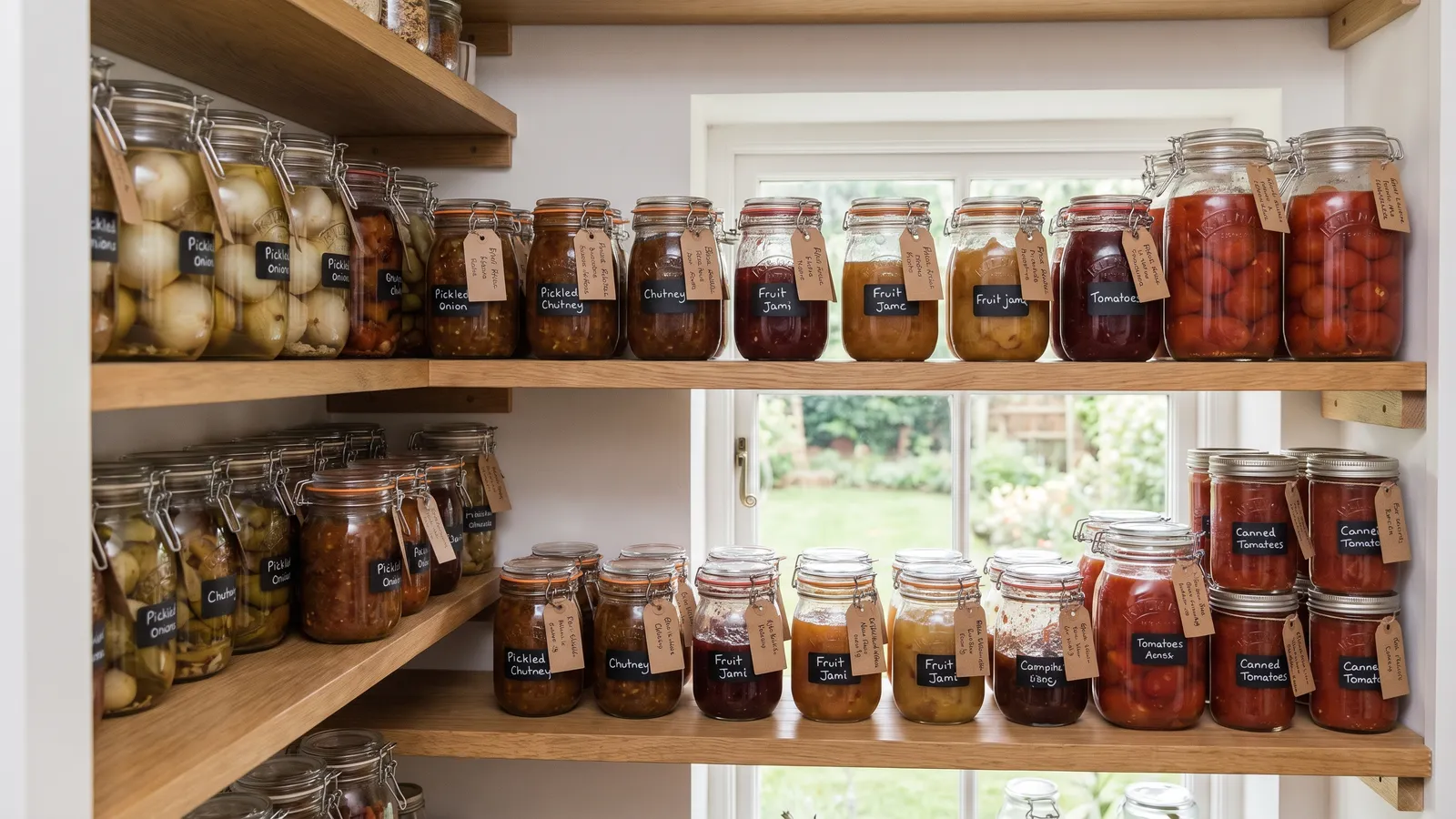
Add jars for jams, pickles and chutneys. Preserving jars (Kilner and similar) turn a fruit glut into jam and a veg glut into pickles and chutneys — all high-acid preserves that are safe to store at room temperature. This is the classic, satisfying route and needs little more than jars, sugar or vinegar and a big pan. Important safety line: do NOT water-bath 'can' low-acid foods (plain vegetables, meat) without proper pressure canning — the botulism risk is real.
Dehydrate and ferment as you scale. A dehydrator dries herbs, apple rings, tomatoes and chillies into a compact, long-life store that needs no freezer or power to keep. Fermentation (sauerkraut, kimchi) preserves cabbage and other veg with just salt, adds gut-friendly bacteria, and is having a well-earned revival. Both are worth adding once freezing and jam have hooked you — they widen what you can store and how long it lasts.
Top pick: FoodSaver FFS005X Vacuum Sealing System. The best-known name in vacuum sealing, and the sensible default for batch-freezing a glut, protecting meat from freezer burn, or extending the life of dried goods. The built-in roll storage and cutter make it the easiest to live with day-to-day. Budget for the real running cost: FoodSaver's own bags and rolls, which UK pricing puts well above US levels — generic embossed rolls work and cost far less.
| Item | Type | Capacity | Method | Price | |
|---|---|---|---|---|---|
| FoodSaver FFS005X Vacuum Sealing SystemTOP PICK | Vacuum sealer (heat-seal) | Rolls/bags to ~28cm, built-in roll store & cutter | Vacuum + heat seal | — | Check price → |
| Judge Maslin Pan (9L, JA74) | Maslin (preserving) pan | 9 litres | Jam, chutney & marmalade making | — | Check price → |
| Kilner Preserve Jar Set | Glass screw-top preserve jars (set of 6) | 0.5 | Water-bath preserving (jams, chutneys, pickles) | £16.99as of 20 Sep 2026, 12:29 BST · DetailsProduct prices and availability are accurate as of the date/time indicated and are subject to change. Any price and availability information displayed on Amazon.co.uk at the time of purchase will apply to the purchase of this product. | Check price → |
| Mortier Pilon 2L Glass Fermentation Crock | Fermentation crock (glass, water-seal) | 2 litres | Lacto-fermentation | — | Check price → |
| Bonsenkitchen VS3802 Vacuum Sealer | Vacuum sealer (heat-seal) | Bags to 30cm | Vacuum + heat seal | — | Check price → |
| Kilner Jam-Making Starter Bundle | Preserving starter bundle | Pan + 4 × 0.4L jars + tools | Water-bath preserving | — | See price on Amazon → |
| Kilner Fermentation Jar Set | Glass fermenting jar set with airlock lid | 3 | Anaerobic lacto-fermentation (airlock + brine weights) | £27.58as of 20 Sep 2026, 12:29 BST · DetailsProduct prices and availability are accurate as of the date/time indicated and are subject to change. Any price and availability information displayed on Amazon.co.uk at the time of purchase will apply to the purchase of this product. | Check price → |
| Presto 16-Quart Pressure Canner (01745) | Pressure canner | 15 litres (16 US quarts) | Pressure canning (low-acid foods) | £382.80Checked 20 Sep · indicative — not price-tracked | Check price → |
ⓘ As an Amazon Associate, PreparedBritain earns from qualifying purchases. We may earn a commission when you buy, or a fee when you request a quote, through our links — it never affects what we recommend. Amazon prices come from Amazon's own product data and show the date and time they were retrieved. Prices at other retailers are checked by us, less often. Prices and stock can change at any time, so always check the retailer's price before you buy.
Who it's for: The mainstream vacuum sealer — freezer burn ends here.
The best-known name in vacuum sealing, and the sensible default for batch-freezing a glut, protecting meat from freezer burn, or extending the life of dried goods. The built-in roll storage and cutter make it the easiest to live with day-to-day. Budget for the real running cost: FoodSaver's own bags and rolls, which UK pricing puts well above US levels — generic embossed rolls work and cost far less.
- The most widely stocked, supported sealer brand in the UK
- Built-in roll storage and cutter speeds up batch days
- Moist/dry settings handle everything from jerky to stew portions
- Own-brand bags are the ongoing cost — generics work for much less
- UK pricing runs high versus the same machine abroad
Judge Maslin Pan (9L, JA74)
4.4Who it's for: The proper jam pan — wide, heavy-based and made for a rolling boil.
A real maslin pan: wide top for evaporation, heavy base that won't catch the sugar, litre markings up the side and a pouring lip for jarring up. It's the single biggest upgrade to home jam and chutney making over an ordinary stockpot. It's the pan alone — no jars, funnel or thermometer — so first-timers should budget for those separately (or grab the Kilner starter set alongside).
- Wide, heavy-based shape made specifically for preserving
- 9L handles a proper glut batch
- Measurement markings and pouring lip are genuinely useful
- Pan only — jars, funnel and thermometer are extra
- Big to store if you only make one batch a year
Kilner Preserve Jar Set
4.3Who it's for: Turning a seasonal glut into jams, chutneys and pickles that keep for months.
A dependable, well-made set from the UK's best-known preserving brand, with sturdy soda-lime glass and a simple two-piece screw-top seal. For household resilience it earns its place as a low-cost way to store home-made high-acid preserves through the year.
- Iconic, widely stocked brand with cheap, easy-to-source replacement seals and bands
- Robust dishwasher-safe glass and a straightforward vacuum-seal lid that beginners can get right
- Genuinely economical per jar, and reusable for years if you look after the seals
- The vacuum discs are effectively single-use and must be replaced each time you re-seal for storage
- Only suited to high-acid preserves via water-bath method, not low-acid canning
Don't buy if You want to safely can low-acid foods like meat or plain vegetables (that needs a tested pressure canner, not water-bath jars), or you just need airtight dry-store containers for a grab bag, where clip-top storage jars are a better fit.
as of 20 Sep 2026, 12:29 BST · Details
Product prices and availability are accurate as of the date/time indicated and are subject to change. Any price and availability information displayed on Amazon.co.uk at the time of purchase will apply to the purchase of this product.Mortier Pilon 2L Glass Fermentation Crock
4.3Who it's for: Fermentation without the guesswork — a proper water-sealed crock you can see into.
A purpose-made glass crock with a water-seal rim that lets gas out and keeps air off your sauerkraut, kimchi or pickles — the step up from an improvised jar that makes ferments far more reliable. Being glass, you can actually watch what's happening. It's an imported specialist item, so UK price and stock bounce around between sellers; if it's silly money on the day, Kilner's fermentation set below does the same job more cheaply.
- Water-seal rim keeps oxygen out without daily fiddling
- Glass body means you can see the ferment working
- Includes a weight to keep veg submerged
- Import pricing varies — check the price on the day
- 2L suits a household batch, not a smallholding one
Bonsenkitchen VS3802 Vacuum Sealer
4.2Who it's for: Proof the job doesn't need £100 — a £40 sealer for occasional batches.
Does the same core job as the FoodSaver for a third of the price: vacuum out the air, heat-seal the bag, freeze. For a household sealing a batch every week or two it's all you need. It's built to a price — the motor and seal bar aren't designed for heavy or daily use, so serious preservers doing big regular runs should spend up; everyone else can pocket the difference and buy bags with it.
- Genuinely cheap way into vacuum sealing
- Compact enough to live in a drawer
- Takes standard embossed bags and rolls
- Budget build — not for heavy or daily use
- Seal bar width limits very large joints
Kilner Jam-Making Starter Bundle
4.1Who it's for: Everything for a first jam day in one box — you'll outgrow the jars, not the kit.
The one-box route into preserving from the UK's best-known preserving brand: pan, funnel, thermometer and four 0.4-litre jars. For a first season of jams and chutneys it removes every excuse. The honest limit is the jar count — four small jars fill fast on a real glut, so expect to buy more jars almost immediately (they're cheap and everywhere, which is the point of Kilner).
- Complete starter set — nothing else needed for batch one
- Kilner jars and seals are cheap and stocked everywhere
- Thermometer and funnel are the tools beginners skip and regret
- Only 4 small jars in the box
- The pan is lighter-duty than a dedicated maslin pan
Kilner Fermentation Jar Set
4.0Who it's for: Home cooks wanting a complete, no-fuss kit for sauerkraut, kimchi and pickles.
A well-made, complete fermenting kit from a trusted UK glassware brand that takes the guesswork out of getting started. The wide-neck glass jar, ceramic weights and airlock lid are all you need for safe first batches, though it is a fermenting vessel rather than a long-term storage jar.
- Everything needed in one box: glass jar, two ceramic weights, airlock, silicone lid and a recipe booklet
- Wide neck and clear glass make filling, monitoring and decanting easy
- Airlock and submerging weights follow sound anaerobic-fermentation practice, reducing spoilage risk for beginners
- Jar is dishwasher-safe and the 3L size handles a generous batch
- The silicone lid can warp or lose its seal if the jar is overfilled and pushes out too much brine
- Lids and airlock must be hand-washed, so it is not entirely dishwasher-friendly
Don't buy if You only want jars for long-term dry or preserved-food storage — this is an active-fermentation kit, not a sealing preserve jar, so a standard Kilner Clip Top or preserve jar suits pantry storage better.
as of 20 Sep 2026, 12:29 BST · Details
Product prices and availability are accurate as of the date/time indicated and are subject to change. Any price and availability information displayed on Amazon.co.uk at the time of purchase will apply to the purchase of this product.Who it's for: The only safe route to shelf-stable low-acid food — a US import for a US-style technique.
Water-bath preserving only safely handles high-acid foods — jams, chutneys, pickles. To shelf-stably store low-acid food (plain vegetables, stocks, meats) you need pressure canning, and this Presto is the standard machine for it. Honesty first: pressure canning is a US technique that never took off in Britain, so UK stock is intermittent and jars/spares (Ball/Mason sizes) are import items too. Follow tested recipes exactly — the USDA guidance is the reference — because improvised low-acid canning is a genuine botulism risk.
- The recognised standard for safe low-acid canning
- 15L takes a meaningful batch per run
- Doubles as a huge stockpot
- UK stock and spares are intermittent imports
- Only worth it if you'll actually pressure-can — most UK households won't
- Demands tested recipes followed exactly — this is a safety-critical technique
Get price-drop alerts on these
Prices for 364 tracked products are refreshed daily — last sweep 20 September 2026. Tell us which and we'll email you when one drops.
We verify every product's specifications against at least two independent sources, re-check its UK price and stock on a schedule where we can track it automatically, and cross-check safety-relevant claims against official guidance. Where we've bought and used a product ourselves we say so on its review; where we haven't, our verdict is a considered spec-and-evidence comparison, not a hands-on test — and commissions never change a ranking either way. Read our full methodology →
Guides that go with this
What UK food security actually looks like, why shelves occasionally gap, and the calm two-week larder that mak…
The calm, honest case for growing some of your own food in the UK — what a garden can and can't do, and the hi…
Common questions
What's the easiest way to preserve a vegetable glut?
Freezing — most veg freezes well after a quick blanch, and fruit, herbs and cooked meals freeze straight off. It's the simplest, safest method and handles the bulk of a home harvest. A vacuum sealer makes frozen food last much longer.
Is home canning safe?
High-acid preserves — jams, pickles, chutneys — are safe to make and store at room temperature. But do not water-bath 'can' low-acid foods like plain vegetables or meat without proper pressure canning: there's a genuine botulism risk. Stick to high-acid preserves unless you've learned pressure canning properly.
What does a vacuum sealer do?
It removes air from a bag before sealing, which stops freezer burn and makes frozen and dry food last far longer. It's the ideal partner to a freezer for storing a glut in neat, long-lasting portions.
What can I do with a dehydrator?
Dry herbs, apple and other fruit rings, tomatoes, chillies and mushrooms into a compact, long-life store that needs no freezer or power to keep. Dehydrated food is light and space-efficient — handy for both the kitchen cupboard and an emergency store.
What is fermentation and is it worth it?
Fermenting (sauerkraut, kimchi) preserves cabbage and other vegetables using just salt and time, and adds gut-friendly bacteria. It's cheap, needs little kit, and is a great way to store a cabbage or carrot glut once you've got the freezing and jam-making basics.
How does preserving fit with being prepared?
It's the bridge between growing food and having a resilient store: a filled freezer, shelves of jars and dried food mean a harvest — or a good shop — carries you through lean weeks. It pairs naturally with a sensible food store, not panic-buying.