Off-Grid Power for Vans and Campervans: work out what you need before you buy anything
For anyone converting a van, or touring or living in one, who wants the electrics to work on a wet December morning as well as a July afternoon. Five chapters take you from an energy budget you build yourself (watts, watt-hours and amp-hours, with two worked examples) through leisure batteries and portable power stations, what a solar panel really gives you in the UK month by month, hook-up, 12 V wiring, gas and carbon monoxide safety, and the DVLA, insurance, weight and licence rules. Technical but friendly, and it names no products: every figure comes from a standard, a regulator, the two caravanning clubs or a maker’s own datasheet.
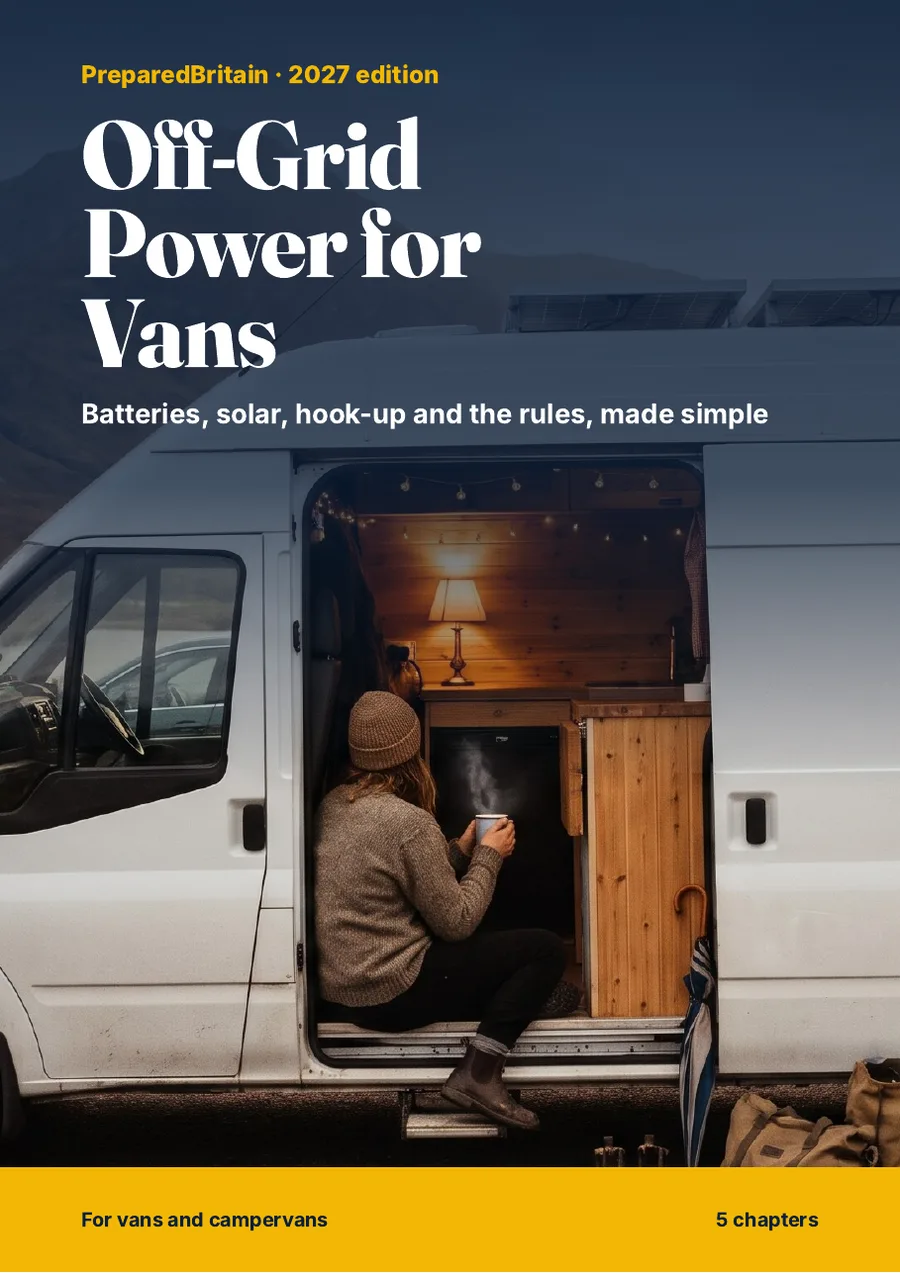
- 68 A4 pages in 5 chapters: how much power you need, batteries and power stations, solar, hook-up and safety, rules and insurance.
- Where the four nations differ, it says so: the gas regulations for Great Britain and Northern Ireland, Part P in England and Wales, the Great Britain speed-limit table with nidirect for Northern Ireland, and overnight parking rules in each nation.
- Solar yields for seven UK cities in June and December from the European Commission’s photovoltaic calculator, queried November 2026; every source listed at the end of each chapter.
- Instant PDF download, read on any device or print it; each chapter ends with a checklist and a who-to-contact table.
Secure card payment by Stripe. It downloads the moment you pay, so by buying you ask for it straight away and there’s no 14-day cancellation. Terms of sale.
For personal and household use. Buying for an organisation, tenants or staff? Ask about a licence.
Also in The Complete Library, with 14 more handbooks and files: £79.99 for all 15.
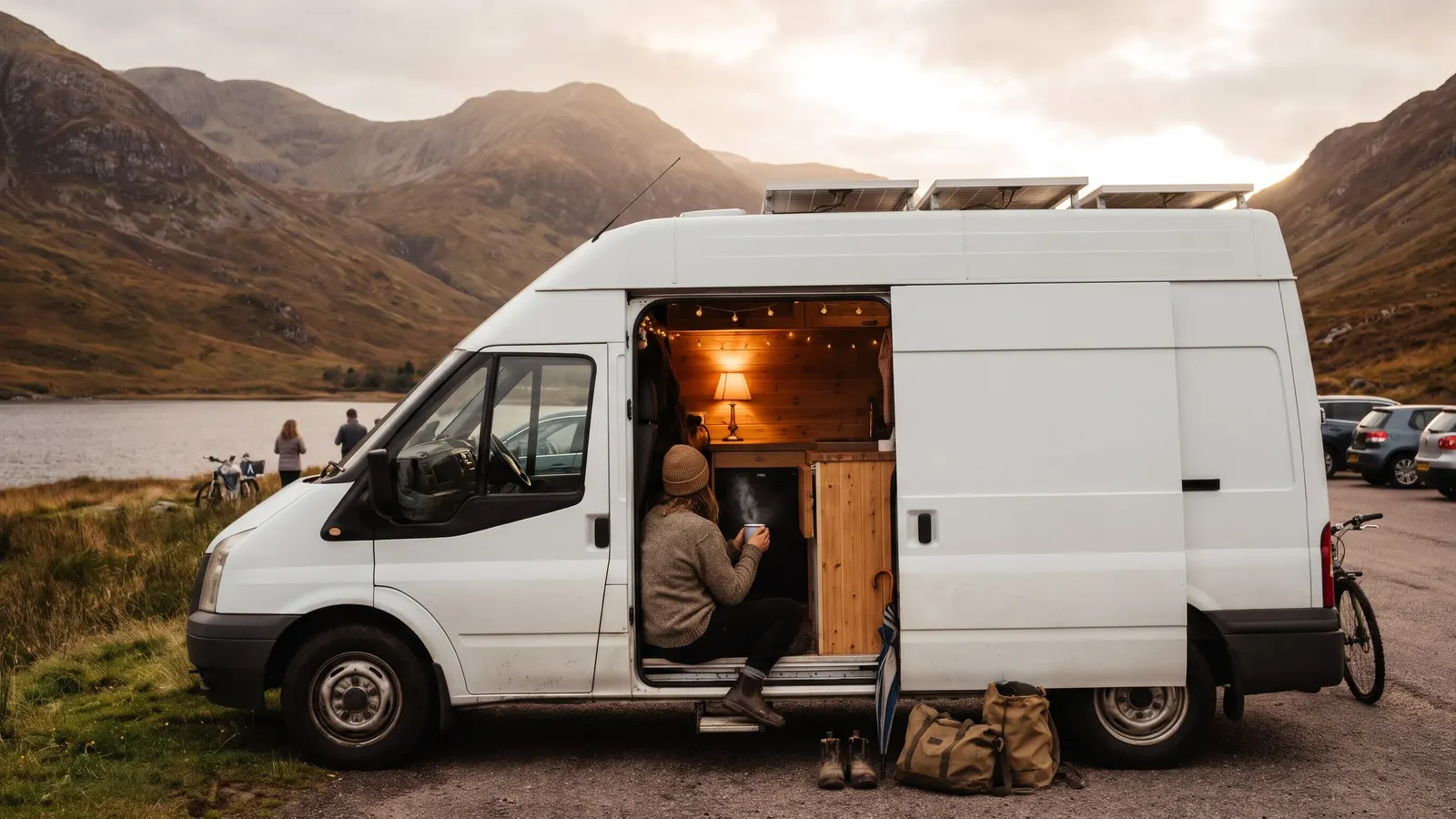
When you’d reach for it
Before you buy the battery: the first chapter’s twenty-minute energy budget tells you whether a weekend with a gas hob needs one modest leisure battery or whether winter living and induction cooking need a different plan altogether. When the fridge dies on Sunday morning or the inverter trips as the kettle goes on. When a smart alternator is quietly under-charging a relay-fed battery. And the week you fill in the V1006, ring the insurer or take the van to a weighbridge.
What it does that a web search can’t
Forum advice and sales copy disagree about everything from flexible panels to MPPT controllers. This book gives you the numbers behind each claim and says where they come from: what a 100 W panel really yields in Plymouth and in Inverness in June and in December, why a ‘100 Ah’ battery is not 100 Ah, how an inverter’s rating falls at 40 °C, and what the DVLA guidance changed on 19 October 2026. Where no independent UK test exists, it says so rather than guessing.
Written for a van you sleep in
Everything ends up as wire and gas pipe in a metal box you sleep in, so safety has a chapter of its own: the hook-up order and the RCD and polarity checks, why a lithium bank’s main fuse needs an interrupt rating, hydrogen from a charging lead-acid battery, the lithium fire warning signs, portable gas heaters that must never come inside, and the CO alarm standard to look for. It is clear about what the law requires of a private owner and what every expert body asks anyway.
What you’ll be able to do
- Build a daily energy budget in watt-hours and turn it into a battery size for lead-acid or lithium
- Size an inverter for the biggest load and its start-up surge, and know why a kettle is about current, not energy
- Choose between a fitted leisure battery and a portable power station using two numbers: watt-hours and watts
- Work out what a solar panel will actually give you in your months and your part of the UK, and when the engine or hook-up has to carry the load
- Connect to a campsite hook-up in the right order and check the RCD and polarity before you trust it
- Know what DVLA records about a conversion, what to tell an insurer, where the 3.05-tonne speed-limit line falls, and how to check your weights at a weighbridge
Look inside
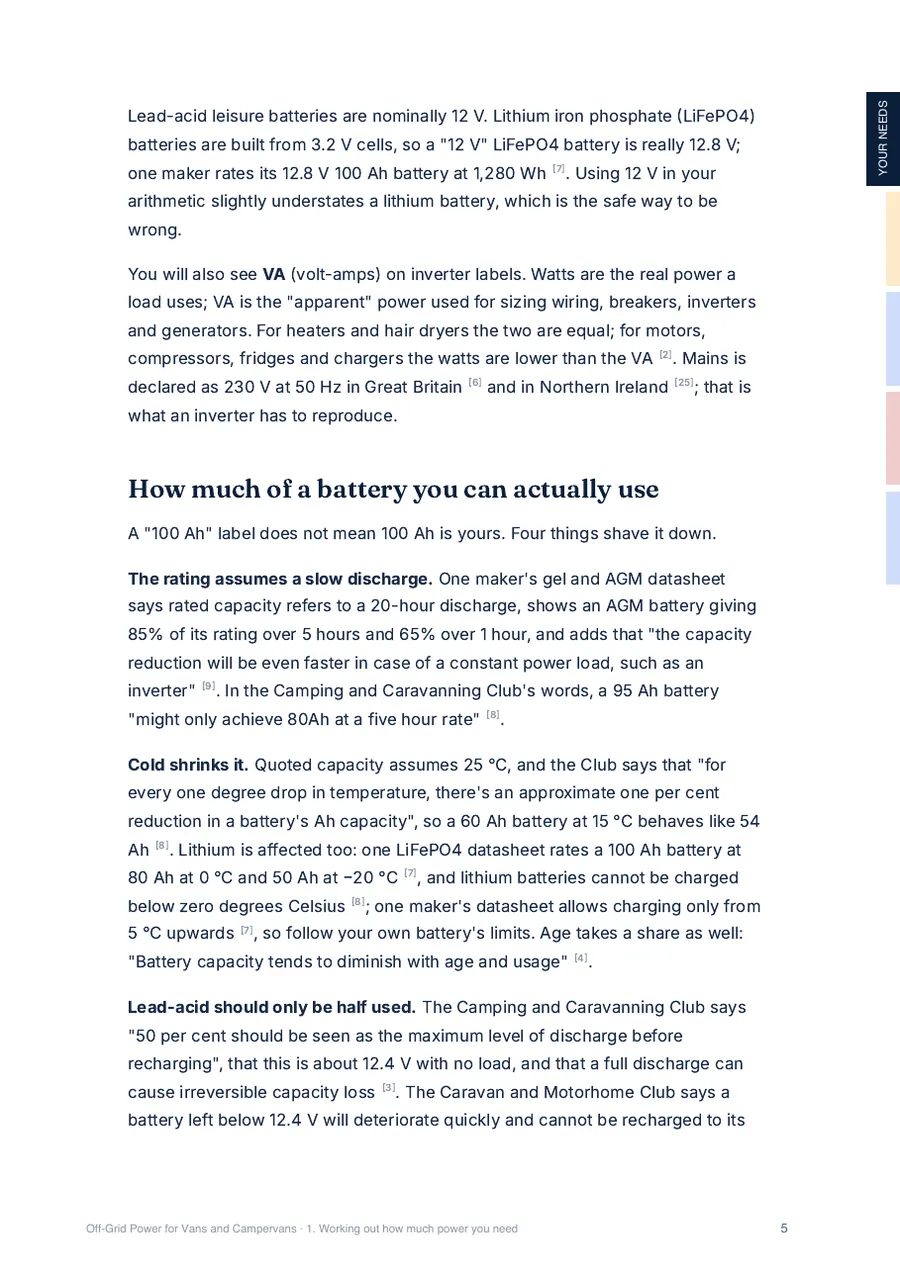
The cover, the start of chapter 1 and the contents. The free sample has the first chapter in full.
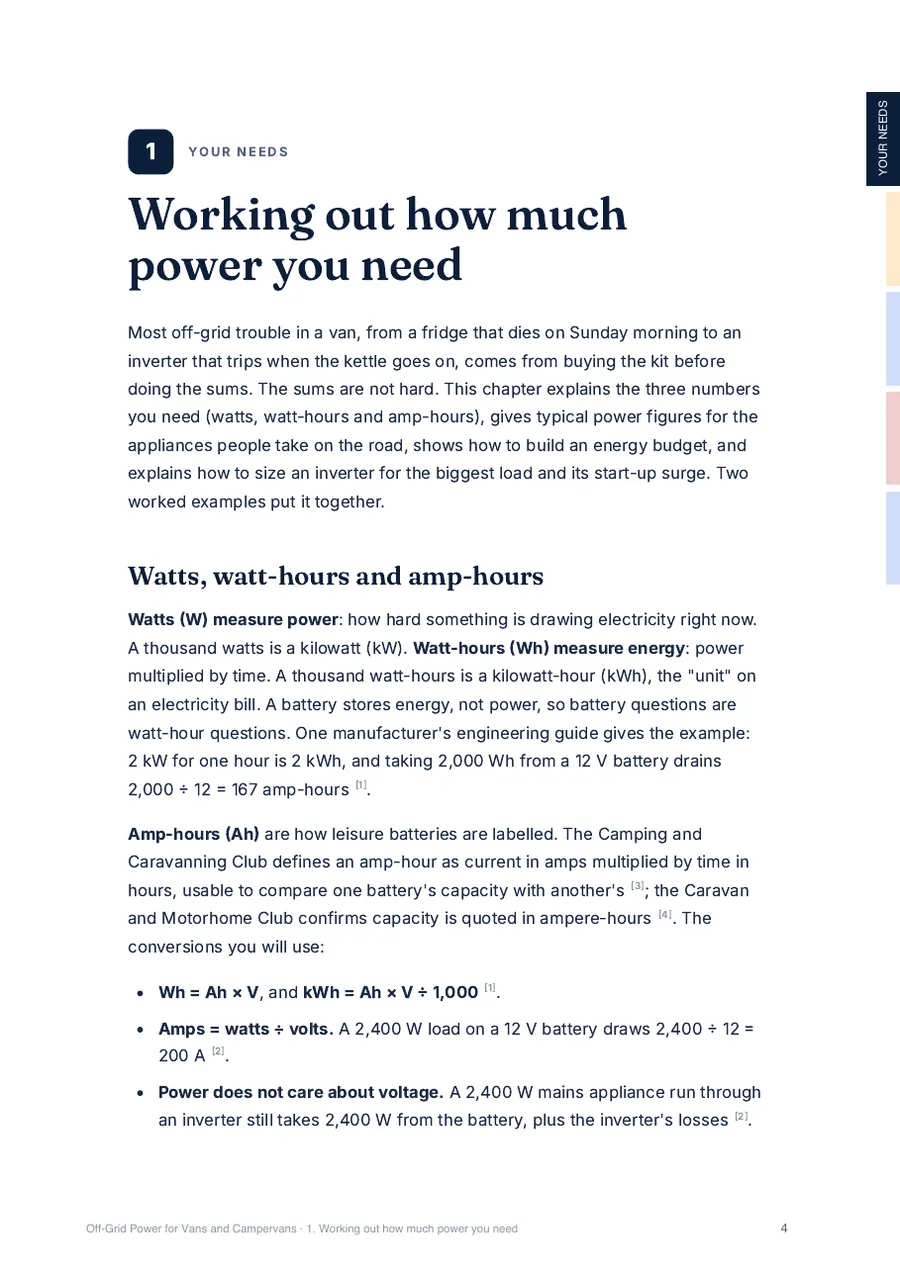
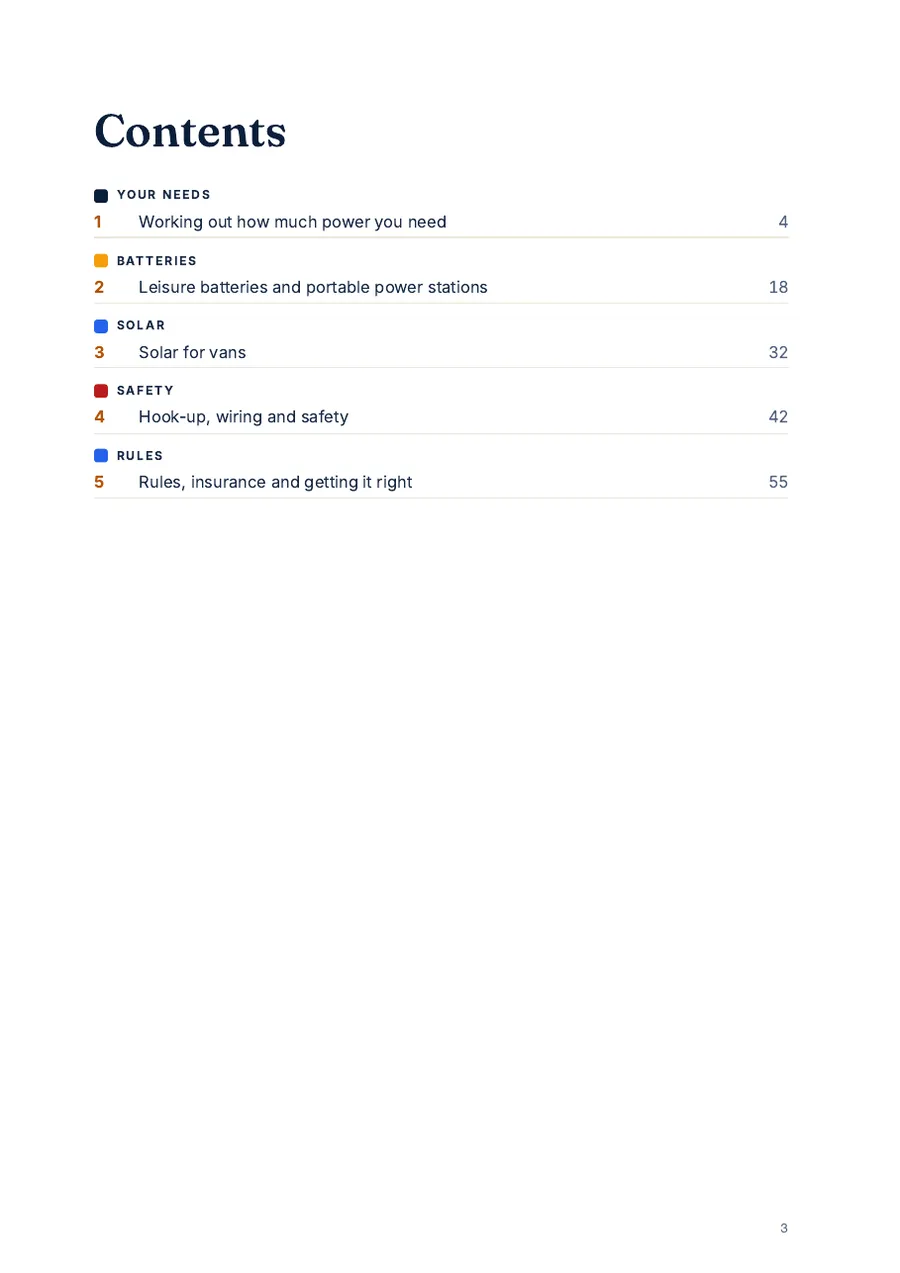
What’s inside
5 chapters across 68 pages. Read it straight through, or go to the chapter you need.
The sum that settles it. Panel watts needed = daily watt-hours needed ÷ Wh per 100 W per day × 100. A household that found 400 Wh a day in Chapter 1 needs about 95 W of panel in London in June. In December, flat, it needs about 870 W, more than most van roofs have room for; even propped at 60 degrees facing south it needs about 285 W. Winter needs another charging source: the engine (Chapter 2) or hook-up (Chapter 4).
When not to buy this
If your van does day trips and the odd summer weekend, you probably need one modest leisure battery and none of the solar or lithium detail, and the two caravanning clubs publish free technical guides that cover that much. GOV.UK carries the DVLA conversion guidance, the V1006 checklist and the weights and licence pages for nothing. Buy this if you want the sums, the sources and the four-nation rules in one place before you spend money on kit. It is not an installation manual: it prints no cable-size table, and it tells you when a competent electrician, a Gas Safe registered engineer or an Approved Workshop is the right call.
Questions
Does it tell me which battery, panel or power station to buy?+
No. It names no products. It gives you the method and the figures to size your own system: usable capacity by chemistry, cycle life against depth of discharge, cold-charging limits, what the watts on a panel box mean, and the two numbers that decide whether a power station suits you. Where a figure comes from a maker’s own datasheet rather than an independent UK test, it says so.
How much does a solar panel really give in the UK?+
Chapter 3 tables a 100 W panel lying flat for Plymouth, Cardiff, London, Belfast, Manchester, Glasgow and Inverness in June and December, from the European Commission’s photovoltaic calculator, with month-by-month figures for London, Manchester and Glasgow and what tilting does in winter. Its short version: a fixed flat panel is a spring-to-autumn tool, and December needs the engine or hook-up.
Can I do the wiring and gas work myself?+
The book sets out what the law actually requires of a private owner, which is less than most people think, and what every expert body asks anyway. It covers the hook-up order, RCD and polarity checks, fusing principles, why lithium changes the fuse, and the gas, ventilation and carbon monoxide rules. It gives no cable-size table and says plainly when to use a competent electrician, an engineer qualified for LPG in leisure vehicles, or an Approved Workshop.
What exactly do I get?+
A PDF ebook, A4, 68 pages, that you download straight after paying, to read on any phone, tablet or computer or to print. It isn't a printed book and nothing is posted. We also email you a link to your downloads.
Does it work in Scotland, Wales and Northern Ireland?+
Yes. Where the rules or services differ between the four nations, the file says so and points to the right official service for each.
Will it go out of date?+
It names the official service to check rather than printing fees or amounts that change. If we update the file, your download link gives you the current version.
Can I get a refund?+
Because it downloads the moment you pay, the 14-day cancellation period doesn’t apply to digital files you’ve asked to receive straight away. If a file won’t open or something is wrong with it, email us and we’ll sort it out.
Secure card payment by Stripe. It downloads the moment you pay, so by buying you ask for it straight away and there’s no 14-day cancellation. Terms of sale.
For personal and household use. Buying for an organisation, tenants or staff? Ask about a licence.
Off-Grid Power for Vans and Campervans is general information. It is not legal, financial or medical advice. Written by Tom Calder for PreparedBritain, an independent publisher not affiliated with HM Government.


Follow PreparedBritain
A calm heads-up when a storm is named, scam warnings, and the money checkers worth knowing about, in your feed.
