Keeping cool in a heatwave without air conditioning
What actually cools a UK home — curtains, timing, fans and water — plus the heat-health alerts to watch and who to check on. Sourced to UKHSA and the NHS.
By Tom Calder · Updated 19 July 2026 · Sourced to UKHSA, the NHS & the Met Office
Why UK homes cope so badly with heat
British housing is engineered to hold warmth in — insulation, small windows, dense brick — which is exactly wrong for a heatwave. Bedrooms under a sun-soaked roof can run several degrees hotter than outside well into the night. That's why the UK feels 30°C harder than holiday destinations do: the buildings, not the people.
The good news is that the effective responses are mostly free and mostly about timing, not equipment.
The daily routine that works
Run the house like a Mediterranean one. Through the day: curtains and blinds closed on whichever side the sun is hitting, windows closed while it's hotter outside than in. From late evening to early morning: open everything that's safe to open and let the cool air flush the heat out — a fan in a window moving air through helps enormously.
External shade beats internal: awnings, shutters or even a sheet pegged outside a sun-facing window stop heat before the glass. Inside, pale curtains reflect better than dark ones. And switch off what you're not using — ovens, consoles and even TVs are small heaters.
Cooling people, not rooms
The fastest wins cool your body directly: cool showers, cold water on wrists and neck, damp cloths, light loose clothing, and drinking regularly before you feel thirsty — the NHS's core advice. Avoid alcohol in the heat of the day; it dehydrates.
A fan is the best pound-per-degree device in the house — it works by helping sweat evaporate. One caution from UKHSA: in extreme heat (air hotter than about 35°C), a fan blowing hot air over you can add heat rather than remove it — at that point it's shade, water and cool rooms.
Plan the day around the sun: stay out of it between 11am and 3pm when UV and heat peak, and shift exercise, gardening and errands to early morning or evening.
The alerts to watch, and who to check on
In England, UKHSA and the Met Office run the Weather-Health Alerting System through the summer: yellow, amber and red heat-health alerts that signal when heat becomes a health risk rather than just discomfort. A red alert means significant risk to life even for the healthy — treat it like the weather warning it is.
Heat kills quietly, and mostly people over 75, people with heart and breathing conditions, and people who live alone. The single most valuable thing on this page: check daily on any older neighbour or relative during an amber or red alert — a phone call, a jug of water, curtains closed by 9am.
Sleep, pets and cars
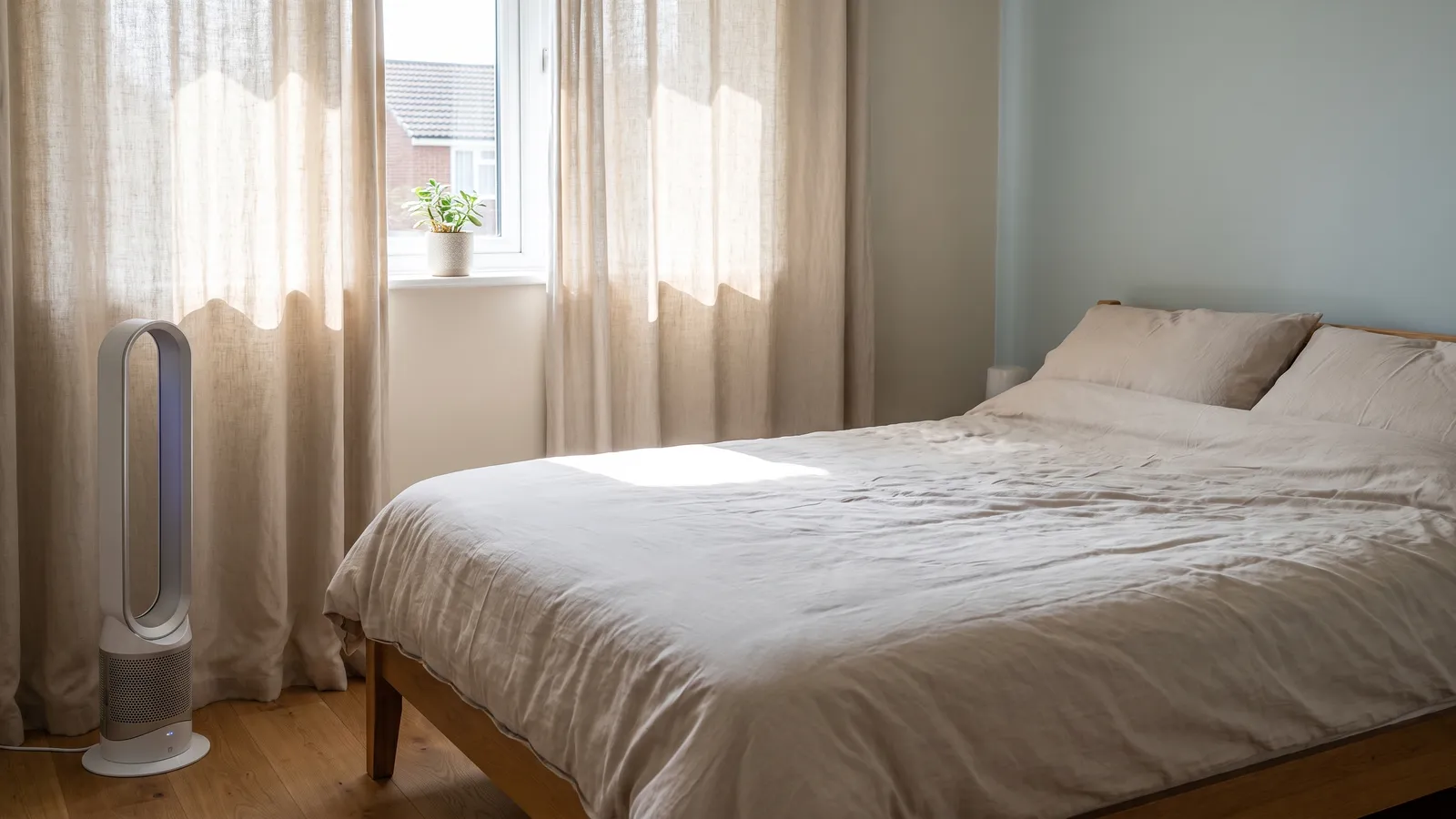
For sleep: cool the bedroom late evening with through-draughts, thin cotton bedding, a fan with a bottle of frozen water in front of it for a poor man's aircon, and if the bedroom won't cool, sleep downstairs — the coolest room wins, not the usual one.
Never leave children or pets in parked cars, even briefly with windows cracked — cabin temperatures climb lethally within minutes. Walk dogs early or late; if the pavement is too hot for your hand, it's too hot for paws.
Common questions
Should I keep windows open or closed in a heatwave?
Closed (with curtains drawn on the sunny side) while it's hotter outside than inside — usually late morning to evening. Open everything safe to open once the outside air turns cooler, typically late evening to early morning, and let the house flush out the day's heat.
Do fans help in extreme heat?
Up to around 35°C, yes — moving air helps sweat evaporate. Above that, UKHSA advises fans can add heat rather than remove it; switch to shade, water, cool showers and the coolest room instead.
What are heat-health alerts?
England's Weather-Health Alerting System (UKHSA with the Met Office) issues yellow, amber and red heat alerts when hot weather becomes a health risk. Amber and red are the ones that should change your plans — and prompt a daily check on vulnerable neighbours.
How much should I drink in a heatwave?
Regularly through the day, before you feel thirsty — water is ideal. Limit alcohol and caffeine in the hottest hours. Pale, plentiful urine is the simple check that you're getting it right.
How do I sleep when the bedroom won't cool?
Flush the room with cooler evening air, use thin cotton bedding, run a fan (a frozen water bottle in front of it helps), and be willing to sleep in the coolest room in the house instead of the usual one.
Who is most at risk in a heatwave?
People over 75, people with heart and respiratory conditions, babies, and anyone living alone without help — heat deaths concentrate there. During amber and red alerts, a daily check on an older neighbour genuinely saves lives.
Sources: UKHSA — beat the heat / heat-health alerts · NHS — coping in hot weather · Met Office — weather warnings. PreparedBritain is independent and not affiliated with HM Government.
The Emergency Kit Checklist
The GOV.UK Prepare essentials on one printable page — tick them off as you go and keep it with the kit. Free, no catch.
Download it straight away. We'll also send the occasional briefing when something genuinely matters — severe weather, live incidents, real price drops. Nothing else.
Keep reading
All weather, storms & flooding guides →Flood preparation checklist for UK homes
Know your risk, get warnings, and what to do before, during and after a flood — the practical checklist, sourced to…
What this record El Niño means for a UK winter (and what it doesn't)
The Pacific is running about 3C above normal and headlines have gone straight to snow. The Met Office signal for…
Driving in snow and ice: the Highway Code rules, technique and when not to travel
Highway Code rules 228–231 explained: clearing snow and ice legally, tyres, gentle-input technique, black ice, and…