
Fuel prices pushed UK inflation to 3.6% in October, but pump prices are now falling
UK inflation rose to 3.6% in October from 3.5%, the ONS said on 18 November, with motor fuels the biggest push: diesel averaged a record 199.5p a litre. Prices were collected around 13 October. Since then, Fuel Finder shows petrol down 11.3p and diesel down 5.5p, both at the lowest in our series. What rose, what fell, and what a tank costs now.
UK inflation rose to 3.6% in the 12 months to October 2026, up from 3.5% in September, the Office for National Statistics (ONS) said on 18 November, and motor fuels made the largest upward contribution. Pump prices have fallen since the ONS collected them, around 13 October. The ONS put diesel at 199.5p a litre in October, the highest since its records began in January 1996, and petrol at 174.7p, the highest since August 2022. On the morning of 18 November, the government's Fuel Finder scheme had diesel at 193.8p across 7,326 forecourts and petrol at 163.0p across 7,569: 5.5p and 11.3p less than our reading on 13 October, and both the lowest in our series, which began on 24 September 2026. A 55-litre tank of petrol costs about £6.22 less than in mid-October, and diesel £3.03 less. The 7.5% in some headlines is the whole transport category, not fuel: motor fuel prices were 33.2% higher than a year earlier.
By Tom Calder · Updated 18 November 2026 · Sourced to the ONS consumer price inflation bulletin for October 2026 (published 18 November), the DESNZ weekly road fuel prices, and the statutory Fuel Finder feed (DESNZ) as read daily on our fuel price tracker since 24 September 2026
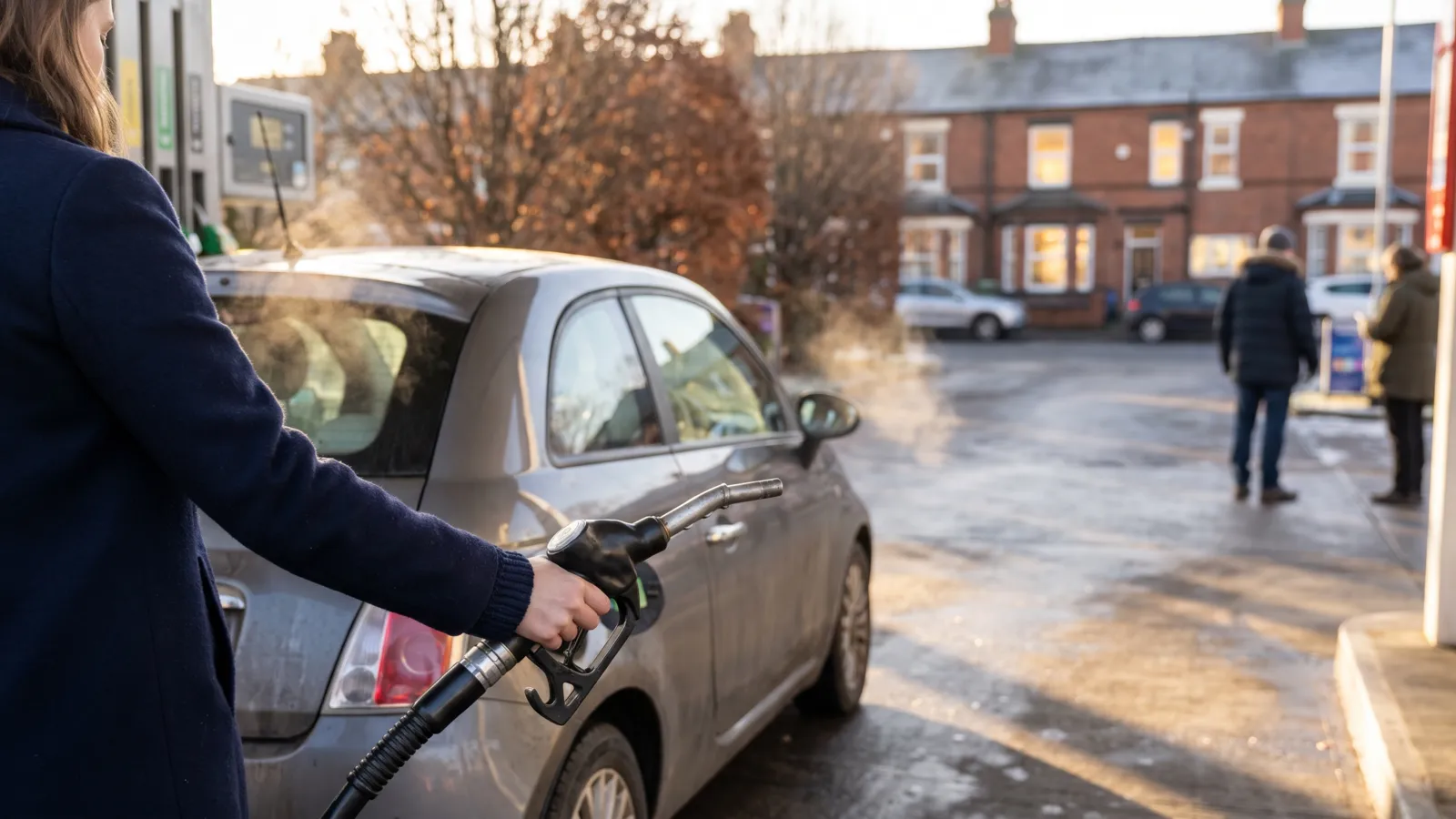
UK inflation rose to 3.6% in October, led by motor fuels
The ONS published its October figures on 18 November. The Consumer Prices Index (CPI) rose by 3.6% in the 12 months to October 2026, up from 3.5% in September. CPI was last higher in September 2025, the ONS says. CPIH, which adds owner occupiers' housing costs, rose to 3.7% from 3.6%, and core CPI, which leaves out energy, food, alcohol and tobacco, was 2.8%, little changed.
"Transport, particularly motor fuels, made the largest upward contribution", the ONS said. Restaurants and hotels made the largest offsetting downward contribution. Why diesel in particular has been so dear, and how much of a litre is tax, is in our diesel explainer.
Diesel averaged a record 199.5p in October, the ONS says
The ONS average price of diesel rose 7.0p a litre between September and October, to 199.5p. "This is the highest price recorded since our records began in January 1996." Petrol rose 5.2p, to 174.7p, the highest since August 2022, so it was not a record. Overall motor fuel prices were 33.2% higher than a year earlier, up from 29.8% in September, the largest annual rise since July 2022.
Some headlines give fuel prices as up 7.5%. That figure is the ONS rate for the whole transport category, which also covers buying vehicles, roadside recovery and rail fares: "Prices in the transport division rose overall by 7.5% in the 12 months to October 2026". The ONS says the purchase of vehicles pulled the other way.
The ONS collects most prices on one day a month. For this release, "the traditionally sourced data used in this release were collected on or around 13 October 2026". That was close to the peak at the pumps.
Since mid-October, pump prices have fallen
Every UK forecourt must report its prices to Fuel Finder, the statutory scheme run by the Department for Energy Security and Net Zero, and our fuel price tracker reads it every day. On 13 October, the ONS collection day, our reading had petrol at 174.3p a litre and diesel at 199.3p, close to the ONS figures. On the morning of 18 November, petrol averaged 163.0p across 7,569 forecourts and diesel 193.8p across 7,326: 11.3p and 5.5p lower.
Both are the lowest in our series, which began on 24 September 2026. Petrol peaked at 175.0p on 4 October and diesel at 200.3p on 3 to 5 October. In the last week alone, on morning readings, petrol is down 4.8p from 167.8p on 11 November and diesel 2.9p from 196.7p.
The government's own weekly statistic shows the same direction, by a different method. DESNZ put petrol at 175.28p and diesel at 200.04p for 12 October, and 167.07p and 196.77p for 16 November: down 8.21p and 3.27p.
Home Alerts members
The full picture, for your home
Each week, what's happening across Britain set against your own address: your water company, your power network, fuel for your car and the gaps in your kit. Free for your own home. Sign up in a minute.
Start free →Britain's figures from our live trackers, 19 November.
What a tank costs now
At the Fuel Finder averages on 18 November, a 55-litre tank of petrol costs about £89.65 and a tank of diesel about £106.59. Against our 13 October reading, that is about £6.22 less for petrol and £3.03 less for diesel. Diesel has fallen less than petrol, so the gap between them has widened, to 30.8p a litre.
Where you fill up matters as much as the fall. On 18 November, supermarket forecourts averaged 190.6p for diesel against 194.7p elsewhere, and 159.8p for petrol against 163.7p. Motorway diesel averaged 209.7p, 16.2p a litre above the 193.5p off the motorway, about £8.91 a tank. Of the forecourts reporting diesel, 186, or 2.5%, still charged £2 or more; our £2 diesel story follows who they are. The postcode lookup on our tracker shows prices near you.
What else moved: food down, gas up, electricity down
Food and non-alcoholic beverage inflation fell to 0.9% in October from 1.3% in September. The ONS says it was last lower in September 2021, at 0.8%. Our September inflation story covers the wholesale side.
Gas prices rose 6.3% in the month, with the change in Ofgem's price cap in October: Ofgem estimated £1,935 a year for an average household paying by direct debit for dual fuel, a rise of £73. Electricity prices fell 0.8%, which the ONS links to the cut in VAT on domestic electricity from 5% to 0% from 1 October 2026. What comes next for bills is in our January price cap story.
What these figures can and cannot tell you
The ONS figure is a snapshot of prices around 13 October, close to the peak at the pumps. Fuel Finder shows what forecourts have charged since, and both petrol and diesel have come down. We make no forecast of what the ONS will report for November, or of where pump prices go next.
Our Fuel Finder averages and the ONS averages are different measures, so we compare each with itself: our 13 October reading with today's, and the ONS's September figure with its October one. Our averages cover forecourts that reported a price in the last 14 days.
Common questions
What is the UK inflation rate for October 2026?
3.6%. The ONS said on 18 November that the Consumer Prices Index rose by 3.6% in the 12 months to October 2026, up from 3.5% in September. Transport, particularly motor fuels, made the largest upward contribution. CPIH was 3.7% and core CPI 2.8%.
Did petrol and diesel prices hit a record high in October?
Diesel did, on the ONS measure: 199.5p a litre in October, the highest since its records began in January 1996. Petrol, at 174.7p, was the highest since August 2022, not a record. Both have fallen since: on 18 November Fuel Finder had diesel at 193.8p and petrol at 163.0p.
Are fuel prices going down?
They have been. On Fuel Finder, petrol fell from 174.3p on 13 October to 163.0p on the morning of 18 November, and diesel from 199.3p to 193.8p, both the lowest since our series began on 24 September 2026. The government's weekly figures show the same direction. We don't forecast where they go next.
Were fuel prices up 7.5% in October?
No: 7.5% is the ONS annual rate for the whole transport category, which includes buying vehicles and fares. Motor fuel prices alone were 33.2% higher than a year earlier, the largest annual rise since July 2022.
Why did inflation rise in October?
Mostly fuel: diesel rose 7.0p a litre and petrol 5.2p between September and October, on the ONS figures, and gas prices rose 6.3% with the October price cap. Food inflation fell to 0.9%, electricity prices fell 0.8% after VAT on domestic electricity was cut to 0%, and restaurants and hotels pulled the rate down most.
Sources (4)
- ONS — Consumer price inflation, UK: October 2026 (published 18 November 2026)
- DESNZ — Weekly road fuel pricesweek of 16 November 2026: petrol 167.07p, diesel 196.77p
- Fuel Finder, the statutory UK fuel price scheme (Department for Energy Security and Net Zero) — access guidance
- PreparedBritain — live fuel price trackerFuel Finder aggregates, series from 24 September 2026; reading of 06:18 UTC, 18 November 2026
PreparedBritain is independent and not affiliated with HM Government.
See our checks first on Google. Add PreparedBritain as a preferred source and Google will show our stories to you more often in Top Stories.

Free alerts for your home
Home Alerts emails you when a power cut, a Met Office warning or a flood warning covers your postcode. Free for your own home. Sign up in a minute.
Start free →Latest from our live data
All stories →


For the children this Christmas


Keep reading
All money & bills guides →Fake Winter Fuel Payment texts: the payment is automatic, and DWP never texts for bank details
Headlines this week warn pensioners about fake Winter Fuel Payment texts asking for bank details. GOV.UK says most…
State Pension rises 3.9% to £250.70 a week in April 2027; the 25p age-80 addition stays frozen
DWP published its proposed rates for 2027 to 2028 on 11 November. The full new State Pension rises 3.9% to £250.70 a…
Mortgage rates are rising: what it adds to your monthly payment, and what you can do
How much more your mortgage will cost when rates rise, in pounds a month, with worked examples; what it means if…