Best rechargeable AA and AAA batteries and chargers UK (2026)
Spare batteries are on the GOV.UK Prepare kit list alongside a battery or wind-up torch and radio, and rechargeable cells let you keep a drawer of them without a stream of single-use alkalines going in the bin. The catch is that not all NiMH cells are built for sitting idle: some makers quote a charge that holds for years, others for about a year. This page compares AA and AAA cells and a mains charger on capacity, stated charge retention and what each maker publishes, and says plainly when an ordinary alkaline pack is the better choice. Prices and stock refresh on a schedule.
By Tom Calder · Updated 21 October 2026 · 9 products, all price-tracked
Our picks
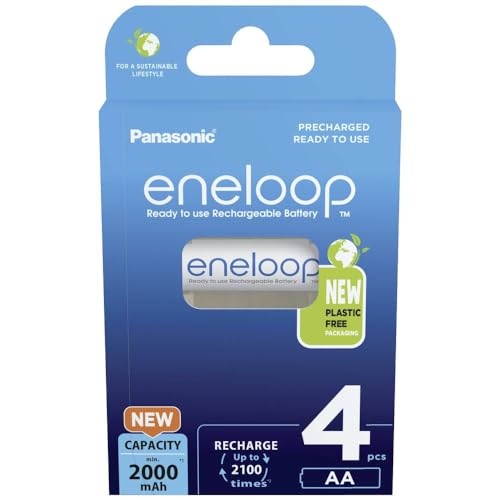 Photo: Amazon
eneloop AA
A kit that needs reusable AA cells you can top up once or twice a year and still trust.
as of 21 Oct 2026, 10:37 BST · Details
Product prices and availability are accurate as of the date/time indicated and are subject to change. Any price and availability information displayed on Amazon.co.uk at the time of purchase will apply to the purchase of this product. Photo: Amazon
eneloop AAA
Small-device AAA needs such as remotes, small torches and some radios.
as of 21 Oct 2026, 10:37 BST · Details
Product prices and availability are accurate as of the date/time indicated and are subject to change. Any price and availability information displayed on Amazon.co.uk at the time of purchase will apply to the purchase of this product. Photo: Amazon
eneloop combo
A household with both AA and AAA devices that wants one purchase.
as of 21 Oct 2026, 10:37 BST · Details
Product prices and availability are accurate as of the date/time indicated and are subject to change. Any price and availability information displayed on Amazon.co.uk at the time of purchase will apply to the purchase of this product.All 9 compared
| Battery | Size | Capacity | Pack | Charger | Price |
|---|---|---|---|---|---|
AA · 2,000 mAh · 4 · No A kit that needs reusable AA cells you can top up once or twice a year and still trust. | AA | 2,000 mAh | 4 | No | £10.89 at Amazon as of 21 Oct 2026, 10:37 BST · DetailsProduct prices and availability are accurate as of the date/time indicated and are subject to change. Any price and availability information displayed on Amazon.co.uk at the time of purchase will apply to the purchase of this product.In stockCheck price → |
Our verdictOur verdictResearched The reference low self-discharge AA. This European BK-3MCDE version is rated at a minimum of 2000 mAh on its datasheet (Panasonic's global page lists other regions at a 1900 mAh minimum), and Panasonic says eneloop keeps around 70% of its charge after ten years in storage, which is why people pick it for torches and radios that sit in a drawer. Alkaline cells are still the simpler choice for a kit you will not touch for years, so treat these as the option if you want to reuse cells and have a charger and a power source. Best for A kit that needs reusable AA cells you can top up once or twice a year and still trust. Good
Worth knowing
Who shouldn't buy it: Don't buy it if you want a set-and-forget kit with nothing to charge; lithium or alkaline cells in the drawer are simpler. | |||||
AAA · 800 mAh · 4 · No Small-device AAA needs such as remotes, small torches and some radios. | AAA | 800 mAh | 4 | No | £7.95 at Amazon as of 21 Oct 2026, 10:37 BST · DetailsProduct prices and availability are accurate as of the date/time indicated and are subject to change. Any price and availability information displayed on Amazon.co.uk at the time of purchase will apply to the purchase of this product.In stockCheck price → |
Our verdictOur verdictResearched The AAA twin of the standard eneloop; this European BK-4MCDE version is rated at a minimum of 800 mAh on its datasheet. It shares the slow self-discharge of the AA version, so it suits devices you use occasionally. AAA cells hold much less energy than AA, so check what your torch or radio actually takes before standardising on this size. Best for Small-device AAA needs such as remotes, small torches and some radios. Good
Worth knowing
Who shouldn't buy it: Don't buy it if your devices take AA, or you want cells you never need to recharge. | |||||
AA + AAA · 2,000 mAh · 4 AA + 4 AAA · No A household with both AA and AAA devices that wants one purchase. | AA + AAA | 2,000 mAh | 4 AA + 4 AAA | No | £25.38 at Amazon as of 21 Oct 2026, 10:37 BST · DetailsProduct prices and availability are accurate as of the date/time indicated and are subject to change. Any price and availability information displayed on Amazon.co.uk at the time of purchase will apply to the purchase of this product.In stockCheck price → |
Our verdictOur verdictResearched Four standard eneloop AA and four standard eneloop AAA in one box, so the specs match the separate packs: the European versions are rated at a minimum of 2000 mAh (AA) and 800 mAh (AAA). It saves guessing the split between sizes. The table column shows the AA figure; the AAA cells are the lower-capacity 800 mAh type. Best for A household with both AA and AAA devices that wants one purchase. Good
Worth knowing
Who shouldn't buy it: Don't buy it if you already know you only need one size; a single-size pack is simpler. | |||||
 AA · 2,500 mAh · 4 · No Heavier-draw AA devices where runtime per charge matters more than months of shelf life. | AA | 2,500 mAh | 4 | No | £17.36 at Amazon as of 21 Oct 2026, 10:37 BST · DetailsProduct prices and availability are accurate as of the date/time indicated and are subject to change. Any price and availability information displayed on Amazon.co.uk at the time of purchase will apply to the purchase of this product.In stockCheck price → |
Our verdictOur verdictResearched Panasonic's higher-capacity line, rated at a minimum of 2500/2450 mAh for AA. The extra capacity comes with shorter storage retention than the standard eneloop, and Panasonic's lineup page puts it at around 85% after one year. That makes it better for cells you rotate through a torch or radio than for ones left idle for years. Best for Heavier-draw AA devices where runtime per charge matters more than months of shelf life. Good
Worth knowing
Who shouldn't buy it: Don't buy it if the cells will sit unused for years; standard eneloop or alkaline cells suit that better. | |||||
 AAA · 930 mAh · 4 · No AAA devices used often enough that extra capacity per charge beats long idle storage. | AAA | 930 mAh | 4 | No | £16.93 at Amazon as of 21 Oct 2026, 10:37 BST · DetailsProduct prices and availability are accurate as of the date/time indicated and are subject to change. Any price and availability information displayed on Amazon.co.uk at the time of purchase will apply to the purchase of this product.In stockCheck price → |
Our verdictOur verdictResearched Panasonic rates the AAA pro at a minimum of 930/900 mAh, a step above the standard AAA. As with the AA pro, the extra capacity trades against how long a charge keeps, so these suit regular use. Check the device first, because many emergency torches and radios take AA instead. Best for AAA devices used often enough that extra capacity per charge beats long idle storage. Good
Worth knowing
Who shouldn't buy it: Don't buy it if your devices use AA or you want cells for long, unattended storage. | |||||
 AA/AAA · 2,000 mAh · Charger + 4 AA · Yes A first-time buyer who wants a charger and cells in one box. | AA/AAA | 2,000 mAh | Charger + 4 AA | Yes | £22.95 at Amazon as of 21 Oct 2026, 10:37 BST · DetailsProduct prices and availability are accurate as of the date/time indicated and are subject to change. Any price and availability information displayed on Amazon.co.uk at the time of purchase will apply to the purchase of this product.In stockCheck price → |
Our verdictOur verdictResearched A mains charger for AA and AAA NiMH cells with four 2000 mAh AA cells included. Energizer says a full charge takes 4 hours, with overcharge protection, safety shut-off and a status indicator. It is the easiest on-ramp to rechargeables, though only one mains charger is not a plan for an extended outage. Best for A first-time buyer who wants a charger and cells in one box. Good
Worth knowing
Who shouldn't buy it: Don't buy it if you already own cells and want a faster or USB-powered charger. | |||||
 AA · 2,500 mAh · 4 · No Everyday AA use in devices that are used and recharged regularly. | AA | 2,500 mAh | 4 | No | £10.89 at Amazon as of 21 Oct 2026, 10:37 BST · DetailsProduct prices and availability are accurate as of the date/time indicated and are subject to change. Any price and availability information displayed on Amazon.co.uk at the time of purchase will apply to the purchase of this product.In stockCheck price → |
Our verdictOur verdictResearched A familiar-brand high-capacity NiMH AA rated at 2500 mAh. Duracell says charge is held for up to 12 months, with up to 80% retained at that point, which is shorter than the eneloop line quotes. Good for a torch or radio you use often; for something that sits in a kit, low self-discharge cells or alkaline are the safer fit. Best for Everyday AA use in devices that are used and recharged regularly. Good
Worth knowing
Who shouldn't buy it: Don't buy it if you want months or years of shelf life without topping up. | |||||
 AAA · 900 mAh · 4 · No AAA devices used and recharged regularly rather than stored for long. | AAA | 900 mAh | 4 | No | £12.19 at Amazon as of 21 Oct 2026, 10:37 BST · DetailsProduct prices and availability are accurate as of the date/time indicated and are subject to change. Any price and availability information displayed on Amazon.co.uk at the time of purchase will apply to the purchase of this product.In stockCheck price → |
Our verdictOur verdictResearched Duracell's AAA NiMH, rated at 900 mAh, so slightly above the standard eneloop AAA on paper. Duracell's retention claims are a year-scale figure, so treat it as a working battery rather than a stored-in-a-drawer one. Best for AAA devices used and recharged regularly rather than stored for long. Good
Worth knowing
Who shouldn't buy it: Don't buy it if the cells will be left idle for long periods. | |||||
 AA · 2,000 mAh · 8 · No A larger AA stock for a household that wants spares across several devices. | AA | 2,000 mAh | 8 | No | £16.49 at Amazon as of 21 Oct 2026, 10:37 BST · DetailsProduct prices and availability are accurate as of the date/time indicated and are subject to change. Any price and availability information displayed on Amazon.co.uk at the time of purchase will apply to the purchase of this product.Out of stockCheck price → |
Our verdictOur verdictResearched A mainstream 2000 mAh NiMH AA in an eight-pack. Energizer says a charge lasts up to 12 months in storage, and its technical datasheet gives the 2000 mAh rating. It is a sound all-rounder, though its own retention claim is shorter than low self-discharge rivals that quote years. Best for A larger AA stock for a household that wants spares across several devices. Good
Worth knowing
Who shouldn't buy it: Don't buy it if you want the longest shelf life; standard eneloop is a better match. | |||||
ⓘ As an Amazon Associate, PreparedBritain earns from qualifying purchases. We may earn a commission when you buy, or a fee when you request a quote, through our links — it never affects what we recommend. Amazon prices come from Amazon's own product data and show the date and time they were retrieved. Prices at other retailers are checked by us, less often. Prices and stock can change at any time, so always check the retailer's price before you buy.
Before you buy
Start with what the cells are for.
A torch or radio that lives in a drawer wants a cell that still has charge when you reach for it, and the figures makers publish differ a great deal. Panasonic says its standard eneloop keeps around 70% of its charge after ten years in storage; Duracell and Energizer both quote about 12 months for their rechargeable AA ranges, with Duracell adding that up to 80% remains at that point. Panasonic's higher-capacity eneloop pro sits between them, at around 85% after a year. For idle kit, the long-retention type wins; for cells you charge every week, retention barely matters.
Capacity is the other number on the box, and it trades against retention.
The standard AA cells here are rated at 2000 mAh and the high-capacity types at about 2500 mAh, with AAA cells at roughly 800 to 930 mAh. More capacity means longer runtime per charge in a bright torch, but Panasonic's own figures show its high-capacity type holds charge for less time and takes fewer recharges: up to 2,100 charges for standard eneloop against up to 500 for eneloop pro. Check which size your devices take first: many emergency radios and torches use AA, and an AAA cell holds well under half the energy.
Rechargeable NiMH cells give a nominal 1.2 volts against 1.5 for alkaline, and most torches, radios and remotes are designed to accept either.
A device with a battery gauge may read a fresh NiMH cell as part-flat, and a few gadgets switch off earlier on NiMH than on alkaline, so if a manual says alkaline only, follow it. Never charge ordinary alkaline or lithium single-use cells, and never mix chemistries or old and new cells in one device, because the weaker cell can be driven into reverse and leak. Keep rechargeables in a labelled case, apart from disposables, and write the charge date on it.
The charger is the weak point in a power cut.
A mains charger needs a working socket, so during an outage it recharges nothing. To top up during a cut, plan for a USB-powered charger run from a power bank or portable power station, and keep that power bank charged on the same routine as your phone. Charge on a hard, non-flammable surface, use the charger made for the cells, and do not leave cells charging overnight or while nobody is home, in line with fire and rescue service advice on charging. If a cell gets hot, unplug at the wall if it is safe to.
Finally, storage and disposal.
Panasonic's FAQ puts the ideal storage temperature at 10 to 25 °C and advises against anything above 35 °C, so an indoor drawer beats a garage or car boot. Top up stored cells once or twice a year. Used cells must not go in the household bin: under the Waste Batteries and Accumulators Regulations, shops selling more than 32 kg of portable batteries a year must take used ones back free, which covers most supermarkets, and many council sites collect them too. Batteries in bin lorries are a known fire cause. Recycle any swollen, dented or leaking cell rather than charging it.
We haven't charged, cycled or run down any of these cells ourselves, so nothing here is a hands-on result. Every figure in the table and the verdicts was checked on 12 October 2026 against the maker's own product page, FAQ or datasheet (Panasonic's eneloop pages and the BK-3MCDE and BK-4MCDE datasheets, Energizer's UK pages and NH15-2000 datasheet) and, where the maker's page leaves a figure out, against a non-Amazon UK retailer or distributor listing (Rapid Electronics, Sainsbury's, Waitrose, Ocado, Tesco). Retention and cycle figures are the makers' claims. Owner reports are summarised in our own words. Commissions never change a ranking. Read our full methodology →
Related kit comparisons
Guides that go with this
The free number to save today, what to have ready, food safety, staying warm safely, and the compensation you …
The Government's recommended kit — with the best products for each item at every budget.
Why lithium batteries fail, the charging rules that prevent fires, warning signs of a failing pack, and how to…
Long wave closed in June 2026, and half the wind-up radios on sale here advertise an American weather band tha…
A calm, sourced look at the 'national blackout' scenario: why it's a low-likelihood risk the grid is engineere…
Common questions
Are rechargeable batteries any good for an emergency kit?
They can be, if you choose the right type. Low self-discharge NiMH cells are the ones built for sitting idle: Panasonic says standard eneloop keeps around 70% of its charge after ten years in storage, where Duracell and Energizer quote about 12 months for their rechargeable ranges. Whatever you buy, a mains charger will not work in a power cut, so keep one sealed pack of alkaline cells as the backstop that needs no electricity, and top up stored rechargeables once or twice a year.
What is the difference between eneloop and eneloop pro?
Capacity against staying power, on Panasonic's own figures. The European standard eneloop AA is rated at a minimum of 2000 mAh, keeps around 70% of its charge after ten years in storage and is rated for up to 2,100 recharges. Eneloop pro AA is rated at 2500 mAh (2450 mAh minimum) for longer runtime per charge, but Panasonic puts its retention at around 85% after one year and its life at up to 500 recharges. Standard suits cells left in a drawer; pro suits cells you cycle often.
Can I use rechargeable batteries in my torch and radio?
Almost always. NiMH AA and AAA cells are the same size as alkalines and most torches, radios, remotes and clocks accept either. They give a nominal 1.2 volts rather than 1.5, so a battery gauge may show a fresh rechargeable as part-full, and a few devices switch off sooner on NiMH. If a maker's manual says to use only alkaline cells, follow it. Check the size your devices need before buying: many emergency radios take AA, and AAA holds much less energy.
Is it safe to leave rechargeable batteries charging overnight?
UK fire and rescue services advise against charging batteries overnight or while nobody is home, which covers AA and AAA cells too. Charge during the day on a hard surface away from anything flammable, use the charger made for the cells, and unplug once the cells are full. If a cell becomes hot, swollen or smells, unplug at the wall if it is safe to and let it cool. If there is smoke or fire, get out, stay out and call 999. Fit working smoke alarms.
How long do rechargeable AA batteries hold their charge?
It depends on the type, and the maker's figure is the one to read. Panasonic quotes around 70% remaining after ten years for standard eneloop and around 85% after one year for eneloop pro. Duracell says its rechargeable AA stays charged for up to 12 months, with up to 80% retained, and Energizer quotes up to 12 months in storage for its Recharge Power Plus. Warm storage shortens all of these, so keep cells indoors rather than in a garage or car.
How do I dispose of rechargeable batteries in the UK?
Never in the household bin. Under the Waste Batteries and Accumulators Regulations, shops selling more than 32 kg of portable batteries a year must take used ones back free of charge, so most supermarkets, DIY stores and electrical retailers have collection tubs, and many council recycling centres take them too. Rechargeable and lithium cells crushed in bin lorries and sorting plants are a recognised cause of fires. Tape the terminals of any damaged cell and recycle it as soon as you can.
