ACR ResQLink 400 review
ACR ResQLink 400 Personal Locator Beacon
By Tom Calder
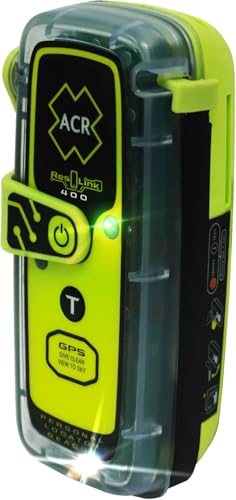
A well-built, no-subscription safety net for genuine emergencies rather than day-to-day check-ins. It only sends one signal — help, here I am — so it suits people who want that simplicity and are prepared to register it, as UK law requires.
- Best for
- Hillwalkers, sailors and remote travellers who want a one-touch emergency beacon with no ongoing subscription to manage.
- Skip it if
- You want to send routine check-in messages or let people track you on a route
as of 4 Nov 2026, 19:07 GMT · Details
Product prices and availability are accurate as of the date/time indicated and are subject to change. Any price and availability information displayed on Amazon.co.uk at the time of purchase will apply to the purchase of this product.We earn a commission if you buy through the retailer links on this page. It doesn't change our verdict. How we make money →
Researched, not used. We haven't used this product. This review is built from the maker's specifications, owner reports and our own sizing.
What we like
- No subscription or ongoing cost — one purchase, then free registration
- GPS plus Galileo GNSS gets rescuers within roughly 100m, backed by a 121.5MHz homing signal
- Compact, buoyant and rated to run 24+ hours once activated, with strobe and infrared strobe for visibility
Worth knowing
- One-way SOS only — no two-way messaging, check-in texts, or way to tell family you're safe but delayed
- Battery must be swapped by an ACR-approved centre every 5 years, which is an added cost most buyers forget to budget for
ⓘ As an Amazon Associate, PreparedBritain earns from qualifying purchases. We may earn a commission when you buy, or a fee when you request a quote, through our links. When two products are close, commission can decide which one we pick. A clearly better product always wins. Amazon prices come from Amazon's own product data and show the date and time they were retrieved. Prices at other retailers are checked by us, less often. Prices and stock can change at any time, so always check the retailer's price before you buy.
Our review
The ResQLink 400 is the plain version of ACR's current beacon: 406 MHz distress alert, 121.5 MHz homing, GPS and Galileo positioning, built-in buoyancy and a five-year battery, with no screen and no return link. It is the lightest of the three and the one to pick if you want a no-frills floating PLB from a long-established marine safety maker.
What it is
ACR's model PLB-400 does the two things every modern PLB does. On activation it transmits a coded 406 MHz message through the Cospas-Sarsat satellite system carrying its unique identity and the position from its GPS and Galileo receiver, and it broadcasts a 121.5 MHz homing tone that rescue aircraft, lifeboats and mountain rescue teams track for the final approach. ACR rates transmission at more than 24 hours with Class 2 operation at −20°C.
What it does not do is acknowledge. ACR's own comparison marks Return Link Service as absent on the 400 and present on the 410 RLS, and there is no display; the only feedback is the beacon's indicator lights and strobes. A visible strobe and an infrared strobe help a crew with night-vision kit pick you out.
In the hills and on the water
In Britain the case for a PLB is the coverage map: large parts of the Highlands, the Lakes, the Pennines and the coast have no mobile signal, and when there is none, 999 cannot connect. A PLB needs no network, no plan and no phone. On land its use is licence-exempt under the Wireless Telegraphy (Exemption) Regulations 2021 provided it meets Ofcom's IR 2084 and is not used airborne or on a ship.
The 400 floats by itself and is waterproof to 5 m for an hour or 10 m for ten minutes, so it suits kayakers and sailors as well as walkers. Activation is manual, and ACR says the beacon will not work submerged: hold it above the water, facing the sky, with the antenna upright.
How it compares
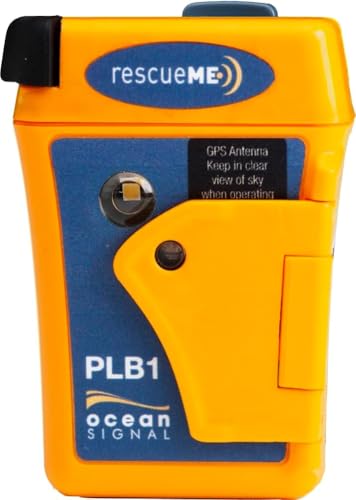
The ResQLink 410 RLS is the same case and battery with a Galileo return link that turns a single blue flash into a double when the alert is received; it weighs 148 g to the 400's 144 g. The ResQLink View adds a screen and a 28-hour rating. From Ocean Signal, the rescueME PLB1 is lighter at 116 g with a seven-year battery, but it is GPS-only, has no infrared strobe and needs a pouch to float. The comparison has the whole category.
Living with it
There is nothing to charge. The lithium manganese dioxide battery is good for five years, and ACR says it must be replaced after five years or after emergency use, whichever comes first, at an ACR-certified battery replacement centre, since the cells are not sold separately. Put that in the budget for year five. ACR allows 60 self-tests and 20 GPS self-tests over the battery's life and recommends a monthly self-test.
The warranty is five years for defects in materials and workmanship. Choose the UK and EU programmed version (SKU 2921.62). Register it free on GOV.UK, which takes about 15 minutes; since 15 April 2026 that has been a legal requirement for a PLB carried on a UK-registered vessel, and Ofcom's land-use rules say it should be registered as well.
Our verdict
Buy the 400 if you want the simplest route to a floating, Galileo-equipped beacon from a maker with a long marine safety record, and you are content not to know whether the alert was received until help appears. Choose the 410 RLS if that uncertainty would bother you. Skip the category altogether if what you really want is to tell family you are late; that needs a messenger with a plan.
A researched review, built from the maker's specs, manual and UK listings; facts checked 21 Oct 2026. Sources: ACR ResQLink 400 product page; ACR PLB-400 specification sheet (PDF); GOV.UK: Register a UK 406 MHz beacon; Wireless Telegraphy (Exemption) Regulations 2021, regulation 7; Ofcom IR 2084: Cospas-Sarsat locator beacons for use on land (PDF); Merchant Shipping (EPIRB and PLB Registration and Radiocommunications) (Amendment) Regulations 2026.
Who shouldn't buy this
Don't buy it if you want to send routine check-in messages or let people track you on a route — that needs a two-way satellite messenger with an active subscription, not a PLB, which is emergency-only by design.
Key specs
| Service type | 406MHz PLB via Cospas-Sarsat satellite network |
| Subscription | None required |
| Battery life | 24+ hours continuous transmission once activated |
| SOS capability | Manual, one-way distress alert only |
This is a Researched review: we haven't used this product. We check every specification against at least two independent sources, re-check the UK price on a schedule where we can track it automatically, and say plainly who it isn't for. Commissions never change a rating.
If this isn’t the one
Best for Hillwalkers, sailors and remote travellers who want serious emergency-only cover with no ongoing subscription to remember.
as of 4 Nov 2026, 19:07 GMT · Details
Product prices and availability are accurate as of the date/time indicated and are subject to change. Any price and availability information displayed on Amazon.co.uk at the time of purchase will apply to the purchase of this product.
Best for Hillwalkers, sailors and remote travellers who want a genuine, subscription-free last-resort distress beacon.
as of 4 Nov 2026, 19:07 GMT · Details
Product prices and availability are accurate as of the date/time indicated and are subject to change. Any price and availability information displayed on Amazon.co.uk at the time of purchase will apply to the purchase of this product.
Best for Hillwalkers, sailors and remote travellers who want a proven one-time-buy distress beacon with no ongoing cost.
as of 4 Nov 2026, 19:07 GMT · Details
Product prices and availability are accurate as of the date/time indicated and are subject to change. Any price and availability information displayed on Amazon.co.uk at the time of purchase will apply to the purchase of this product.Questions
Does the ResQLink 400 have Return Link Service?
No. ACR's comparison table shows no return link on the 400; the ResQLink 410 RLS adds it as a blue double flash, and the View RLS adds it with a screen message as well.
How long does the ResQLink 400 transmit for?
ACR rates it for more than 24 hours once activated, based on an accredited laboratory test report, with Class 2 operation down to −20°C. It needs the antenna upright and a clear view of the sky to work as rated.
Does the ResQLink 400 float?
Yes. ACR lists built-in buoyancy, and the beacon is waterproof to 5 m for an hour or 10 m for ten minutes. Keep the lanyard attached so it stays with you in the water.
Can the ResQLink 400 send a message to my family?
No. A PLB transmits only a distress alert with your position to the rescue authorities. For texts, check-ins or tracking you need a satellite messenger with an active plan, such as the ZOLEO or a Garmin inReach.
Free alerts for your home
Home Alerts emails you when a power cut, a Met Office warning or a flood warning covers your postcode. Free for your own home. Sign up in a minute.
Start free →