Ocean Signal rescueME PLB1 review
By Tom Calder
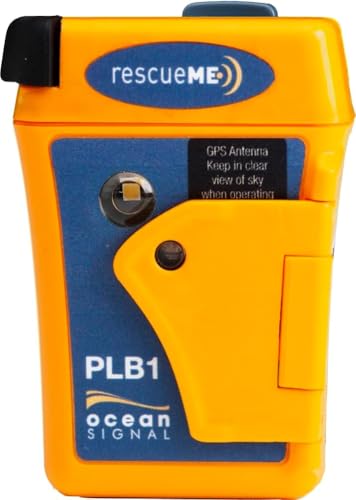
A well-made, genuinely pocket-sized PLB that does one job — get a real search-and-rescue team to your GPS position — without a monthly bill. It has no messaging or check-in features, so pair it with a plan for someone at home to know your route.
- Best for
- Hillwalkers, sailors and remote travellers who want serious emergency-only cover with no ongoing subscription to remember.
- Skip it if
- You want to send routine check-in messages or track a route for family to see
as of 4 Nov 2026, 21:07 GMT · Details
Product prices and availability are accurate as of the date/time indicated and are subject to change. Any price and availability information displayed on Amazon.co.uk at the time of purchase will apply to the purchase of this product.We earn a commission if you buy through the retailer links on this page. It doesn't change our verdict. How we make money →
Researched, not used. We haven't used this product. This review is built from the maker's specifications, owner reports and our own sizing.
What we like
- No subscription ever — one registration, then it's free to use for the life of the unit
- One of the smallest, lightest PLBs on the market (77 x 51 x 32.5mm, 116g) — easy to actually carry
- Dual 406MHz satellite alert + 121.5MHz homing signal plus built-in GPS and a strobe for search teams
Worth knowing
- SOS-only — no two-way texting, no 'I'm OK' check-ins, no weather; you can't tell anyone you're fine, only that you're not
- Battery isn't user-serviceable — needs an authorised centre, and the 5-year warranty only applies if you register it
ⓘ As an Amazon Associate, PreparedBritain earns from qualifying purchases. We may earn a commission when you buy, or a fee when you request a quote, through our links. When two products are close, commission can decide which one we pick. A clearly better product always wins. Amazon prices come from Amazon's own product data and show the date and time they were retrieved. Prices at other retailers are checked by us, less often. Prices and stock can change at any time, so always check the retailer's price before you buy.
Our review
Ocean Signal's rescueME PLB1 is the beacon you will actually carry: 116 g, shorter than a smartphone, with a seven-year battery and no subscription. It gives up the newer extras, Galileo reception, return-link acknowledgement and an infrared strobe, in exchange for size. It suits walkers, runners and paddlers who want a 406 MHz alert in a jacket pocket.
What it is
The PLB1 sends a 406 MHz distress message at a nominal 5 W to the Cospas-Sarsat satellites, carrying its identity and a position from its built-in GPS receiver, and a 121.5 MHz homing signal at 25 to 100 mW for the last stage of a search. Ocean Signal quotes typical GPS accuracy within 100 m, and notes that even without a fix the satellites alone place a beacon to roughly a five nautical mile radius.
It measures 77 by 51 by 32.5 mm and Ocean Signal calls it the world's smallest PLB. The receiver is GPS only; the company's own table reserves Galileo and GLONASS for the PLB3. The strobe is a visible LED of about one candela with no infrared, and the beacon has no Return Link Service, so nothing tells you the alert has been received.
In the hills and on the water
Carried, not stowed, is the whole argument for this unit. A 116 g beacon lives in a running vest or a jacket pocket on every outing, which matters because the places it is for, the Cairngorms, the Lakeland fells, a sea kayak off Pembrokeshire, are the ones where a phone shows no bars. Activation is manual: pull the antenna tab out fully, lift the protective flap and hold the ON key for a second. It transmits for more than 24 hours at −20°C.
It is waterproof to 15 m at 20°C but does not float. Ocean Signal sells a flotation pouch separately, and says the pouch gives buoyancy without holding the beacon upright, so the lanyard should stay attached to you. On land, UK use is licence-free provided the beacon meets Ofcom's IR 2084 and is not used airborne or aboard a ship.
How it compares
The ACR ResQLink 400 is 28 g heavier, floats on its own and adds Galileo reception and an infrared strobe, with the same 24-hour-plus transmission rating but a five-year battery against the PLB1's seven. Ocean Signal's own rescueME PLB3 AIS adds an AIS alert for nearby boats and return-link capability at 190 g. Everything in the category is on the comparison.
Living with it
The lithium manganese dioxide battery has a seven-year replacement interval, the longest here, and must be changed at an authorised battery replacement centre; there is no user access. There is nothing to charge and no plan. Ocean Signal limits the GPS test to ten over the battery's life and suggests running it no more than once a year, because it uses a lot of battery. The warranty is two years, extended by three if you register with Ocean Signal within 90 days of purchase; that registration is separate from registering the beacon with the rescue authority.
Registration with the UK Beacon Registry is free on GOV.UK and takes about 15 minutes. Since 15 April 2026 it has been a legal requirement for a PLB carried on a UK-registered vessel; for land use Ofcom's IR 2084 says the beacon should be registered. Note the expiry date on the label somewhere you will see it.
Our verdict
If weight decides whether a beacon comes with you, the PLB1 is the right answer, and seven years between battery changes keeps the long-run cost low. If you spend more time on the water than on the hill, a floating ACR or the PLB3 is the better fit, and anyone who wants confirmation that the alert landed should buy a return-link model. It cannot message, track or check in, and it was never meant to.
A researched review, built from the maker's specs, manual and UK listings; facts checked 21 Oct 2026. Sources: Ocean Signal rescueME PLB1 product page; Ocean Signal PLB1 user manual (PDF); GOV.UK: Register a UK 406 MHz beacon; Wireless Telegraphy (Exemption) Regulations 2021, regulation 7; Ofcom IR 2084: Cospas-Sarsat locator beacons for use on land (PDF); Merchant Shipping (EPIRB and PLB Registration and Radiocommunications) (Amendment) Regulations 2026.
Who shouldn't buy this
You want to send routine check-in messages or track a route for family to see — that needs a two-way satellite messenger with a subscription, not a PLB; the PLB1 only has one function, a genuine SOS.
Key specs
| Service type | 406MHz Cospas-Sarsat global SAR satellite alert |
| Subscription | None |
| Battery life | 7-year standby life |
| SOS capability | Manual 406MHz distress activation with built-in |
This is a Researched review: we haven't used this product. We check every specification against at least two independent sources, re-check the UK price on a schedule where we can track it automatically, and say plainly who it isn't for. Commissions never change a rating.
If this isn’t the one

Best for Hillwalkers, sailors and remote travellers who want a genuine, subscription-free last-resort distress beacon.
as of 4 Nov 2026, 21:07 GMT · Details
Product prices and availability are accurate as of the date/time indicated and are subject to change. Any price and availability information displayed on Amazon.co.uk at the time of purchase will apply to the purchase of this product.
Best for Hillwalkers, sailors and remote travellers who want a proven one-time-buy distress beacon with no ongoing cost.
as of 4 Nov 2026, 21:07 GMT · Details
Product prices and availability are accurate as of the date/time indicated and are subject to change. Any price and availability information displayed on Amazon.co.uk at the time of purchase will apply to the purchase of this product.
Best for Hillwalkers, sailors and remote travellers who want genuine two-way texting beyond mobile signal, not just a one-shot distress button.
as of 4 Nov 2026, 21:07 GMT · Details
Product prices and availability are accurate as of the date/time indicated and are subject to change. Any price and availability information displayed on Amazon.co.uk at the time of purchase will apply to the purchase of this product.Questions
Does the rescueME PLB1 float?
Not on its own. Ocean Signal sells a flotation pouch separately and says it adds buoyancy but does not hold the beacon upright, so keep the lanyard attached to you. Australian and New Zealand versions have the pouch fitted permanently to meet local rules.
How long does the rescueME PLB1 battery last?
Ocean Signal gives a seven-year replacement interval in storage and more than 24 hours of transmission at −20°C once activated. The battery is not user-replaceable and must be changed at an authorised centre.
Does the rescueME PLB1 have Return Link Service?
No. Ocean Signal lists Return Link capability only against the PLB3. The PLB1 transmits its alert and homing signal but receives no acknowledgement.
Do I need a licence to use the rescueME PLB1 in the UK?
Not on land. PLB use is exempt under the Wireless Telegraphy (Exemption) Regulations 2021 provided the beacon meets Ofcom's IR 2084 and is not used airborne or aboard a ship. Register it free with the UK Beacon Registry; that is compulsory on a UK-registered vessel since 15 April 2026.
Free alerts for your home
Home Alerts emails you when a power cut, a Met Office warning or a flood warning covers your postcode. Free for your own home. Sign up in a minute.
Start free →