Ocean Signal rescueME PLB3 AIS review
By Tom Calder

A compact, well-built 406MHz PLB with AIS transmission for close-range rescue, backed by Ocean Signal's marine safety reputation. It's a one-way emergency-only device, not a messenger, so it suits people who want distress cover without a recurring bill.
- Best for
- Sailors, offshore paddlers and remote hillwalkers who want a one-off, no-subscription distress beacon rather than an ongoing messaging service.
- Skip it if
- You want routine check-in texts or two-way messaging on a trip
We earn a commission if you buy through the retailer links on this page. It doesn't change our verdict. How we make money →
Researched, not used. We haven't used this product. This review is built from the maker's specifications, owner reports and our own sizing.
What we like
- No subscription — one purchase, no ongoing fees
- AIS transmission helps nearby vessels/aircraft home in during the final rescue stage
- Over 24 hours battery life and a 6-year unreplaced shelf life; small and pocketable
Worth knowing
- No two-way messaging, weather, or check-in texts — it only sends an emergency alert, once triggered
- Higher upfront price than basic 406MHz PLBs without AIS
Out of stock when we checked: our alternatives
Closest in size first, then by our score. None of them was showing out of stock when we last checked.
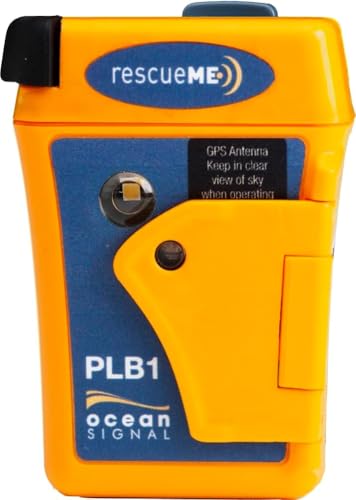
Best for Hillwalkers, sailors and remote travellers who want serious emergency-only cover with no ongoing subscription to remember.
as of 5 Nov 2026, 22:07 GMT · Details
Product prices and availability are accurate as of the date/time indicated and are subject to change. Any price and availability information displayed on Amazon.co.uk at the time of purchase will apply to the purchase of this product.
Best for Hillwalkers, sailors and remote travellers who want a genuine, subscription-free last-resort distress beacon.
as of 5 Nov 2026, 22:07 GMT · Details
Product prices and availability are accurate as of the date/time indicated and are subject to change. Any price and availability information displayed on Amazon.co.uk at the time of purchase will apply to the purchase of this product.
Best for Hillwalkers, sailors and remote travellers who want a proven one-time-buy distress beacon with no ongoing cost.
as of 5 Nov 2026, 22:07 GMT · Details
Product prices and availability are accurate as of the date/time indicated and are subject to change. Any price and availability information displayed on Amazon.co.uk at the time of purchase will apply to the purchase of this product.ⓘ As an Amazon Associate, PreparedBritain earns from qualifying purchases. We may earn a commission when you buy, or a fee when you request a quote, through our links. When two products are close, commission can decide which one we pick. A clearly better product always wins. Amazon prices come from Amazon's own product data and show the date and time they were retrieved. Prices at other retailers are checked by us, less often. Prices and stock can change at any time, so always check the retailer's price before you buy.
Our review
The rescueME PLB3 is Ocean Signal's two-in-one beacon: a 406 MHz personal locator beacon that also broadcasts an AIS man-overboard alert to boats nearby. The AIS side is what sets it apart, and it only earns its keep on the water. It is built for sailors and crew who want satellite rescue and a local alert from the same unit.
What it is
A PLB sends a coded distress message on 406 MHz to the Cospas-Sarsat satellites, which pass your identity and GPS position to a rescue coordination centre. Ocean Signal rates the PLB3's 406 MHz transmitter at 5 W and pairs it with a 121.5 MHz homing signal that search aircraft and lifeboats follow for the last stretch. The receiver uses GPS, Galileo and GLONASS.
The AIS part is the difference. Once activated, the PLB3 also broadcasts its position on the two AIS channels at 1 W, eight times a minute, so any vessel within VHF range running an AIS receiver sees a man-overboard target on its plotter. Ocean Signal is clear that it does not send DSC alerts, so a VHF set without an AIS receiver stays silent. It is also Return Link capable: where the beacon is configured for it, it can confirm that the alert was received and the location detected, which Ocean Signal says aims to arrive within 30 minutes but may take longer.
On the water and on land
The design assumes a lifejacket. Fitted, packed and armed inside a compatible inflatable jacket, the antenna deploys and the beacon starts when the jacket inflates (semi-automatic activation). Manual activation means lowering the red arming slide and moving the grey activation slide, and because the antenna springs out quickly the manual asks you to keep your face at least 30 cm clear. At 200 mm long and 190 g it is a lifejacket beacon rather than a pocket one.
On a hill it still works as a plain PLB; Ocean Signal notes that AIS use on land is restricted, and its messages only reach AIS receivers within VHF range. The beacon does not float on its own and needs the flotation pouch, which is not in the UK box. It is rated for more than 10 m of immersion for over an hour and transmits for more than 24 hours at −20°C once triggered. Ocean Signal's free app reads battery usage and self-test results over NFC; it offers no tracking or messaging.
How it compares
Against the rescueME PLB1, the PLB3 adds AIS, an infrared strobe, Galileo and GLONASS reception and Return Link capability, at the cost of 74 g and a longer body; the PLB1's battery interval is seven years to the PLB3's six. The ACR ResQLink 410 RLS has the same satellite side, floats unaided and weighs 148 g, with a five-year battery and a blue return-link flash, but no AIS. The whole category is on the comparison.
Living with it
The battery is a lithium iron disulphide pack that Ocean Signal says must be replaced six years from manufacture or five years after entering service, whichever comes first, and only by a service centre. There is nothing to charge and no plan. Registration with the UK Beacon Registry is free on GOV.UK and takes about 15 minutes; since 15 April 2026 it has been a legal duty for a PLB carried on a UK-registered vessel. Ocean Signal's warranty is two years, extended by three if you register the product with the company, which is separate from the beacon registry.
Included are a belt bracket, an oral-tube bracket for lifejackets, an antenna rewind tool and a lanyard.
Our verdict
Buy the PLB3 if you sail, race or work on deck with other boats around you: the AIS alert reaches the people best placed to pull you out within minutes, and the satellite side covers everything else. If you walk, cycle or paddle alone, the AIS half does little, and a lighter plain beacon such as the PLB1 or a floating ACR handles the same emergency with less bulk. Nobody should buy it expecting to send messages; it transmits only when you are in trouble.
A researched review, built from the maker's specs, manual and UK listings; facts checked 21 Oct 2026. Sources: Ocean Signal rescueME PLB3 AIS product page; Ocean Signal PLB3 user manual (PDF); Ocean Signal rescueME PLB1 product page (PLB1 and PLB3 comparison table); GOV.UK: Register a UK 406 MHz beacon; Merchant Shipping (EPIRB and PLB Registration and Radiocommunications) (Amendment) Regulations 2026; EUSPA: Galileo Search and Rescue Return Link Service.
Who shouldn't buy this
You want routine check-in texts or two-way messaging on a trip — a subscription satellite messenger (e.g. Garmin inReach) does that; a PLB is emergency-only and stays silent otherwise.
Key specs
| Service type | 406MHz PLB with integrated AIS |
| Subscription | None |
| Battery life | Over 24 hours of continuous distress |
| SOS capability | Manual + semi-automatic activation in an |
This is a Researched review: we haven't used this product. We check every specification against at least two independent sources, re-check the UK price on a schedule where we can track it automatically, and say plainly who it isn't for. Commissions never change a rating.
Questions
Does the rescueME PLB3 need a subscription?
No. Ocean Signal's page says there are no subscription fees, and the Cospas-Sarsat system is free to use. The cost to plan for after purchase is the battery replacement at the service interval. You must still register the beacon with the UK Beacon Registry, which is free.
Does the PLB3 float?
Not by itself. Ocean Signal says it requires the flotation pouch and is not designed to operate floating; it is meant to be worn in a lifejacket or on a belt bracket, tethered by its lanyard.
Will a VHF radio pick up the PLB3's alert?
Only a radio or plotter with an AIS receiver will show it. The PLB3 sends AIS position and status messages but no DSC alert, so a plain VHF set stays silent.
How long does the PLB3 battery last?
Ocean Signal rates it for more than 24 hours of transmission at −20°C once activated, and says the pack must be replaced six years from manufacture or five years after entering service, whichever is sooner.
Free alerts for your home
Home Alerts emails you when a power cut, a Met Office warning or a flood warning covers your postcode. Free for your own home. Sign up in a minute.
Start free →