ACR ResQLink 410 RLS review
By Tom Calder

A well-engineered, no-subscription PLB: deploy the antenna, press the button, and it broadcasts your GPS position over the 406MHz distress network, with a blue strobe confirming the signal was received. It's built for the moment mobile signal and 999/112 run out — not for routine messaging.
- Best for
- Hillwalkers, sailors and remote travellers who want a proven one-time-buy distress beacon with no ongoing cost.
- Skip it if
- You want to send routine 'I'm okay' or two-way messages on the trail
as of 4 Nov 2026, 19:07 GMT · Details
Product prices and availability are accurate as of the date/time indicated and are subject to change. Any price and availability information displayed on Amazon.co.uk at the time of purchase will apply to the purchase of this product.We earn a commission if you buy through the retailer links on this page. It doesn't change our verdict. How we make money →
Researched, not used. We haven't used this product. This review is built from the maker's specifications, owner reports and our own sizing.
What we like
- No subscription ever — pay once, register free with the UK Beacon Registry, done
- Return Link Service gives visible confirmation your SOS was received
- 5-year battery, floats, dual visual/infrared strobe
Worth knowing
- One-way SOS only — no check-in texts or two-way messaging with family
- Pricier upfront than basic PLBs with fewer features
ⓘ As an Amazon Associate, PreparedBritain earns from qualifying purchases. We may earn a commission when you buy, or a fee when you request a quote, through our links. When two products are close, commission can decide which one we pick. A clearly better product always wins. Amazon prices come from Amazon's own product data and show the date and time they were retrieved. Prices at other retailers are checked by us, less often. Prices and stock can change at any time, so always check the retailer's price before you buy.
Our review
The ResQLink 410 RLS is ACR's floating 406 MHz beacon with a Galileo return link: once a rescue centre has your alert and position, the status light changes from a single to a double blue flash. That one piece of feedback is what you pay for over the plain 400, and for a solo walker or sailor it is worth having.
What it is
Like every PLB, the 410 (ACR model PLB-410) sends a 406 MHz distress message to the Cospas-Sarsat satellites and a 121.5 MHz homing signal for rescuers nearby. The position comes from a GPS and Galileo receiver. ACR describes the sequence as Position, Alert, Confirm, Home: it gets a fix, transmits, waits for the acknowledgement, then keeps homing until you are found.
Return Link Service is the Confirm step. The Galileo satellites carry a short message back to the beacon when the alert has been received and the location detected, and the 410 shows it only as a light: the single blue flash becomes a double flash. ACR is careful about what that means. It confirms receipt, not that anyone has been dispatched or when they will arrive. The EU space agency marked the service's first year in January 2021, so it has been running since early 2020.
In the hills and on the water
A beacon is for the places where neither 999 nor a text will go: remote glens, sea cliffs, open water. The 410 floats, is waterproof to 5 m for an hour or 10 m for ten minutes, and is rated by ACR for more than 24 hours of transmission with Class 2 operation at −20°C, a figure ACR bases on accredited laboratory testing with the beacon above water, facing the sky and the antenna upright. Activation is manual, so it does nothing if you are unconscious in the water; a lifejacket-armed beacon such as the Ocean Signal PLB3 covers that case.
On land, PLB use is licence-free in the UK provided the unit meets Ofcom's IR 2084 and is not used in the air or aboard a ship. Tell someone your route anyway; a household emergency plan that says who to call if you are overdue costs nothing.
How it compares
The ResQLink 400 is the same case, 4 g lighter, with the same transmission rating, battery interval and strobes, minus the return link. The ResQLink View swaps the acknowledgement for a screen showing status and coordinates and is rated at 28 hours. Among the Ocean Signal units, the rescueME PLB3 AIS adds a local AIS alert for boats but needs a pouch to float; see the comparison.
Living with it
There is no charging and no plan. The battery is rated for five years and ACR says it must be replaced after five years or after any emergency use, at a certified battery replacement centre. The beacon allows 60 self-tests and 20 GPS self-tests over that life; ACR recommends a self-test once a month, or at least two weeks before a trip, and the GPS test switches itself off after the twentieth use. ACR's optional 406Link satellite-testing service covers only North and South America, according to the manual.
ACR's warranty is five years from purchase; opening the beacon or having it serviced at an unauthorised centre voids it. Buy the UK and EU programmed version (SKU 2931.62). Registration with the UK Beacon Registry is free on GOV.UK and takes about 15 minutes; since 15 April 2026 it has been a legal requirement for a PLB carried on a UK-registered vessel, with a duty to tell the registry when the registered details change.
Our verdict
The 410 RLS is the sensible middle of ACR's range: the same body and endurance as the 400 with the one addition that changes how a bad hour feels, knowing the alert arrived. Choose it over the View if feedback matters more than reading coordinates off a screen, and over any Ocean Signal unit if you want a beacon that floats unaided. Do not buy it, or any PLB, to keep in touch; it has no messages to send.
A researched review, built from the maker's specs, manual and UK listings; facts checked 21 Oct 2026. Sources: ACR ResQLink 410 RLS product page; ACR ResQLink 410 RLS user manual (PDF); ACR ResQLink 410 RLS specification sheet (PDF); EUSPA: Galileo Search and Rescue Return Link Service; GOV.UK: Register a UK 406 MHz beacon; Merchant Shipping (EPIRB and PLB Registration and Radiocommunications) (Amendment) Regulations 2026; Wireless Telegraphy (Exemption) Regulations 2021, regulation 7.
Who shouldn't buy this
Don't buy this if you want to send routine 'I'm okay' or two-way messages on the trail — a PLB only calls for genuine emergencies. For messaging you need a satellite messenger with a paid subscription (e.g. Garmin inReach) instead.
Key specs
| Service type | COSPAS-SARSAT 406MHz distress network |
| Subscription | None required (PLB) |
| Battery life | 5-year non-rechargeable battery |
| SOS capability | Deploy the antenna |
This is a Researched review: we haven't used this product. We check every specification against at least two independent sources, re-check the UK price on a schedule where we can track it automatically, and say plainly who it isn't for. Commissions never change a rating.
If this isn’t the one
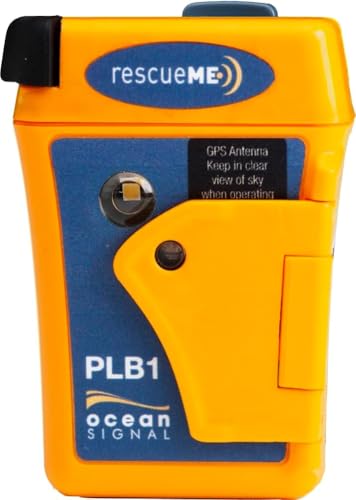
Best for Hillwalkers, sailors and remote travellers who want serious emergency-only cover with no ongoing subscription to remember.
as of 4 Nov 2026, 19:07 GMT · Details
Product prices and availability are accurate as of the date/time indicated and are subject to change. Any price and availability information displayed on Amazon.co.uk at the time of purchase will apply to the purchase of this product.
Best for Hillwalkers, sailors and remote travellers who want a genuine, subscription-free last-resort distress beacon.
as of 4 Nov 2026, 19:07 GMT · Details
Product prices and availability are accurate as of the date/time indicated and are subject to change. Any price and availability information displayed on Amazon.co.uk at the time of purchase will apply to the purchase of this product.
Best for Hillwalkers, sailors and remote travellers who want genuine two-way texting beyond mobile signal, not just a one-shot distress button.
as of 4 Nov 2026, 19:07 GMT · Details
Product prices and availability are accurate as of the date/time indicated and are subject to change. Any price and availability information displayed on Amazon.co.uk at the time of purchase will apply to the purchase of this product.Questions
What does the blue light on the ResQLink 410 RLS mean?
A single blue flash, which starts about 50 seconds after activation, means the return-link request has gone out to the rescue system. A double blue flash means a Return Link message has arrived through the Galileo satellites confirming that the alert was received and the location detected. ACR says it does not confirm that help has been dispatched.
Does the ResQLink 410 RLS need a subscription?
No. The Cospas-Sarsat system and the Galileo return link are free to use. Registration with the UK Beacon Registry is also free. The only later cost is the battery replacement at five years or after emergency use.
Can I replace the battery in the ResQLink 410 RLS myself?
No. ACR says the battery is not sold separately and must be fitted by an ACR-certified battery replacement centre, after five years or after any emergency use, whichever comes first.
Does the ResQLink 410 RLS work in the UK hills as well as at sea?
Yes. It is a satellite beacon, so it works anywhere with a view of the sky. On land in the UK it is licence-exempt provided it meets Ofcom's IR 2084; on a UK-registered vessel it must be registered.
Free alerts for your home
Home Alerts emails you when a power cut, a Met Office warning or a flood warning covers your postcode. Free for your own home. Sign up in a minute.
Start free →