‘Unprecedented’ summer of wildfires sparks Welsh fire resilience summit: what satellites show
Wales' First Minister holds a wildfire summit on 22 October after a summer that saw four major incidents declared in Wales. The figure being shared says 2026 was the UK's second-highest year for burnt land. On one EU satellite record it is, by 199 hectares; on the other it is third. Both put it well behind 2025. What MPs want done before spring, and what it means for your household.
Wales' First Minister, Rhun ap Iorwerth, holds a multi-agency wildfire summit on 22 October, which he promised on 12 August. Four major incidents were declared in Wales over July and August. South Wales Fire and Rescue Service has called the summer "unprecedented" for the service. The figure being shared with the story, from the Global Wildfire Information System (GWIS), is 28,299 hectares burnt across the UK in 2026, the second-highest year on record. We checked it against both EU satellite records. On GWIS, which starts in 2012, 2026 is second, 199 hectares ahead of 2019 and about 1.9 times the 2012–2025 average. On the European Forest Fire Information System (EFFIS), with UK figures back to 2001, it is third, at 25,084 hectares, about 2.8 times its average. On both, 2025 was bigger. By count, fire services in England and Wales have attended over 1,300 wildfires this year, more than in the whole of 2025. On 21 October MPs on the Environment, Food and Rural Affairs Committee asked for an aerial firefighting plan by January 2027, a way to restrict disposable barbecue sales in high-risk periods and wildfire risk in weather forecasts by next season. Our tracker showed low fire danger across the UK on 21 October; spring is when UK wildfires are most likely.
By Tom Calder · Updated 22 October 2026 · Sourced to the Environment, Food and Rural Affairs Committee's wildfire report (21 October 2026), the Welsh Government and Senedd Research, the EU's two satellite fire records (GWIS and EFFIS, read on 22 October 2026), fire service and government statistics, and GOV.UK Prepare and National Fire Chiefs Council advice
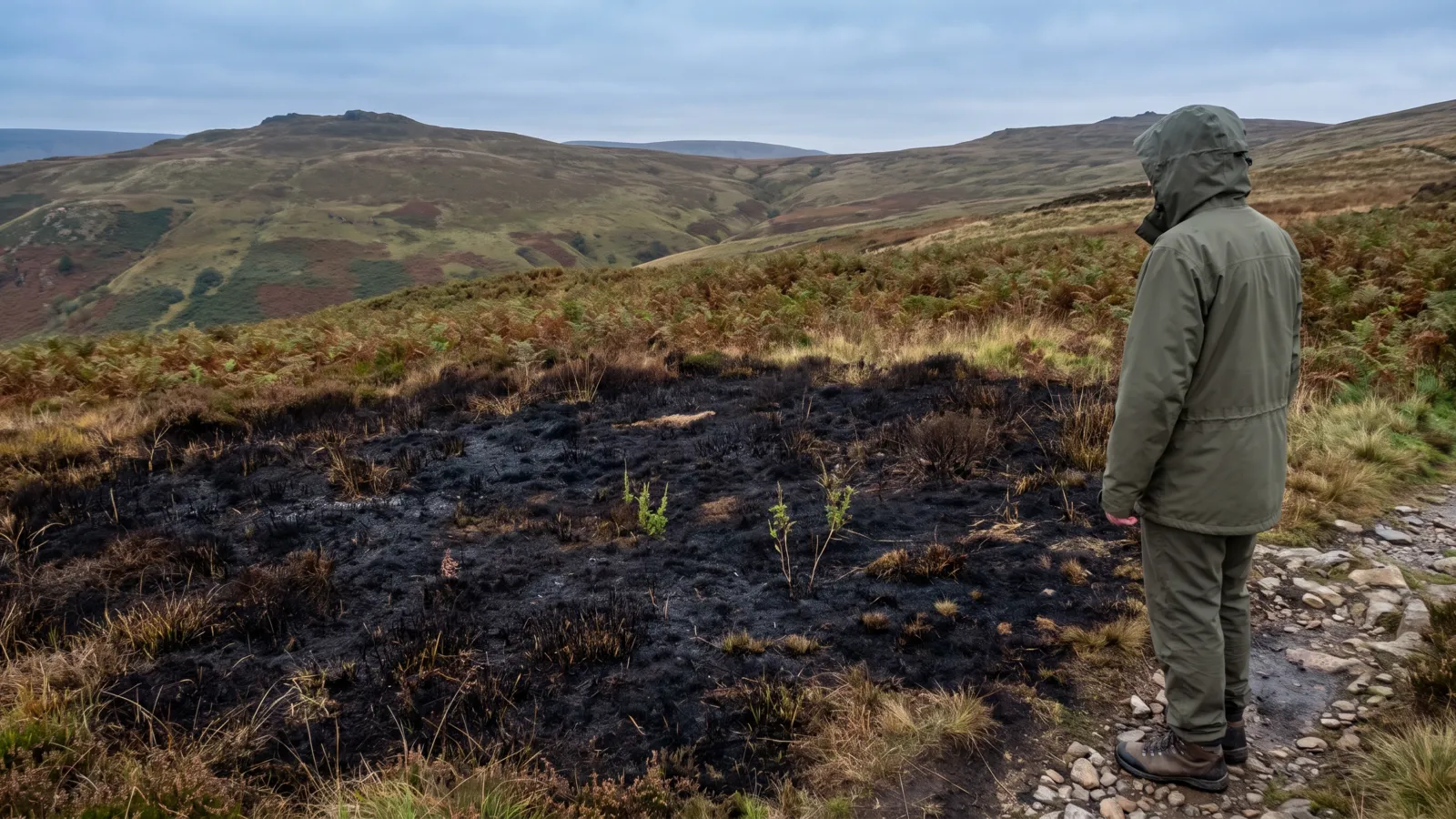
Wales holds its wildfire summit today
The First Minister of Wales, Rhun ap Iorwerth, is holding a multi-agency wildfire summit on 22 October. He promised it on 12 August, after attending a meeting of the UK government's emergency committee, COBR, saying he would "convene a multi-agency summit in Wales to strengthen wildfire prevention and resilience" and share the results with partners across the UK. The Prime Minister's own wildfire summit is expected in October too, according to MPs on the Environment, Food and Rural Affairs Committee.
Four major incidents were declared in Wales in July and August, according to Senedd Research: on Conwy Mountain, on Llanwonno Mountain in Rhondda Cynon Taf, at Llangynidr Reservoir near Ebbw Vale and at Rhandirmwyn in Carmarthenshire. South Wales Fire and Rescue Service had military help in August, and Welsh services had help from English ones on several large fires.
The Denbighshire Free Press reported on 22 October that South Wales Fire and Rescue Service saw a 227% increase in calls and responded to more than 1,000 grassfire incidents, and that at one point 14 incidents were running at once in Wales. "This was unprecedented for us," its Assistant Chief Fire Officer, Matthew Jones, said in the paper's report. It reported that aerial support, climate change, technology, funding and prevention are expected to be discussed, and that no fire and rescue service in Wales has its own aircraft; Natural Resources Wales has contracts with helicopter operators.
Second-highest year on record? It depends which satellite record
The figure in the Denbighshire Free Press report is 28,299 hectares of UK land burnt in 2026, from the Global Wildfire Information System (GWIS), described as the second-highest year on record. Senedd Research gave the same figure in September for the year to 1 September, and GWIS still showed 28,299 hectares when we read it on 22 October.
It holds on GWIS, whose UK figures start in 2012: 2026 is second, behind 2025's 43,629 hectares, and just 199 hectares ahead of 2019's 28,100. That is about 1.9 times the 2012–2025 average of 14,861 hectares.
The EU's other record, the European Forest Fire Information System (EFFIS), which our wildfire tracker reads, has UK figures back to 2001 and ranks 2026 third. It puts this year at 25,084 hectares from 79 mapped fires, behind 2025 (47,879) and 2019 (28,754), and about 2.8 times its 2006–2025 average of 8,838 hectares. On that record 2026 is about half of 2025.
The two systems map fires from satellite images in different ways, so their totals differ, and both count only fires large enough to map, not every fire. Senedd Research said in September that Wales-only wildfire statistics for 2026 were not yet available.
More fires than 2025, though not the most in England's longer record
Counted by fires attended rather than land burnt, this year is a record in the fire chiefs' figures. Fire and rescue services in England and Wales have responded to over 1,300 wildfires so far this year, the Environment, Food and Rural Affairs Committee said on 21 October, more than in the whole of 2025, itself a record-breaking year. The fire chiefs' published series starts in 2020.
The government's own series for England, which starts in 2010, still has 2022 highest: 1,592 wildfires that year, against 1,354 from January to August 2026, a provisional figure (Ministry of Housing, Communities and Local Government, 8 October). We looked at both counts in more detail in our check of the wildfire record claims.
Home Alerts members
The full picture, for your home
Each week, what's happening across Britain set against your own address: your water company, your power network, fuel for your car and the gaps in your kit. Free for your own home. Opening in October; the first 100 on the list get in first.
Join the list →Britain's figures from our live trackers, 22 October.
What MPs want done
The committee's report, published on 21 October, says summer 2026 "exposed severe weaknesses" in the UK's preparedness and response, to be tackled in time for next spring. Its chair, Alistair Carmichael, said: "Two consecutive, record-breaking years of wildfires should be ringing alarm bells in Westminster."
The UK has no dedicated firefighting aircraft, the report says, though some fire services have contracts with private providers, and a limited number of military water-bombing aircraft are permanently based in Cyprus. The committee wants a detailed plan for aerial firefighting by January 2027.
For the public, it recommends a clear way to bring in future nationwide restrictions on the sale of disposable barbecues in high-risk periods, a public awareness campaign by spring 2027, and wildfire risk given routinely in weather forecasts and apps by the start of next year's season. It also asks for a cross-government Wildfire Action Plan by the end of 2026, a National Wildfire Strategy for England and clear rules on water companies' duties to fire services in major incidents.
Responding to the report, a government spokesperson told PA that improving wildfire preparedness is a major priority and that "this week we are holding a summit with Government ministers, fire and rescue leaders, land managers and other partners".
Where things stand now
The fire weather has eased. Our wildfire tracker, which reads the EU's Copernicus fire weather index at one point in each region, showed low danger in all 14 UK regions on 21 October. For England and Wales the official measure is the Met Office Fire Severity Index.
Smoke on Welsh hills this winter may be planned. The season for controlled burning of heather, grass, bracken and gorse opened on 1 October and runs to 15 March, or 31 March in the uplands, and land managers are asked to tell their fire service before they burn (North Wales Fire and Rescue Service, 1 October).
Spring is usually the riskiest time of year. UK wildfires are most likely then, when there is plenty of dead, dry vegetation after the winter, with a second peak in summer (Department for Transport and Met Office, October 2025).
What it means for your household
Most UK wildfires are started by people, so the advice from GOV.UK Prepare and the National Fire Chiefs Council is about small things. Do not light fires in the countryside or other open spaces. Use barbecues only where they are allowed and never leave one unattended. Put cigarettes out properly, take rubbish home and never release sky lanterns.
If you see a wildfire, move to a safe place and call 999 straight away rather than assuming someone else has. Do not try to put it out, and do not travel to look. If you are told to leave or to stay indoors, do so. If smoke reaches your street, keep windows and doors shut and check the air quality tracker.
If you live at the edge of open land, the preparation that pays is the ordinary kind: a written household emergency plan, medicines and documents easy to grab if you are asked to leave, and emergency alerts left switched on.
Common questions
When is the Welsh wildfire summit?
On 22 October 2026. The First Minister of Wales, Rhun ap Iorwerth, promised a multi-agency summit on wildfire prevention and resilience on 12 August. Four major incidents were declared in Wales in July and August. The Prime Minister's wildfire summit is also expected in October.
Was 2026 the worst year for UK wildfires?
Not for land burnt. On the Global Wildfire Information System, which starts in 2012, 2026 is second with 28,299 hectares, behind 2025's 43,629. On the European Forest Fire Information System, with UK figures back to 2001, it is third with 25,084 hectares, behind 2025 and 2019. By the number of fires attended, England and Wales passed the whole of 2025 by mid-August.
Does the UK have firefighting planes?
Not of its own. The Environment, Food and Rural Affairs Committee says the UK has no dedicated firefighting aircraft, though some fire services contract private providers, and a limited number of military water-bombing aircraft are based in Cyprus. The committee wants a plan for aerial firefighting by January 2027.
Is there a wildfire risk now?
Low. Our wildfire tracker showed low fire danger in all 14 UK regions on 21 October. In Wales the controlled-burning season runs from 1 October to 15 March, so some smoke on the hills may be planned. UK wildfires are most likely in spring.
What should I do if I see a wildfire?
Move to a safe place and call 999 straight away. Do not try to put it out and do not travel to look. If you are told to leave or to stay indoors, do so, and if smoke reaches your home keep windows and doors shut.
Sources (15)
- Environment, Food and Rural Affairs Committee — Wildfires: MPs call for new aircraft, disposable barbecue bans and Aussie-style public awareness campaigns21 October 2026: over 1,300 wildfires in England and Wales; no dedicated UK firefighting aircraft; Cyprus-based water-bombers; recommendations; Welsh summit on 22 October, Prime Minister's expected in October
- Welsh Government — Statement from the First Minister of Wales following COBR (12 August 2026)
- Senedd Research — Wildfires in summer 2026 in brief10 September 2026: four major incidents; GWIS 28,299 hectares to 1 September; no Wales-only figures yet
- Denbighshire Free Press — Unprecedented summer of wildfires sparks Welsh fire resilience summit (22 October 2026)
- PA via Malvern Gazette — MPs urge new planes and barbecue bans to tackle UK wildfires21 October 2026: government spokesperson's response
- Global Wildfire Information System (GWIS) — country estimates, United Kingdomburnt area and fires by year from 2012; read 22 October 2026
- Copernicus EFFIS — seasonal fire statistics, United Kingdomburnt area and mapped fires, UK figures from 2001; 2006–2025 average 8,838 hectares; read 22 October 2026
- PreparedBritain — UK wildfires trackerCopernicus fire weather index and EFFIS season statistics, checked 21 October 2026
- Ministry of Housing, Communities and Local Government — Provisional wildfire statistics for England, 2010 to 2026 (8 October 2026)
- National Fire Chiefs Council — Wildfire Update: Continued Vigilance Needed (17 August 2026)
- National Fire Chiefs Council — New wildfire record sparks urgent call for fire service investment5 September 2025: annual wildfire counts for England and Wales from 2020
- North Wales Fire and Rescue Service — Landowners urged to #BurnToProtect (1 October 2026)
- Department for Transport and Met Office — Transport hazard summary: Wildfire (October 2025)
- GOV.UK Prepare — Wildfires
- National Fire Chiefs Council — Wildfire prevention advice
PreparedBritain is independent and not affiliated with HM Government.
See our checks first on Google. Add PreparedBritain as a preferred source and Google will show our stories to you more often in Top Stories.

The Emergency Kit Checklist
The GOV.UK Prepare essentials on one printable page — tick them off as you go and keep it with the kit. Free, no catch.
Download it straight away. We'll also send the occasional briefing when something genuinely matters — severe weather, live incidents, real price drops. Nothing else.
Latest from our live data
All stories →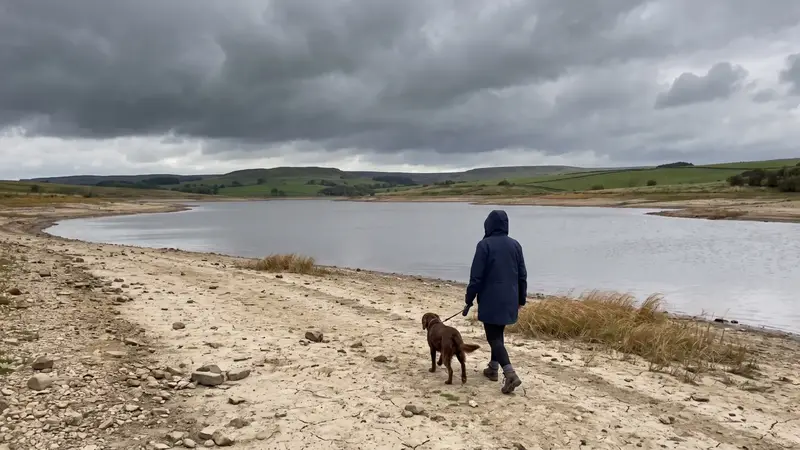 News · 22 OctStorm Austen won't end the drought: England's reservoirs are 54% full and need months of rain
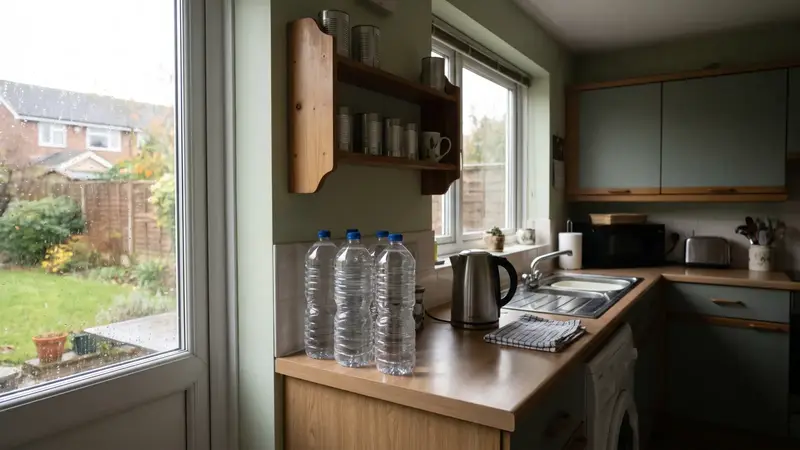 News · 21 OctOnly 4 in 100 adults have three days of bottled water at home, the government's survey shows
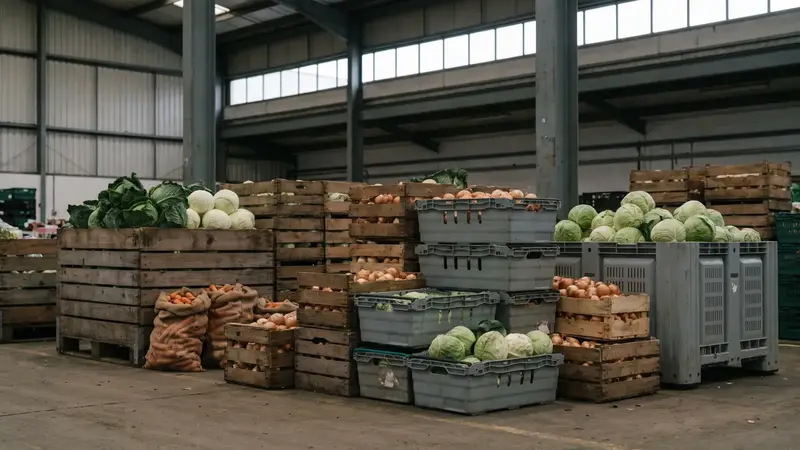 News · 21 OctUK inflation picks up more than expected to 3.5%: food held at 1.3%, wholesale veg up a third
Keep reading
All planning & the national picture guides →Storm Austen won't end the drought: England's reservoirs are 54% full and need months of rain
Storm Austen brings wind warnings and 20-30mm of rain in many places on Friday. It will help soils and rivers, but…
Only 4 in 100 adults have three days of bottled water at home, the government's survey shows
The government's own 2026 preparedness survey of 10,791 UK adults asked people to count the litres of bottled…
Renogy vs Jackery vs EcoFlow vs BLUETTI solar panels: price per watt, and the plug catch
Nine portable solar panels compared on price per watt, with what a watt is actually worth in a British December…