Best de-icer sprays, scrapers and mitts for UK winter mornings (2026)
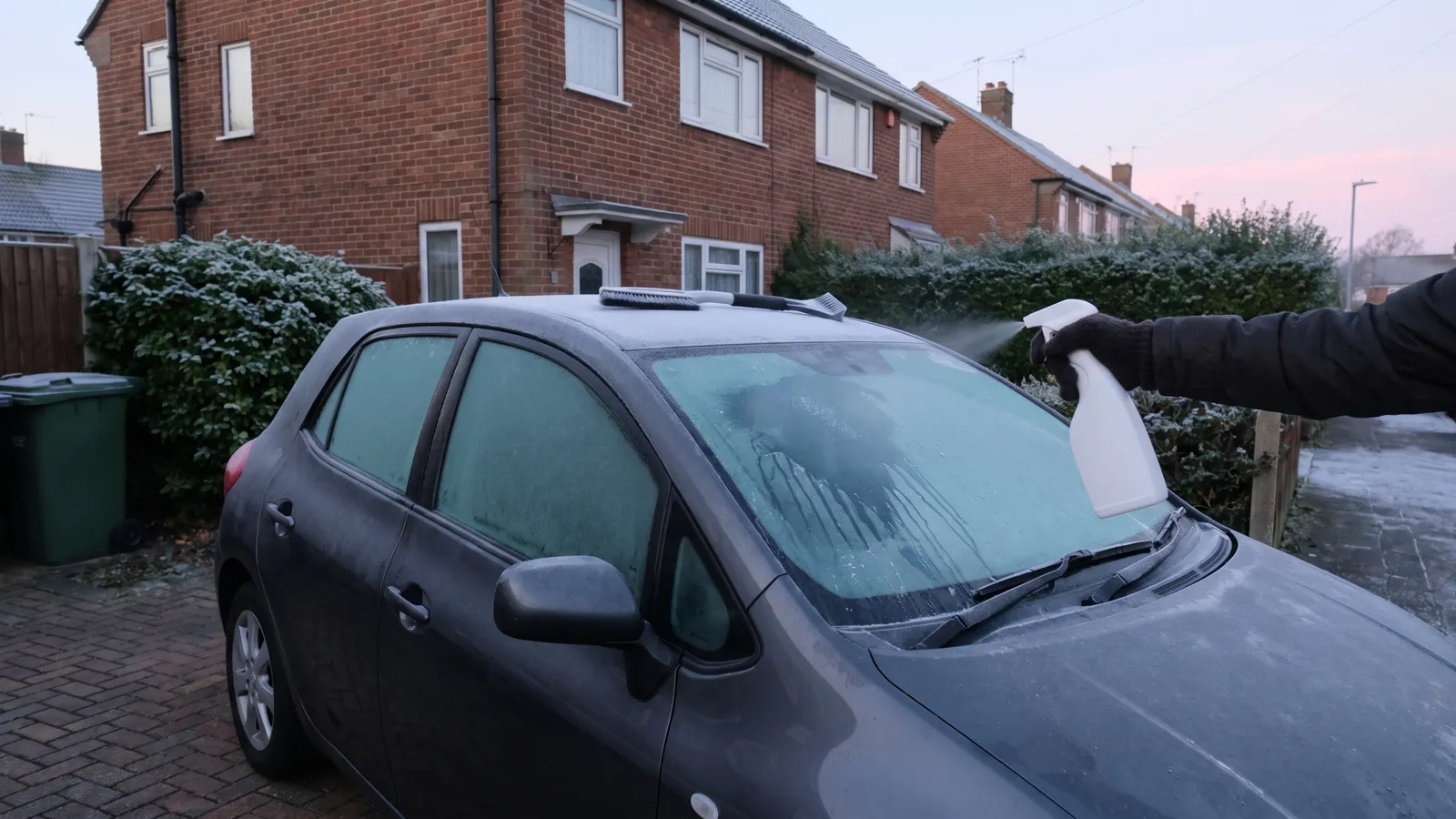
A frosted car is one of the few winter problems almost every UK household meets, and the Highway Code is clear about it: before you set off you must be able to see, so all windows, mirrors, lights and the roof need clearing, not a porthole in the windscreen. This page compares four de-icer sprays widely sold in the UK on the one thing that separates them, the makers' own rated temperature limits, and on whether you would rather carry an aerosol or a trigger bottle. Every figure is credited to the maker or a UK retailer's listing; we have not sprayed, timed or compared any of them ourselves.
By Tom Calder · Updated 21 October 2026 · 4 products, all price-tracked
Our picks by type
 Photo: Amazon
Prestone aerosol
Drivers who want one can in the car for cold, icy mornings and prefer a spray to scraping.
as of 21 Oct 2026, 10:37 BST · Details
Product prices and availability are accurate as of the date/time indicated and are subject to change. Any price and availability information displayed on Amazon.co.uk at the time of purchase will apply to the purchase of this product. Photo: Amazon
Prestone trigger
Households who would rather keep a trigger bottle than a pressurised can in the car.
as of 21 Oct 2026, 10:37 BST · Details
Product prices and availability are accurate as of the date/time indicated and are subject to change. Any price and availability information displayed on Amazon.co.uk at the time of purchase will apply to the purchase of this product. Photo: Amazon
Autoglym DI500
Drivers who want the lowest rated temperature limit among the sprays on this page.
as of 21 Oct 2026, 10:37 BST · Details
Product prices and availability are accurate as of the date/time indicated and are subject to change. Any price and availability information displayed on Amazon.co.uk at the time of purchase will apply to the purchase of this product.All 4 compared
| De-icer | Type | Size | Works to (maker) | Good to know | Price |
|---|---|---|---|---|---|
Aerosol spray · 600 ml · Down to -40C (maker figure) · Shake well before use Drivers who want one can in the car for cold, icy mornings and prefer a spray to scraping. | Aerosol spray | 600 ml | Down to -40C (maker figure) | Shake well before use | £3.39 at Amazon as of 21 Oct 2026, 10:37 BST · DetailsProduct prices and availability are accurate as of the date/time indicated and are subject to change. Any price and availability information displayed on Amazon.co.uk at the time of purchase will apply to the purchase of this product.In stockCheck price → |
Our verdictOur verdictResearched Prestone's 600 ml aerosol carries a minimum application temperature of -40C on Toolstation's spec listing, the second-lowest rating in this group after Autoglym's -50C. The maker's directions are simply to shake the can hard before use, and the retailer lists it for car windows, windscreens and locks. It works chemically, so a scraper is still worth carrying for thick overnight ice. Best for Drivers who want one can in the car for cold, icy mornings and prefer a spray to scraping. Good
Worth knowing
Who shouldn't buy it: Don't buy it if you would rather avoid aerosol cans in the car, or if you already carry a trigger bottle you are happy with. | |||||
Trigger spray · 500 ml · Down to -40C (maker figure) · Score thick ice before spraying Households who would rather keep a trigger bottle than a pressurised can in the car. | Trigger spray | 500 ml | Down to -40C (maker figure) | Score thick ice before spraying | £3.70 at Amazon as of 21 Oct 2026, 10:37 BST · DetailsProduct prices and availability are accurate as of the date/time indicated and are subject to change. Any price and availability information displayed on Amazon.co.uk at the time of purchase will apply to the purchase of this product.In stockCheck price → |
Our verdictOur verdictResearched This is the trigger-bottle version of Prestone's rapid de-icer, listed by Toolstation with the same -40C minimum application temperature as the aerosol. Prestone's own directions are to score thicker ice first so the liquid can get underneath. There is no propellant, and at 500 ml it holds a little less than the 600 ml can. Best for Households who would rather keep a trigger bottle than a pressurised can in the car. Good
Worth knowing
Who shouldn't buy it: Don't buy it if you already own a de-icer you are happy with, or if you want a larger can that lasts more of the winter. | |||||
Ready-to-use spray · 500 ml · Down to -50C (maker figure) · Water-free, concentrated formula Drivers who want the lowest rated temperature limit among the sprays on this page. | Ready-to-use spray | 500 ml | Down to -50C (maker figure) | Water-free, concentrated formula | £7 at Amazon as of 21 Oct 2026, 10:37 BST · DetailsProduct prices and availability are accurate as of the date/time indicated and are subject to change. Any price and availability information displayed on Amazon.co.uk at the time of purchase will apply to the purchase of this product.In stockCheck price → |
Our verdictOur verdictResearched Autoglym calls DI500 a super-concentrated, water-free de-icer and says it stays effective down to -50C, the lowest figure in this group. The maker says it clears ice without the risk of refreezing and without harming paintwork, rubber, plastics or glass. Charlies' spec listing repeats the DI500 code, the 500 ml size and the -50C rating. Best for Drivers who want the lowest rated temperature limit among the sprays on this page. Good
Worth knowing
Who shouldn't buy it: Don't buy it if you want the largest volume for the money, or if a -20C rated can already covers your mornings. | |||||
 Aerosol spray · 600 ml · Down to -20C (maker figure) · Methanol-free, per Cromwell's listing Milder frosts where a moderately rated aerosol from a familiar brand is enough. | Aerosol spray | 600 ml | Down to -20C (maker figure) | Methanol-free, per Cromwell's listing | £5.89 at Amazon as of 21 Oct 2026, 10:37 BST · DetailsProduct prices and availability are accurate as of the date/time indicated and are subject to change. Any price and availability information displayed on Amazon.co.uk at the time of purchase will apply to the purchase of this product.In stockCheck price → |
Our verdictOur verdictResearched Holts' 600 ml DI6 aerosol is described as working down to -20C, clearing frost without smearing and being safe on paintwork, and Cromwell lists it as methanol-free. Holts says to shake the can well before spraying. Its rated limit is well short of the Prestone and Autoglym sprays here, so it suits milder mornings best. Best for Milder frosts where a moderately rated aerosol from a familiar brand is enough. Good
Worth knowing
Who shouldn't buy it: Don't buy it if your mornings regularly drop well below freezing, or if you prefer a trigger bottle to an aerosol. | |||||
ⓘ As an Amazon Associate, PreparedBritain earns from qualifying purchases. We may earn a commission when you buy, or a fee when you request a quote, through our links — it never affects what we recommend. Amazon prices come from Amazon's own product data and show the date and time they were retrieved. Prices at other retailers are checked by us, less often. Prices and stock can change at any time, so always check the retailer's price before you buy.
Before you buy
Start with what the law expects, because that sets how much clearing you have to do.
Highway Code rule 229 says that before you set off you must be able to see, so clear all snow and ice from every window, keep lights and number plates clean and legible, make sure mirrors are clear and windows fully demisted, and remove snow from the roof that could fall into the path of other road users. The MUST lines rest on vehicle construction, lighting and registration law, and a driver who sets off with a part-cleared windscreen can be stopped and fined. Our defrosting-your-car guide covers the detail.
The sprays on this page are separated mainly by the temperature their makers rate them to.
Autoglym gives its DI500 a -50C figure, Prestone's aerosol and trigger bottle are listed at -40C on Toolstation, and Holts' DI6 is listed to -20C. A UK hard frost sits a few degrees below zero, so every one is rated well beyond a typical morning; the lower figures matter more for thick ice, upland and rural areas, and cars left out in a cold snap. All are makers' figures, not independent tests, and Prestone says to score thick ice first so the liquid can get under it.
Choose the container to suit how you store it.
An aerosol sprays a fine, even mist and the two 600 ml cans here hold the most, but a pressurised can needs storing as its label says, away from heat (including a hot parked car) and out of children's reach, and some retailers age-check aerosols at the till. A trigger bottle has no propellant, so it suits a glovebox or hallway shelf, though Prestone's 500 ml bottle holds a little less than the can. Autoglym's DI500 is a water-free, ready-to-use spray the maker says will not refreeze. If your locks freeze, keep one indoors too.
A scraper is still the other half of the job, and no spray replaces it on thick overnight ice.
Look for a plastic blade with a straight, undamaged edge and a handle you can grip in gloves; a brush on the other end deals with snow on the roof and lights, and a scraper mitt keeps your hand dry and warm while you work. Avoid metal blades and anything gritty, which can scratch glass. Heated 12V scrapers plug into the car's socket and warm the blade; they need a free socket and, in many cars, the ignition on, so treat them as a convenience rather than essential kit.
Two habits stop a frosty morning becoming an expensive one.
Never pour hot or boiling water on frozen glass: the sudden temperature change can crack a windscreen, and the water can refreeze on the ground. And do not start the engine and walk away. Highway Code rule 123 says you must not leave a vehicle unattended with the engine running on a public road, and insurers commonly decline a theft claim when the keys were left in an unattended car. Start the car, stay with it while the heater and the de-icer work, and clear everything before you pull away.
We verify every product's specifications against at least two independent sources, re-check its UK price and stock on a schedule where we can track it automatically, and cross-check safety-relevant claims against official guidance. Every review is labelled Researched or Used and reviewed by us: where we've bought a product, or been sent it free, and used it ourselves, its review says which; where we haven't, our verdict is a considered spec-and-evidence comparison, not a hands-on test — and commissions never change a ranking either way. Read our full methodology →
Related kit comparisons
Guides that go with this
What the Highway Code and the regulations say about running the engine to defrost your car, idling fines, insu…
Highway Code rules 228–231 explained: clearing snow and ice legally, tyres, gentle-input technique, black ice,…
The correct connection order for jump leads and jump packs, the stop-start and EV caveats most guides skip, an…
How UK storm warnings work, what Arwen and Éowyn taught households, and the short pre-storm checklist that mat…
What the UKHSA Cold-Health Alert colours mean, who's most at risk in cold weather, and the practical, sourced …
Common questions
Is it illegal to drive with ice or snow on my windscreen or roof?
Highway Code rule 229 says you MUST be able to see, so all snow and ice must be cleared from all your windows before you set off, lights and number plates must be clean and legible, and you should clear your mirrors, demist thoroughly and remove snow from the roof that could fall into the path of other road users. Those MUST lines are backed by law, and police can stop and fine a driver peering through a small cleared patch.
Can I use hot or boiling water to defrost my car?
No. Glass does not cope well with a sudden change in temperature, and hot water poured on a frozen windscreen can crack it, especially if there is already a chip. The water also runs onto the ground and can refreeze where you are standing. Use a de-icer spray, a plastic scraper, the car's own heater and demisters, or a windscreen cover fitted the night before. Lukewarm water is sometimes suggested, but a chip you did not know about makes even that a gamble.
Can I leave my engine running to defrost the car while I go back inside?
Not on a public road: Highway Code rule 123 says you must not leave a vehicle unattended with the engine running, and councils can issue fixed penalties for idling. On a private driveway the law is different, but the theft risk is the same, and many motor insurers will not pay out for a car stolen with the keys in it and nobody there. Start the car, stay with it, and use the few minutes to clear the windows yourself.
Aerosol or trigger-bottle de-icer: which is better?
They do the same job. An aerosol gives a fine, even spray and the 600 ml cans here hold the most, but a pressurised can has to be stored as the label says, kept away from heat and out of children's reach, and some retailers age-check aerosols at the till. A trigger bottle has no propellant and suits a glovebox or hallway shelf, at the cost of slightly less volume. If you dislike aerosols, Prestone's trigger bottle is listed at the same -40C figure as its can.
What does the -20C, -40C or -50C rating on a de-icer mean?
It is the lowest temperature at which the maker says the product will still work on ice, and it is the maker's own claim rather than an independent test. Holts rates its DI6 to -20C, Prestone's aerosol and trigger bottle are listed at -40C, and Autoglym gives its DI500 a -50C figure. UK frosts are usually only a few degrees below zero, so any of them is rated well beyond a typical morning; the lower figures matter most for thick ice, exposed rural spots and cold snaps.
Will de-icer damage my paintwork, rubber seals or wipers?
The makers on this page say not: Autoglym states DI500 will not harm paintwork, rubber, plastics or glass, and Holts' DI6 listing says it keeps paintwork safe. Even so, aim at the glass, wipe drips off painted panels and do not use de-icer as a general spray round the car. Check your wipers are not frozen to the screen before switching them on, because forcing them can tear the blades or strain the motor, and lift them clear while you scrape.
