Garmin inReach Mini 2 review
By Tom Calder

A compact, well-proven satellite messenger with genuine two-way texting, not just a panic button. The trade-off versus a PLB is an ongoing subscription — worth it if you want to stay in touch, not just raise an alarm.
- Best for
- Hillwalkers, sailors and remote travellers who want two-way messaging home as well as an SOS button.
- Skip it if
- You only want emergency alerting with no ongoing running cost
as of 2 Nov 2026, 13:07 GMT · Details
Product prices and availability are accurate as of the date/time indicated and are subject to change. Any price and availability information displayed on Amazon.co.uk at the time of purchase will apply to the purchase of this product.We earn a commission if you buy through the retailer links on this page. It doesn't change our verdict. How we make money →
Researched, not used. We haven't used this product. This review is built from the maker's specifications, owner reports and our own sizing.
What we like
- Two-way text messaging via 100% global Iridium coverage, not just a one-way SOS alert
- Strong battery life — up to 14 days at default 10-minute tracking, up to 30 days in power-save mode
- Small and light (around 100g) with a built-in GPS tracker
Worth knowing
- Needs an active Garmin subscription on top of the purchase price — plans are tiered, so check Garmin's current UK pricing before buying
- Small monochrome screen and no keyboard make typing messages slow
ⓘ As an Amazon Associate, PreparedBritain earns from qualifying purchases. We may earn a commission when you buy, or a fee when you request a quote, through our links. When two products are close, commission can decide which one we pick. A clearly better product always wins. Amazon prices come from Amazon's own product data and show the date and time they were retrieved. Prices at other retailers are checked by us, less often. Prices and stock can change at any time, so always check the retailer's price before you buy.
Our review
The inReach Mini 2 is Garmin's 100 g satellite messenger: it sends and receives short texts and shares your track over the Iridium network, and its SOS button reaches Garmin's emergency response team, who reply. It needs an active Garmin subscription to do any of that, which is the main thing that separates it from a one-off beacon.
What it is
Garmin gives 100 g and 5.17 by 9.90 by 2.61 cm, so it clips to a rucksack strap without thought. It is rated IPX7, which Garmin's manual describes as withstanding accidental immersion in one metre of water for 30 minutes. A built-in 1,250 mAh lithium-ion battery charges over USB-C between 0 and 45°C and works from −20 to 60°C.
Messaging, tracking and SOS all use the Iridium satellites, and the manual is plain that the device needs a clear view of the sky. Bluetooth links it to a phone app for easier typing, and TracBack can guide you back along the route you came in on.
Battery life in practice
Garmin's figures depend on how often it sends a track point and what is overhead. At a ten-minute interval it quotes up to 14 days in open sky, but up to four days under moderate tree cover. At 30 minutes that becomes up to 30 days, or ten under trees. Switched off it holds charge for up to a year. Those spreads matter on a long walk in a wooded valley: plan on the lower numbers.
The SOS and the subscription
Press SOS and the message goes to the Garmin Response team, who contact the appropriate emergency services and can text you back, so you know the alert has landed and can describe the injury. That two-way exchange is what a 406 MHz beacon cannot give you.
None of it works without an active satellite subscription, which Garmin offers in several tiers that all include SOS. Check current UK plan terms on Garmin's site before buying, and test the device outdoors once it is activated, as the manual advises. The manual also notes that some countries restrict satellite communicators, so check before travelling abroad.
How it compares
The rescueME PLB1 is a 406 MHz beacon: no plan to pay, a seven-year battery, and an alert that goes to the national rescue system, but it cannot message and tells you nothing back. The ZOLEO also runs on Iridium and leans on your phone. Garmin's own inReach Messenger Plus adds photo and voice messages and quotes up to 600 hours at a ten-minute interval in its low-power mode. Everything is on the comparison.
Our verdict
Buy it if you walk, paddle or drive where there is no signal and you want to stay in touch, not only raise an alarm. Skip it if you want emergency cover with no running cost: a registered PLB raises the alarm for the purchase price alone. Charge it before each trip, and because it holds charge for up to a year switched off, a top-up every few months keeps a kit unit ready. Our household emergency plan guide covers who at home should know your route.
A researched review, built from the maker's specs, manual and UK listings; facts checked 2 Nov 2026. Sources: Garmin inReach Mini 2 owner's manual (PDF); Garmin inReach Mini 2 specifications (manual); Garmin inReach Mini 2 product specification sheet (PDF); Garmin inReach Messenger Plus owner's manual (PDF).
Who shouldn't buy this
You only want emergency alerting with no ongoing running cost — a registered 406 MHz PLB raises the alarm for a one-off purchase price with no subscription, though it can't send or receive routine messages.
Key specs
| Service type | Iridium satellite network (100% global coverage) |
| Subscription | Required |
| Battery life | Up to 14 days at default 10-minute tracking |
| SOS capability | Interactive two-way SOS via Iridium to Garmin |
This is a Researched review: we haven't used this product. We check every specification against at least two independent sources, re-check the UK price on a schedule where we can track it automatically, and say plainly who it isn't for. Commissions never change a rating.
If this isn’t the one
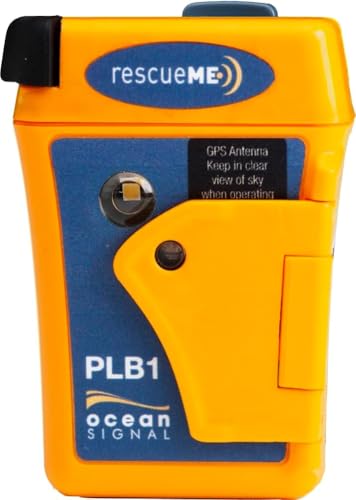
Best for Hillwalkers, sailors and remote travellers who want serious emergency-only cover with no ongoing subscription to remember.
as of 2 Nov 2026, 13:07 GMT · Details
Product prices and availability are accurate as of the date/time indicated and are subject to change. Any price and availability information displayed on Amazon.co.uk at the time of purchase will apply to the purchase of this product.
Best for Hillwalkers, sailors and remote travellers who want a genuine, subscription-free last-resort distress beacon.
as of 2 Nov 2026, 13:07 GMT · Details
Product prices and availability are accurate as of the date/time indicated and are subject to change. Any price and availability information displayed on Amazon.co.uk at the time of purchase will apply to the purchase of this product.
Best for Hillwalkers, sailors and remote travellers who want a proven one-time-buy distress beacon with no ongoing cost.
as of 2 Nov 2026, 13:07 GMT · Details
Product prices and availability are accurate as of the date/time indicated and are subject to change. Any price and availability information displayed on Amazon.co.uk at the time of purchase will apply to the purchase of this product.Questions
Does the Garmin inReach Mini 2 need a subscription?
Yes. Garmin's manual says an active satellite subscription is needed for messaging, tracking and SOS. All of Garmin's plan tiers include SOS; check current UK terms before you buy.
How long does the inReach Mini 2 battery last?
Garmin quotes up to 14 days at a ten-minute tracking interval in open sky, falling to up to four days under moderate tree cover, and up to 30 days at a 30-minute interval.
Is the inReach Mini 2 waterproof?
It is rated IPX7, which Garmin describes as surviving accidental immersion in one metre of water for 30 minutes. It is not a diving device.
Should I buy an inReach or a PLB?
A PLB has no plan to pay and alerts the national rescue system, but it is one-way. The inReach costs a subscription and gives two-way texting, including with the people handling your SOS.
Free alerts for your home
Home Alerts emails you when a power cut, a Met Office warning or a flood warning covers your postcode. Free for your own home. Sign up in a minute.
Start free →