The clocks go back on Sunday: what changes at home, and the £1,000 dog-coat fine that isn't
The clocks go back one hour at 2am on Sunday 25 October. Here is what to change at home, the driving rule that applies once it gets dark earlier, and a check of the headline linking a dog coat to £1,000 fines.
The clocks go back one hour at 2am on Sunday 25 October, to 1am GMT, so you get an extra hour in bed and darker evenings from Sunday. Phones set to update automatically change themselves; mechanical heating timers, oven clocks and many car clocks do not. No law says a dog must wear a hi-vis coat: the £1,000 in this week's headlines is the most a court can fine for breaking a council's local dog rules, such as not picking up. The rules that do bite in the dark are about car lights. And the government's fire safety advice is to test smoke alarms at least monthly, so Sunday is a good day to do it.
By Tom Calder · Updated 23 October 2026 · Sourced to GOV.UK, legislation.gov.uk, the Highway Code, Home Office fire safety guidance, the Met Office and the original report
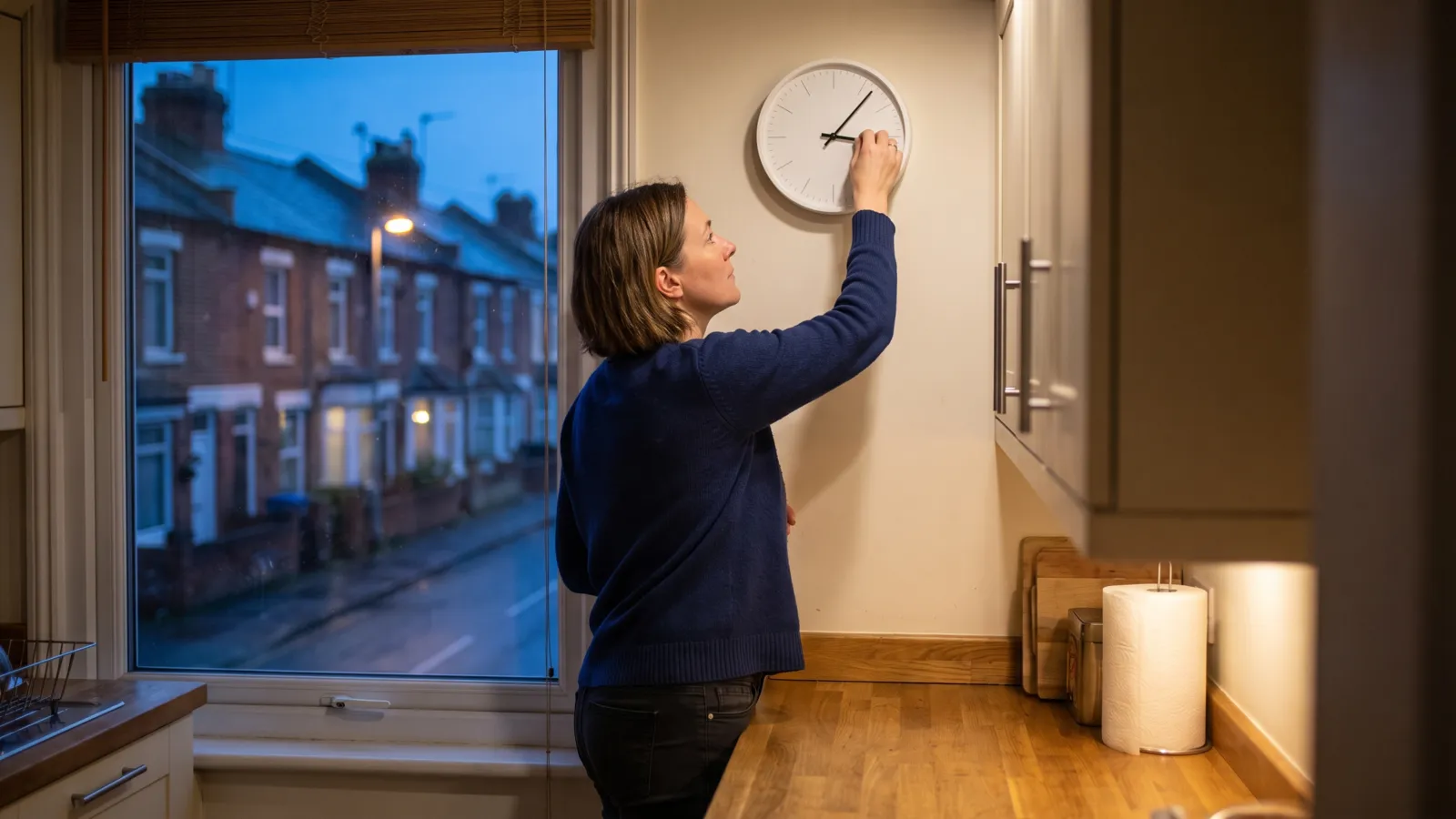
When the clocks change
The clocks go back one hour at 2am on the last Sunday in October, which this year is Sunday 25 October, according to GOV.UK. At 2am British Summer Time the time becomes 1am Greenwich Mean Time, so the hour from 1am to 2am happens twice. It applies across the UK.
It means an extra hour in bed on Sunday morning and lighter mornings for a while, but it gets dark an hour earlier by the clock from Sunday evening. Any time you see given for Sunday, including weather warnings, is in GMT.
The £1,000 dog-coat headline: what's true
This week a story ran under the headline “Aldi's Neon Dog Coat helps avoid £1,000 fines” (britbrief.co.uk, 19 October; the headline also gives the coat's price). The coat is a reflective dog coat pitched at darker evening walks after the clocks go back.
No UK law requires a dog to wear a hi-vis or reflective coat, and the article itself says as much. Wearing one does not protect you from any fine, and no national law fines you for not using one.
The £1,000 comes from a different rule. In England and Wales, councils can make Public Spaces Protection Orders that set local dog rules, such as picking up after your dog or keeping it on a lead in a park. Under the Anti-social Behaviour, Crime and Policing Act 2014, breaking one is an offence with a maximum fine in court of level 3 on the standard scale, which is £1,000. An on-the-spot fixed penalty is capped at £100 in that Act.
The Crime and Policing Act 2026 will raise that on-the-spot ceiling to £500 once the change comes into force, the Home Office says; legislation.gov.uk still shows £100. Its factsheet, updated on 30 September, gives no start date and says the measures will be brought in “as soon as practicable”, and each council sets its own amount. None of these fines have anything to do with the clocks or with what a dog wears.
The rule that really changes with the dark: car lights
For drivers, the darker evenings bring the lighting rules into play earlier in the day. In Great Britain, Highway Code rule 113 says you must have your sidelights and rear number-plate lights on between sunset and sunrise, and you must use headlights at night on roads without lit street lights, and whenever visibility is seriously reduced. Night, for this rule, runs from half an hour after sunset to half an hour before sunrise.
Rule 115 adds that you should use dipped headlights at night in built-up areas and in dull daytime weather, so that you can be seen. If you walk, cycle or walk a dog on unlit roads after work, something light or reflective helps drivers see you sooner, which is the sensible part of the coat story.
Home Alerts members
The full picture, for your home
Each week, what's happening across Britain set against your own address: your water company, your power network, fuel for your car and the gaps in your kit. Free for your own home. Opening in October; the first 100 on the list get in first.
Join the list →Britain's figures from our live trackers, 23 October.
What to change at home
Phones, tablets, computers and smart thermostats that are set to update the time automatically will change themselves overnight. Anything with its own clock will not: mechanical heating and hot water timers, oven and microwave clocks, many car clocks, and some bedside alarm clocks.
The one that matters most is the heating. A timer left on summer time will run an hour early by the new clock, so the heating comes on at 5am instead of 6am, for example. If you're not sure how your programmer works, the manual or the manufacturer's website will show you.
Test your smoke alarms on Sunday
The clock change is a handy reminder to test smoke alarms. The government's fire safety guidance says to test your smoke alarms at least monthly and to fit at least one on every level of your home.
It also says a ten-year alarm should be replaced as a whole unit every ten years, and an alarm with a one-year battery needs a new battery every year. If an alarm doesn't sound when you press the test button, replace the battery (or, for a sealed ten-year alarm, the whole alarm). Our guide to what to do in a house fire covers escape plans, and if you have a gas boiler or fire, read the signs of carbon monoxide poisoning.
Storm Boelo runs through the change
The clock change falls in the middle of the Met Office's weekend wind warnings for Storm Boelo. The yellow warning for Scotland and parts of northern England runs from 6pm on Saturday to 9pm on Sunday, and the one for Northern Ireland from 6pm on Saturday to 3pm on Sunday; the Sunday times are GMT.
If you are in the warning areas, it's worth checking your torches and charging power banks on Saturday, while it is still light. Our power cut preparation guide has the full list.
Common questions
When do the clocks go back in 2026?
At 2am on Sunday 25 October 2026. The time goes back to 1am GMT, so you get an extra hour. They go forward again on the last Sunday in March.
Can you be fined if your dog doesn't wear a hi-vis coat?
No. No UK law requires a dog to wear a hi-vis or reflective coat. The £1,000 figure in the headlines is the maximum court fine in England and Wales for breaking a council's Public Spaces Protection Order, such as not picking up after your dog.
What is the fine for breaking a dog Public Spaces Protection Order?
Under the 2014 Act, a court can fine up to £1,000 (level 3), and an on-the-spot fixed penalty is capped at £100. The Crime and Policing Act 2026 will raise that cap to £500 once in force; the Home Office has not given a start date. Councils set their own amount.
Do I need to change my phone and heating clocks?
Phones and devices set to update the time automatically change themselves. Mechanical heating timers, oven clocks, many car clocks and some alarm clocks need changing by hand.
How often should I test my smoke alarm?
The government's fire safety guidance says at least monthly, with at least one alarm on every level of your home. The clock change is a good reminder.
Sources (9)
- GOV.UK — When do the clocks change?2026: back on 25 October, 2am on the last Sunday in October
- britbrief.co.uk — Aldi's £6.99 Neon Dog Coat helps avoid £1,000 fines (19 October 2026)
- legislation.gov.uk — Anti-social Behaviour, Crime and Policing Act 2014, section 67offence of failing to comply with a PSPO; level 3 fine
- legislation.gov.uk — Anti-social Behaviour, Crime and Policing Act 2014, section 68fixed penalty must not be more than £100
- legislation.gov.uk — Sentencing Act 2020, section 122 (standard scale: level 3 is £1,000)
- Home Office — Crime and Policing Act 2026: anti-social behaviour factsheetPSPO fixed penalty ceiling £100 to £500; updated 30 September 2026
- GOV.UK — The Highway Code, rules 113 and 115 (lighting requirements)
- Home Office — Fire safety in the homesmoke alarms: test at least monthly, one on every level
- Met Office — UK weather warnings feedStorm Boelo yellow wind warnings, read 23 October 2026
PreparedBritain is independent and not affiliated with HM Government.
See our checks first on Google. Add PreparedBritain as a preferred source and Google will show our stories to you more often in Top Stories.

The Emergency Kit Checklist
The GOV.UK Prepare essentials on one printable page — tick them off as you go and keep it with the kit. Free, no catch.
Download it straight away. We'll also send the occasional briefing when something genuinely matters — severe weather, live incidents, real price drops. Nothing else.
Latest from our live data
All stories →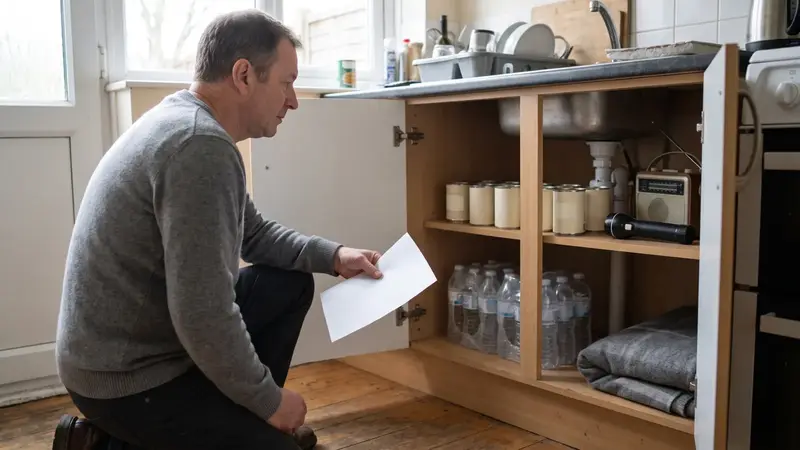 News · 22 OctBe Ready: the government's new emergency checklist asks for three days of supplies. What's new
 News · 22 OctProduct safety notices are up 27% on a year ago. A quarter name Amazon as the marketplace
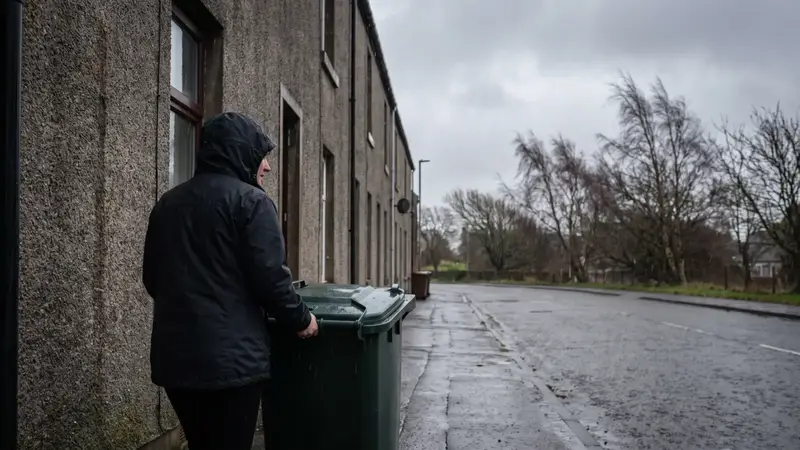 News · 22 OctSecond storm to hit UK this weekend: Storm Boelo named, gusts up to 80mph on northern coasts
Keep reading
All planning & the national picture guides →Be Ready: the government's new emergency checklist asks for three days of supplies. What's new
The government has launched Be Ready, a three-year campaign asking households to be ready for three days of…
‘Unprecedented’ summer of wildfires sparks Welsh fire resilience summit: what satellites show
Wales' First Minister holds a wildfire summit on 22 October after a summer that saw four major incidents declared in…
Storm Austen won't end the drought: England's reservoirs are 54% full and need months of rain
Storm Austen brings wind warnings and 20-30mm of rain in many places on Friday. It will help soils and rivers, but…