How to drive through flood water — and when you must not
How to drive through flood water safely if you have no choice — the real depth limits (30cm of moving water can float a car), the technique, and what the law says.
By Tom Calder · Updated 26 August 2026 · Sourced to the Highway Code, the Environment Agency, the Met Office, the NFCC and UK fire and rescue services
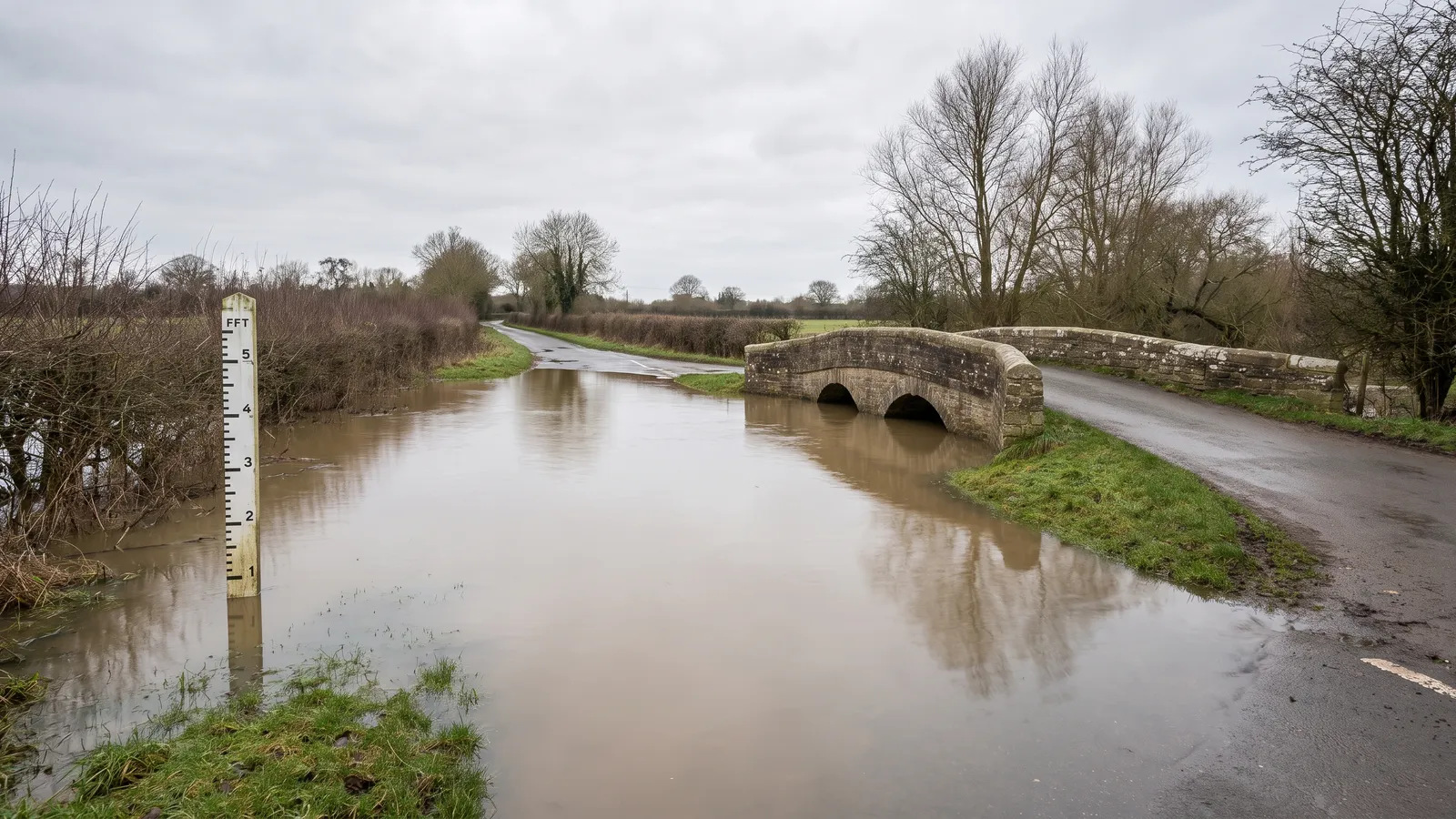
The bottom line: turn around, don't drown
Driving through flood water is the single most common cause of death during flooding, according to the National Fire Chiefs Council and the Met Office. The advice from both is blunt and identical: if you meet a flooded road, turn around and find another route. The phrase the emergency services use — 'turn around, don't drown' — is meant literally, and no ordinary journey is worth the risk.
This guide explains why even shallow water is dangerous, the depth thresholds that actually matter, what the Highway Code and the law say, and what to do if you are caught out. But the headline never changes: the safe choice is not to enter the water at all. Everything below is for judging risk and avoiding it — not for finding a 'safe' way through.
How deep is too deep — the real thresholds
There is no depth of moving water that is reliably safe to drive through, but the figures are worth knowing. The Environment Agency's advice is not to enter water that is moving or more than about 10cm (four inches) deep; beyond that, fire and rescue services warn, water is likely to stall your engine and leave you stranded. Just 30cm (one foot) of moving water is enough to move a car, and the Met Office states plainly that 'just 12 inches (30cm) of moving water can float your car'. Around 60cm (two feet) is enough to float most vehicles away — including large 4x4s, which people wrongly assume are immune.
Those figures are for water that is moving. Standing water is not automatically safe either: it hides how deep it is and what the surface underneath is doing. If you cannot see the road markings, or cannot judge the depth against a kerb or a known landmark, treat it as too deep. Knowing your own area's flood risk before wet weather arrives makes these decisions far easier to make calmly.
Why moving water is the real danger
A car is more buoyant than it looks. Modern vehicles are well sealed, so they trap air and begin to float in surprisingly little water. Once floating, even a slow current can push a car weighing more than a tonne sideways and carry it into deeper water. That is why moving water is far more dangerous than the same depth standing still — it is the current, not just the depth, that does the damage.
Flood water also hides what it covers. Underneath may be a collapsed road surface, an open manhole where the cover has floated off, debris, or a ford that is far deeper than usual. And you do not need deep water to be stranded: water drawn into a car's air intake can stall the engine and cause serious, expensive damage — leaving you stationary in water that may still be rising.
What the Highway Code and the law say
The Highway Code addresses these conditions in two places. Rule 227 covers wet weather generally: stopping distances are 'at least double' those on dry roads, and if the steering becomes unresponsive it means water is stopping the tyres gripping — you should ease off the accelerator and slow down gradually rather than brake hard. Rule 121 deals with the aftermath: 'If you have driven through deep water your brakes may be less effective', so test them at the first safe opportunity and dry them with gentle, light pressure while driving slowly.
On the law itself: most flood-related guidance is advisory rather than a named offence, but that does not make driving through flood water consequence-free. The Highway Code can be used in evidence in court, and driving without reasonable consideration for others — such as creating a bow wave that swamps pedestrians or other vehicles — can be prosecuted as careless or inconsiderate driving under the Road Traffic Act 1988. Ignoring a 'road closed' sign or barrier can be an offence in its own right, and a driver who gets stuck may also divert emergency crews from genuine rescues.
If your car stalls or the water is rising
If your engine cuts out in flood water, do not try to restart it — drawing more water into the engine can turn a repairable fault into a write-off. Assess quickly. If the water is shallow, still and not rising, and it is safe to do so, get yourself out and move to higher ground rather than staying with the car. If the water is deep, fast-flowing or rising, or the car begins to move, call 999, ask for the fire service, and prioritise getting yourself to safety over saving the vehicle.
A car being swept along is the exact situation the 'don't drown' warning exists for — do not sit inside a floating vehicle hoping it will settle. A basic car emergency kit kept in the boot through the wetter months makes a bad moment more survivable: a torch, a hi-vis, a phone power bank and a way to signal for help all earn their space.
Check the warnings before you set off
Most flood-driving emergencies are avoidable at the planning stage. Before travelling in wet or stormy weather, check the Met Office forecast and warnings, and check the Environment Agency's flood warnings for your whole route — not just your start and end points. A road can be clear where you are and impassable ten miles on. The Environment Agency's own message is to check the flood risk for your entire route before you travel; the Met Office's is simply to 'check the weather forecast and plan ahead'.
If warnings are in force, delay non-essential journeys or plan a route that avoids fords, low-lying roads and known flood spots. Allow extra time, tell someone your route, and keep a car emergency kit in the boot for the times you are caught out despite planning. Signing up for free flood warnings for your area means you are told before water reaches the roads you use.
Common questions
How many centimetres of water is safe to drive through?
There is no depth of moving water that is reliably safe. As a guide, the Environment Agency says not to enter water that is moving or more than about 10cm deep; UK fire services warn that 30cm of moving water can move a car, and the Met Office says 30cm (one foot) can float it. If the water is moving, or you cannot see the road surface or judge the depth, don't drive into it — turn around and find another route.
Is it illegal to drive through flood water in the UK?
There is no single offence called 'driving through flood water', and the Highway Code's flood guidance is advisory. But it isn't consequence-free: creating a bow wave that swamps pedestrians or other cars can be prosecuted as careless or inconsiderate driving under the Road Traffic Act 1988, ignoring a 'road closed' sign can be an offence, and the Highway Code can be used as evidence in court.
Can 30cm of water really float a car?
Yes. The Met Office states that just 12 inches (30cm) of moving water can float your car. Modern cars are well sealed, so they trap air and become buoyant in less water than people expect; once floating, even a modest current can carry the vehicle into deeper water.
What should I do if my car stalls in flood water?
Do not try to restart the engine — that can draw in more water and cause serious damage. If the water is shallow, still and not rising and it's safe, get out and move to higher ground. If it's deep, fast-flowing or rising, or the car starts to move, call 999, ask for the fire service, and focus on getting yourself to safety rather than saving the car.
Is standing water safer than flowing water to drive through?
Neither is safe, but flowing water is far more dangerous because the current adds force that can push and float a vehicle. Standing water is still a hazard: it hides the depth and what's underneath — a collapsed road, an open manhole or a deep ford — and water drawn into the engine can stall the car. If you're unsure, don't enter it.
How do I check for flooding before I travel?
Check the Met Office forecast and weather warnings, and use the Environment Agency's 'check for flooding' service to see flood warnings and river levels for your whole route, not just the start and end. You can sign up for free flood warnings for your area so you're told before water reaches the roads you use, and plan an alternative route that avoids fords and low-lying roads.
Sources: The Highway Code — driving in adverse weather conditions (Rule 227) · The Highway Code — general rules, techniques and advice (Rule 121, brakes affected by water) · GOV.UK / Environment Agency — Drivers warned not to risk driving through floodwater · Met Office — Driving in severe weather · National Fire Chiefs Council — Flooding advice (driving through flood water is the number one cause of death; turn around) · North Yorkshire Fire & Rescue Service — Floodwater (10cm stalls the engine, 30cm moves a car, 60cm floats it) · Environment Agency — Check for flooding (flood warnings and river levels). PreparedBritain is independent and not affiliated with HM Government.
The Emergency Kit Checklist
The GOV.UK Prepare essentials on one printable page — tick them off as you go and keep it with the kit. Free, no catch.
Download it straight away. We'll also send the occasional briefing when something genuinely matters — severe weather, live incidents, real price drops. Nothing else.
Keep reading
All weather, storms & flooding guides →How to stay warm without turning the heating on
How to stay warm at home without turning the heating on — warm the person, then the zone, then the room, with the…
Sandbags and flood barriers: where to get them, how to use them, and what works better
Where to get sandbags in the UK, how to fill and stack them correctly, and why the Environment Agency says flood…
Are portable air conditioners worth it in a UK home?
A calm, honest look at portable air con for UK homes: when a fan and night-purge is enough, the BTU sizing rule, and…