Are people being told to isolate for 48 hours? What UKHSA says, as flu positivity hits 11.4%
The 48 hours is UKHSA's usual norovirus advice: stay off work, school or nursery until 48 hours after diarrhoea and vomiting stop. For flu the advice is to try to stay at home while you have a high temperature or feel unwell.
Not for flu or COVID, and not in those words. The 48 hours comes from UKHSA's advice on norovirus, the winter vomiting bug: if you have diarrhoea and vomiting, don't go back to work, school or nursery until 48 hours after your symptoms have stopped. The word "isolate" isn't used. For flu and other respiratory infections, GOV.UK and the NHS advise trying to stay at home while you have a high temperature or feel unwell. They set no fixed number of hours. UKHSA's bulletin of 19 November says norovirus is 5.4% above its five-season average and still within expected levels; we found no 18% rise in it. Flu is rising. In England, 11.4% of flu tests were positive in the week to 15 November, up from 8.3% the week before. That is the first reading at 10% or more this autumn, close to the 11.07% for the same week last year. UKHSA still describes flu as circulating at low levels.
By Tom Calder · Updated 20 November 2026 · Sourced to UKHSA's weekly winter virus surveillance bulletin of 19 November 2026, the UKHSA data dashboard, GOV.UK's guidance for people with symptoms of a respiratory infection and the NHS pages on flu and norovirus, all read on 20 November 2026
Are people being told to isolate for 48 hours?
The headline being shared reads: "People told to isolate for 48 hours as UKHSA says virus cases up 18pc". We read the UK Health Security Agency's weekly winter virus bulletin, published on 19 November, and the official guidance it points to. The 48 hours is in that bulletin, but it is about norovirus, the stomach bug, not flu or COVID-19, and it doesn't use the word "isolate".
Amy Douglas, Lead Epidemiologist at UKHSA, said: "If you have diarrhoea and vomiting, don't return to work, school or nursery until 48 hours after your symptoms have stopped". She added that people shouldn't prepare food for others in that time. UKHSA gave the same advice, in the same words, in its previous week's bulletin. The NHS norovirus page puts it as two days: "do not go to school, nursery or work until you have not been sick or had diarrhoea for 2 days".
What the 19 November bulletin says about norovirus
UKHSA says: "Norovirus activity has increased in recent weeks but remains within expected levels." Laboratory reports from 2 to 15 November in England were 5.4% higher than the five-season average for the same two weeks. In the previous week's bulletin, covering 26 October to 8 November, they were 8.7% lower than average. We found no 18% rise in the bulletin, and we couldn't confirm where the headline's figure comes from.
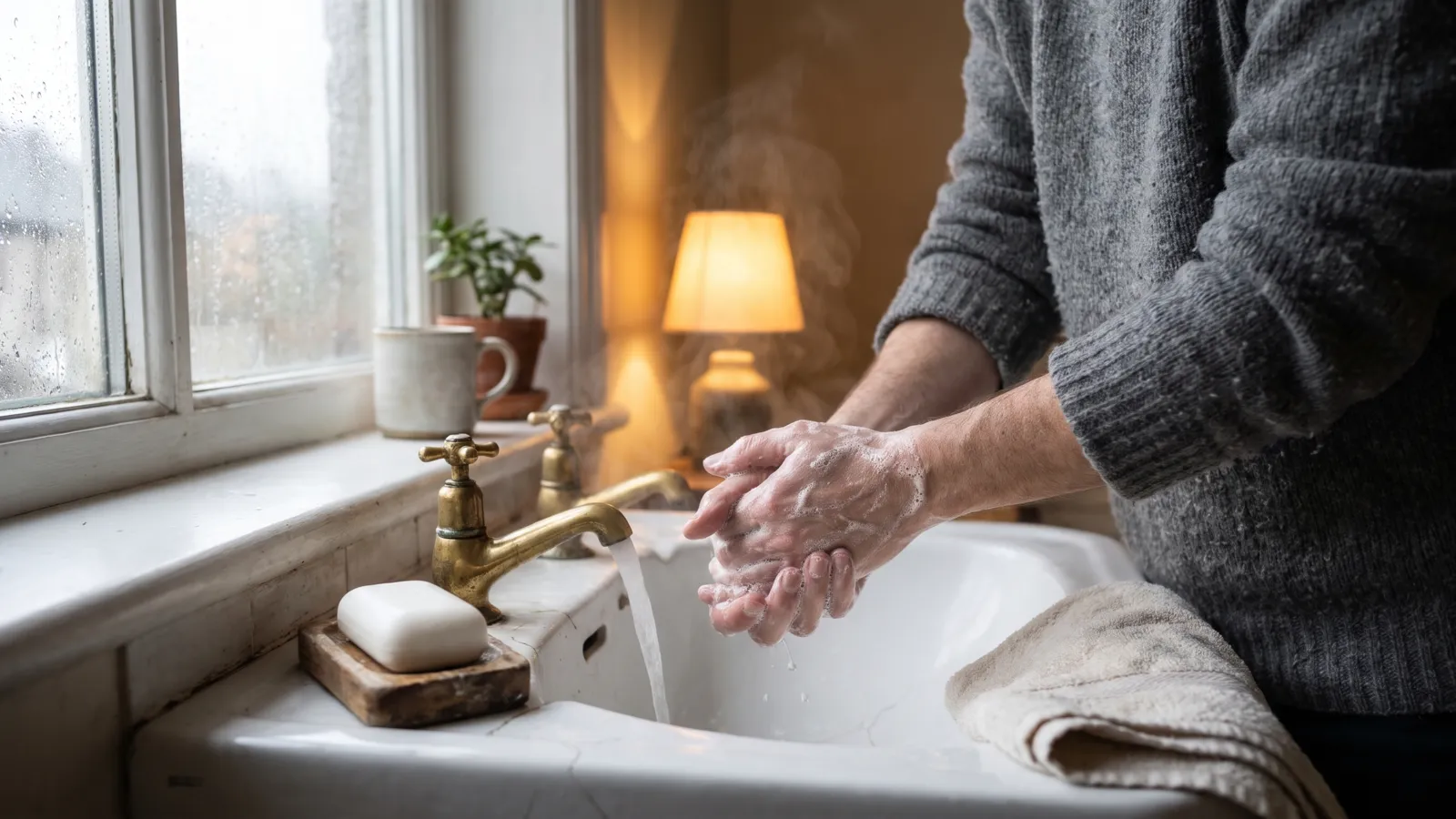
Rotavirus is higher. UKHSA says it "has exceeded expected levels", at 60.3% above the five-season average for 2 to 15 November. UKHSA's norovirus advice also asks people who are unwell to avoid visiting hospitals and care homes, and says "Alcohol gels do not kill norovirus". Washing hands with soap and warm water and cleaning surfaces with bleach-based products help stop it spreading, UKHSA says.
What the guidance says for flu and COVID
For flu, COVID-19 and other respiratory infections, the guidance sets no 48-hour rule. GOV.UK's guidance for people with symptoms says that if you have a high temperature or don't feel well enough to go to work or carry out normal activities, "try to stay at home and avoid contact with other people" until you no longer have a high temperature, if you had one, or no longer feel unwell. The NHS flu page gives similar advice and adds: "You're more likely to give it to others in the first 5 days after getting infected."
The guidance says "Most people can no longer access free testing for COVID-19." After a positive test, the guidance says adults should try to stay at home and avoid contact with other people for 5 days after the day of the test. For children and young people aged 18 and under, it's 3 days, "if they can".
Children with a runny nose, sore throat or slight cough "who are otherwise well, can continue to attend their education setting". Children who are unwell with a high temperature should stay at home, where they can, until they no longer have one and are well enough to go back. None of the guidance we read uses the word "isolate" or describes a legal requirement.
Home Alerts members
The full picture, for your home
Each week, what's happening across Britain set against your own address: your water company, your power network, fuel for your car and the gaps in your kit. Free for your own home. Sign up in a minute.
Start free →Britain's figures from our live trackers, 20 November.
Flu positivity in England passes 10%
Flu is rising. UKHSA's bulletin says 11.4% of flu tests were positive in the week of 9 to 15 November, compared with 8.3% the week before (the dashboard has since revised that week to 8.0%). Flu hospital admissions rose to 4.68 per 100,000 people, from 3.76. On the UKHSA dashboard, which our flu and COVID tracker reads, it is the first week at 10% or more this autumn. The share had stayed below 9% every week since September.
Positivity is the share of tests that come back positive, mostly among people tested because they have symptoms. It shows which way flu is heading, not how many people have it. The figures cover England only.
How this compares with last year
The level is similar to a year ago. In the same week of 2025, beginning 10 November, flu positivity was 11.07% on the UKHSA dashboard. Last autumn it passed 10% two weeks earlier, at 11.77% in the week beginning 27 October 2025, and reached 21.44% in the week beginning 1 December 2025.
UKHSA describes flu, COVID-19 and RSV as all "circulating at low levels". COVID-19 positivity was stable at 7%, against 7.2% the week before. RSV rose to 5.2% from 3.2%. Our October story on COVID admissions in England has the background on COVID.
What to do
If you have a stomach bug, stay off work, school or nursery until 48 hours after the last vomiting or diarrhoea, don't prepare food for others in that time, drink plenty of fluids and wash your hands with soap and water. If you have flu-like symptoms with a high temperature, or you feel too unwell for normal activities, try to stay at home until you are better.
UKHSA's Dr Alex Allen said that "only just over a third of 2-and-3 year olds have received a flu vaccine". Children aged 2 and 3 can get theirs free from their GP practice or a participating pharmacy.
The NHS says to ask for an urgent GP appointment or contact 111 if, for example, you're 65 or over, pregnant, have a long-term condition, or your symptoms don't improve after 7 days. For a stomach bug, the NHS says to call 111 if, for example, you're worried about a baby under 12 months, a child under 5 shows signs of dehydration such as fewer wet nappies, or someone keeps being sick and cannot keep fluid down. For flu, it says to call 999 or go to A&E for sudden chest pain, severe difficulty breathing or coughing up blood.
Our home first aid kit checklist covers what is worth having in the cupboard.
Common questions
Is UKHSA telling people to isolate for 48 hours?
Not in those words, and not for flu. UKHSA's advice is that if you have diarrhoea and vomiting, which is usually norovirus, you shouldn't return to work, school or nursery until 48 hours after your symptoms have stopped, and shouldn't prepare food for others in that time. None of the guidance we read uses the word "isolate".
How long should I stay at home with flu?
There is no fixed number of hours or days. GOV.UK and the NHS advise trying to stay at home and avoiding contact with other people if you have a high temperature or don't feel well enough for normal activities. GOV.UK adds: until you no longer have a high temperature or no longer feel unwell. The NHS says you're most likely to pass flu on in the first 5 days.
Can my child go to school with a cold or cough?
The GOV.UK guidance says children with mild symptoms such as a runny nose, sore throat or slight cough who are otherwise well can keep going to school. Children who are unwell and have a high temperature should stay at home, and can go back once they no longer have a high temperature and are well enough. For vomiting or diarrhoea, it's 48 hours after symptoms stop.
Are norovirus cases up 18%?
We found no 18% rise in UKHSA's 19 November bulletin. It says norovirus laboratory reports in England from 2 to 15 November were 5.4% above the five-season average, and that norovirus remains within expected levels. Rotavirus was 60.3% above average, which UKHSA says has exceeded expected levels.
How high is flu in England now?
UKHSA says 11.4% of flu tests were positive in the week to 15 November, up from 8.3% the week before, and flu hospital admissions rose to 4.68 per 100,000. It's the first week at 10% or more this autumn, and close to the 11.07% for the same week last year. UKHSA describes flu as circulating at low levels.
Sources (5)
- UKHSA, Latest weekly winter virus surveillance data (updated 19 November 2026: week 46 flu, COVID-19 and RSV figures; norovirus and rotavirus for 2 to 15 November; quotes from Dr Alex Allen and Amy Douglas), read 20 November 2026
- UKHSA data dashboard, Influenza, England (flu test positivity by week, 2025 and 2026), read 20 November 2026
- UKHSA, People with symptoms of a respiratory infection including COVID-19 (GOV.UK guidance), read 20 November 2026
- NHS, Flu (page last reviewed 3 February 2026), read 20 November 2026
- NHS, Norovirus (vomiting bug) (page last reviewed 31 December 2024), read 20 November 2026
PreparedBritain is independent and not affiliated with HM Government.
See our checks first on Google. Add PreparedBritain as a preferred source and Google will show our stories to you more often in Top Stories.

The Emergency Kit Checklist
The GOV.UK Prepare essentials on one printable page — tick them off as you go and keep it with the kit. Free, no catch.
Download it straight away. We'll also send the occasional briefing when something genuinely matters — severe weather, live incidents, real price drops. Nothing else.
Latest from our live data
All stories →
For the children this Christmas
Keep reading
All planning & the national picture guides →Will tap water be turned off on a rota in the UK? What the drought data shows
No rota has been ordered in England. The tap rota in the headline is South West Water's last-resort plan for Devon…
Why are we being told to stockpile? What the 'blackouts and empty shelves' alert rests on
The 'stockpiling alert' is a House of Lords committee report, and the stockpiles it worries about are the country's…
Red Cross shares 14 ‘essential’ items for 3-day emergency kit: how it compares with Be Ready
The British Red Cross’s 14 ‘essential’ emergency kit items, shared in the papers on 16 November, set side by side…