Red Cross shares 14 ‘essential’ items for 3-day emergency kit: how it compares with Be Ready
The British Red Cross’s 14 ‘essential’ emergency kit items, shared in the papers on 16 November, set side by side with the government’s 15-line Be Ready checklist: what matches, what each adds, and the small difference on water.
The British Red Cross’s 14 ‘essential’ items and the government’s Be Ready checklist ask for mostly the same things: three days of water and food, a torch, a radio, a power bank, cash, copies of documents, medicine and a first aid kit. By our reading, 11 of the 14 have a matching line on Be Ready. The Red Cross adds a tin opener, a pen and paper, and spare home and car keys. Be Ready’s 15 lines add blankets and warm clothing, baby formula, nappies and pet supplies, which the Red Cross lists as extras or add-ons. On water, Be Ready says 3 litres per person per day for drinking; the Red Cross says around 2.5 to 3. The Red Cross list is the charity’s advice, not a new government instruction, and both say you can build it up gradually.
The three things most homes are missing
Our top pick from each comparison
as of 19 Nov 2026, 03:07 GMT · Details
Product prices and availability are accurate as of the date/time indicated and are subject to change. Any price and availability information displayed on Amazon.co.uk at the time of purchase will apply to the purchase of this product.
as of 19 Nov 2026, 03:07 GMT · Details
Product prices and availability are accurate as of the date/time indicated and are subject to change. Any price and availability information displayed on Amazon.co.uk at the time of purchase will apply to the purchase of this product.
as of 19 Nov 2026, 03:07 GMT · Details
Product prices and availability are accurate as of the date/time indicated and are subject to change. Any price and availability information displayed on Amazon.co.uk at the time of purchase will apply to the purchase of this product.If you already have these, you're most of the way there.
By Tom Calder · Updated 16 November 2026 · Sourced to the British Red Cross’s emergency kit page (last updated 29 October 2026), GOV.UK Be Ready and the Cabinet Office’s 22 October 2026 launch release, all read on 16 November 2026. The WalesOnline and Mirror articles compared were read the same day.
What the Red Cross published
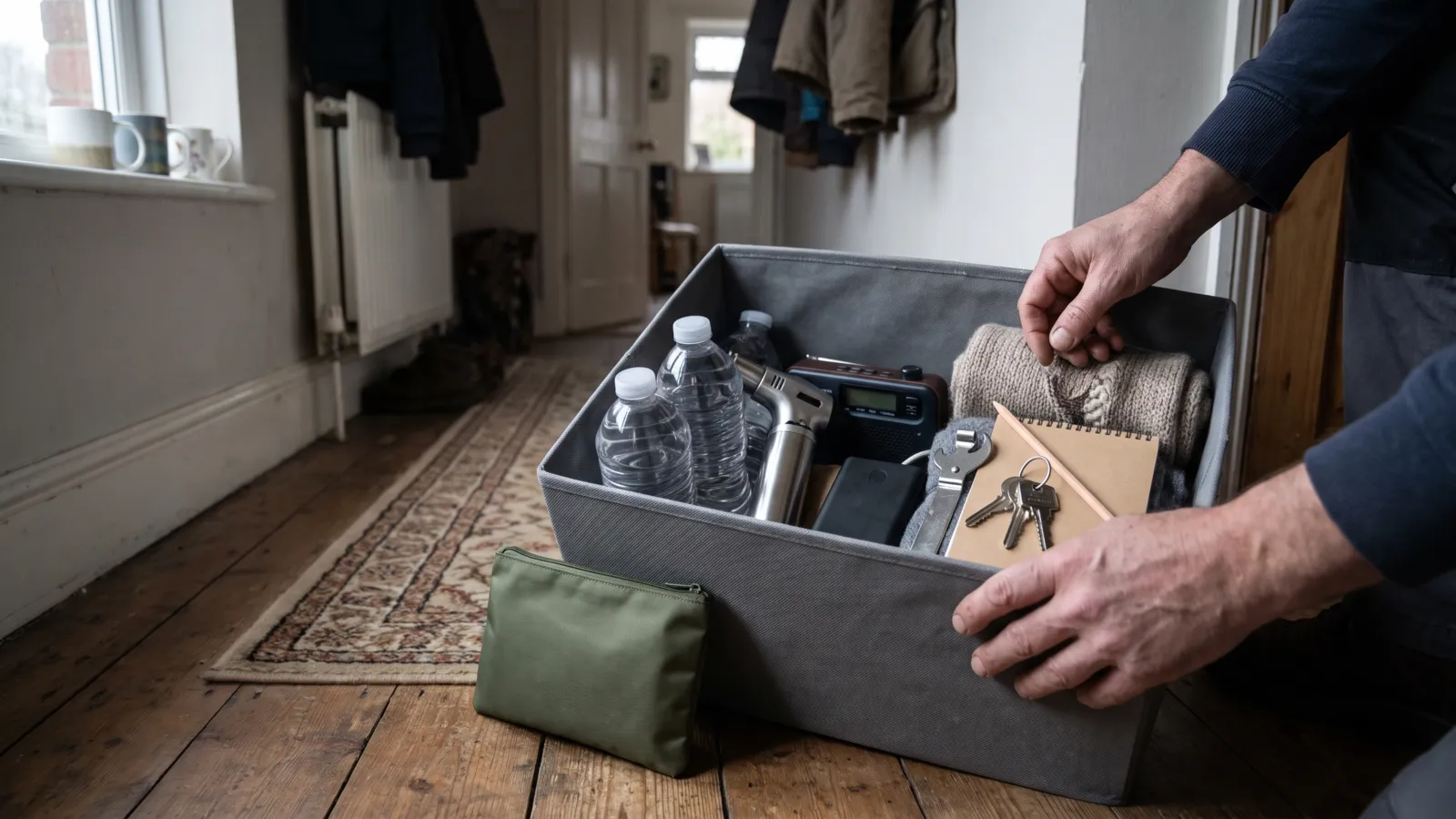
On 16 November WalesOnline and the Mirror ran the British Red Cross’s list of 14 items for a three-day emergency kit. The list comes from the charity’s emergency kit page, last updated on 29 October, which calls them “the core emergency items every household should consider keeping in an emergency kit”. WalesOnline’s “every home needs” and “urging”, and the Mirror’s “must-have”, are the papers’ words; the page says “should consider”.
WalesOnline’s headline adds “35 ‘mights’”. By our count those are the page’s optional lists: 7 “useful additional” items, which it says “are not essential”, plus 6 for children and babies, 6 for pets, 7 for health and accessibility needs and 9 for the car.
The articles call the government’s campaign “Be Prepared”. Its name is Be Ready: the Cabinet Office launched it on 22 October, and its checklist has 15 lines to tick. Our Be Ready guide goes through each one.
The 14 items side by side with Be Ready
Both lists are built around the same three days. The Red Cross page describes “a 3-day or 72 hour emergency kit”, and Be Ready says “Being ready for 3 days helps you manage while support reaches those most in need.” Here is each Red Cross item next to the Be Ready line that matches it, in the order the charity gives them.
| British Red Cross essential item | Be Ready checklist line |
|---|---|
| Paper copy of important contact numbers | Important phone numbers and information |
| Mobile phone charger and portable power bank | Charged power bank |
| Cash for essentials such as food or fuel | Cash (mix of coins and notes) and cards |
| Torch and spare batteries | Torch (and spare batteries) |
| Battery-powered or wind-up radio | FM radio (battery / wind up) |
| Essential medication and copies of prescriptions if needed | Essential medication and medical supplies |
| Basic first aid kit | First aid kit / first aid items |
| Hand sanitiser and wet wipes | Hand sanitiser, wet wipes and bathroom products |
| Three days’ supply of drinking water | Bottled water for 3 days |
| Three days’ supply of long-life or ready-to-eat food | Non-perishable food for 3 days |
| Tin opener | Not on the checklist |
| Copies of important documents stored in a waterproof bag | Copies of IDs / documents |
| Pen and paper | Not on the checklist |
| Spare home and car keys | Not on the checklist |
Where the Red Cross asks for more
Three items have no Be Ready line: a tin opener, a pen and paper “in case anything needs to be recorded”, and spare home and car keys “in case these are lost in the emergency”. Be Ready does ask you to write down contact numbers and radio frequencies, but doesn’t list the pen.
Some matching lines go a little further. The Red Cross wants a phone charger as well as a power bank, documents in a waterproof bag, and copies of prescriptions if needed. Its cash line names the causes, “in case of a cyber attack or power cut stopping card payments”; Be Ready says “In case electronic payments or ATMs are disrupted.” Neither list sets an amount of cash; Be Ready says it “depends on your family’s specific needs for essentials.”
Home Alerts members
The full picture, for your home
Each week, what's happening across Britain set against your own address: your water company, your power network, fuel for your car and the gaps in your kit. Free for your own home. Sign up in a minute.
Start free →Britain's figures from our live trackers, 19 November.
Where Be Ready asks for more
Four Be Ready lines aren’t among the Red Cross’s 14: blankets, sleeping bags and warm clothing; baby formula; nappies and wipes; and pet food and bottled water. The Red Cross still mentions them, but as optional extras. Blankets, sleeping bags and warm spare clothing are among its “useful additional” items, and baby and pet supplies are on its lists for households with children or pets.
Be Ready gives its reason for the blankets: “Homes can become cold very quickly when the heating goes off.” For babies it says “Ready-made or ‘ready-to-feed’ formula is best, as you may not be able to boil water to make up powdered formula safely.” Its hygiene line also adds bathroom products, its cash line adds cards, and its phone numbers line asks for “a list of any regular medication and doses.”
Water: 3 litres, or 2.5 to 3?
This is the one number that differs. Be Ready asks for “3 litres per person per day for drinking”, and says more would be needed for cooking and washing. The Red Cross page says “around 2.5 to 3 litres per person per day”, and credits that to general UK Government advice. It says about 10 litres per person per day covers basic cooking, washing and hygiene.
For a household of four over three days, by our sums, Be Ready’s figure is 36 litres of drinking water and the Red Cross range is 30 to 36. Planning to Be Ready’s 3 litres meets both. Our water storage guide covers bottles, rotation and where to keep them.
What it means for your household
If you have already worked through Be Ready, the Red Cross list adds three small things: a tin opener, a pen and paper, and a spare set of keys. If you started with the Red Cross list, Be Ready’s extra lines are blankets and warm clothing, and supplies for any baby or pet at home.
Neither asks for a big shop. The Red Cross says “you don’t need to buy everything at once” and that building a kit gradually “should not cause panic-buying or shortages of certain supplies.” Be Ready says: “You don’t need to do it all at once.” If money, space or time is short, the Red Cross suggests starting with medication, a torch, a power bank, drinking water, long-life food, emergency contact details and basic first aid supplies.
The papers tied the list to this week’s snow warning; our snow warning story has what the Met Office says. Our kit builder sizes the official list for your household.
Common questions
What are the Red Cross’s 14 emergency kit items?
A paper copy of important contact numbers; a phone charger and power bank; cash; a torch and spare batteries; a battery or wind-up radio; essential medication and copies of prescriptions; a basic first aid kit; hand sanitiser and wet wipes; three days’ drinking water; three days’ long-life or ready-to-eat food; a tin opener; copies of documents in a waterproof bag; a pen and paper; and spare home and car keys.
Is the Red Cross list part of the Be Ready campaign?
It isn’t the Be Ready checklist. It is the British Red Cross’s own advice, on its own website. The government’s Be Ready checklist is a separate list of 15 lines. The two agree on three days and on most items, and the Cabinet Office’s launch release for Be Ready on 22 October quoted the British Red Cross’s Director for UK Resilience.
How much water do I need for three days?
Be Ready says 3 litres per person per day for drinking, so 9 litres each for three days, with more for cooking and washing. The Red Cross says around 2.5 to 3 litres a day for drinking, and about 10 litres a day once basic cooking, washing and hygiene are included.
Do I need to buy everything on the list?
No. The Red Cross says a kit “doesn’t need to be perfect or contain every item on a checklist”, and suggests checking what you already have before buying anything new. Be Ready suggests picking up an extra item or two when you can.
Sources (5)
- British Red Cross, Prepare an emergency kit (last updated 29 October 2026: the 14 essential items, 7 useful extras, add-on lists, 2.5 to 3 litres per person per day), read 16 November 2026
- GOV.UK Be Ready, Be ready for emergencies (the Be Ready checklist: 15 lines, 3 days, 3 litres per person per day), read 16 November 2026
- Cabinet Office, Households encouraged to take small, simple steps to stay prepared in an emergency (22 October 2026: the Be Ready launch, quoting the British Red Cross), read 16 November 2026
- WalesOnline, Red Cross shares 14 ‘essential’ items every home needs in 3-day emergency kit - plus 35 ‘mights’ (16 November 2026), the article compared
- Mirror, Red Cross shares 14 must-have items in 3-day emergency kit as snow forecast (16 November 2026)
PreparedBritain is independent and not affiliated with HM Government.
See our checks first on Google. Add PreparedBritain as a preferred source and Google will show our stories to you more often in Top Stories.

The Emergency Kit Checklist
The GOV.UK Prepare essentials on one printable page — tick them off as you go and keep it with the kit. Free, no catch.
Download it straight away. We'll also send the occasional briefing when something genuinely matters — severe weather, live incidents, real price drops. Nothing else.
Latest from our live data
All stories →
For the children this Christmas
Keep reading
All planning & the national picture guides →Do I need torches and batteries before Tuesday's snow? What the Met Office warnings say
The Met Office has a yellow snow warning for parts of northern England, the Midlands and southern Scotland until…
What should you stockpile, and what shouldn't you? The UK list checked against official advice
The government's Be Ready checklist is the UK list: 15 lines, from bottled water to pet food. The 'do not stockpile'…
Will the government send a UK alert for wildfires? What the fire-danger data shows
People are searching for a government wildfire alert. GOV.UK showed no current alerts on 15 November 2026. Emergency…