What should you stockpile, and what shouldn't you? The UK list checked against official advice
The government's Be Ready checklist is the UK list: 15 lines, from bottled water to pet food. The 'do not stockpile' list going round is credited to an expert, not the government. What it gets right, and wrong.
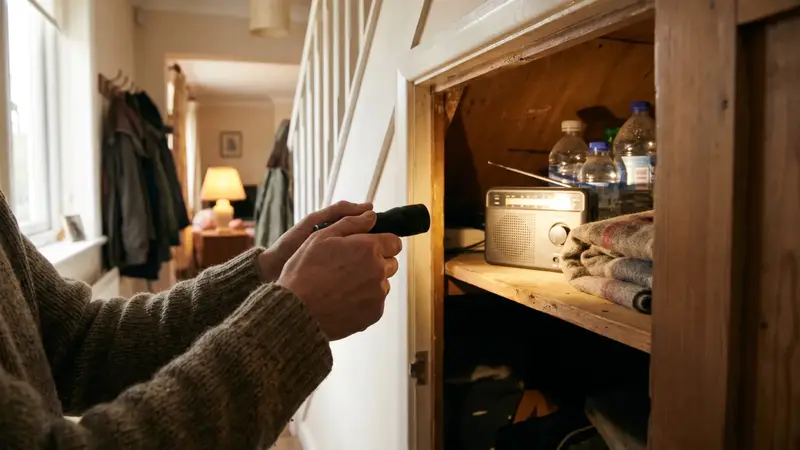
Keep what the government's Be Ready checklist asks for: three days of bottled water at 3 litres per person per day, food that keeps without a fridge or cooking, a torch and batteries, warm layers, an FM radio, a charged power bank, cash, copies of documents, first aid and medicines, and supplies for babies and pets. Cash comes with no fixed amount: Be Ready says it depends on your family's needs for essentials, and doesn't mention a 'Black Sky event'. The £100 to £300 in some coverage is one money expert's figure. We found no official list of things not to stockpile: the Express list of 15 November, frozen food, dried pasta and bread, is credited to "an expert", not the government. Frozen food isn't automatically wasted in a power cut: the Food Standards Agency says, for England, Wales and Northern Ireland, a full freezer should stay frozen for up to 48 hours (24 if half full), though these are estimates. Dried pasta has a best before date, not a use-by; it just needs cooking.
Water, food and a way to cook it
Our top pick from each comparison
as of 19 Nov 2026, 04:07 GMT · Details
Product prices and availability are accurate as of the date/time indicated and are subject to change. Any price and availability information displayed on Amazon.co.uk at the time of purchase will apply to the purchase of this product.

as of 19 Nov 2026, 04:07 GMT · Details
Product prices and availability are accurate as of the date/time indicated and are subject to change. Any price and availability information displayed on Amazon.co.uk at the time of purchase will apply to the purchase of this product.If you already have these, you're most of the way there.
By Tom Calder · Updated 16 November 2026 · Sourced to GOV.UK Be Ready and its checklist PDF, the Cabinet Office's 22 October 2026 release, the Food Standards Agency's power-cut and date-label advice on GOV.UK, and the Scottish Fire and Rescue Service, all read on 15 November 2026. The Express article checked was read on AOL the same day
Earlier changes
16 Nov Added a question on toilet paper: the Be Ready checklist, re-read on 16 November 2026, lists “bathroom products” under hygiene and names no amount.
16 Nov Added a dated update on the 'keep cash for Black Sky emergency' headline: the Be Ready checklist, re-read on 16 November 2026, lists cash with no fixed amount and doesn't mention a Black Sky event; the £100 to £300 figure is one money expert's.
Update, 16 November 2026: the ‘keep cash for Black Sky emergency’ headline, and how much cash
Since 15 November a headline has said "UK households urged to keep cash at home for 'Black Sky event' emergency" (Brit Brief). The cash advice it quotes comes from the government's Be Ready checklist, whose 15 lines are set out below, and cash is one of them. So keeping some cash at home is official advice. The Black Sky link is not: the Be Ready page, re-read on 16 November, doesn't mention a Black Sky event. It talks about being ready for 3 days.
How much cash should you keep at home? The government gives no figure. Be Ready lists "Cash (mix of coins and notes) and cards", "In case electronic payments or ATMs are disrupted", and says: "The amount of cash you should keep depends on your family’s specific needs for essentials." The only figure we found in the coverage is one money expert's: Noyan Nihat told Metro, as LADbible reported on 12 November, "For most households, this is somewhere between £100 and £300." That is his suggestion, not official advice. LADbible says the cash is meant to "cover around a week of essentials like food, fuel and medicine"; Be Ready asks households to be ready for 3 days.
So every item on the list is official; a fixed cash amount and the Black Sky framing are not. Our guide to when the card machine's down covers keeping a little cash at home, including insurance limits, and our Black Sky explainer says what the term means.
What should you stockpile, and what shouldn't you?
On 15 November the Express ran "Items UK households are told not to stockpile as sales for emergency supplies soar". It says an expert "has revealed the items that UK households should not include in their emergency stockpile cupboard": frozen food, dried pasta and perishable food such as bread. The article quotes two food-safety specialists speaking to the Independent, about perishable food, and also prints the government's checklist in full.
The government's own list is the Be Ready checklist, launched by the Cabinet Office on 22 October. It says what to keep, not what to avoid, and we found no official list of things not to stockpile. Our explainer of the checklist goes through it in more detail. Here is the short version, set against the press list.
The list of things to stockpile, from the official checklist
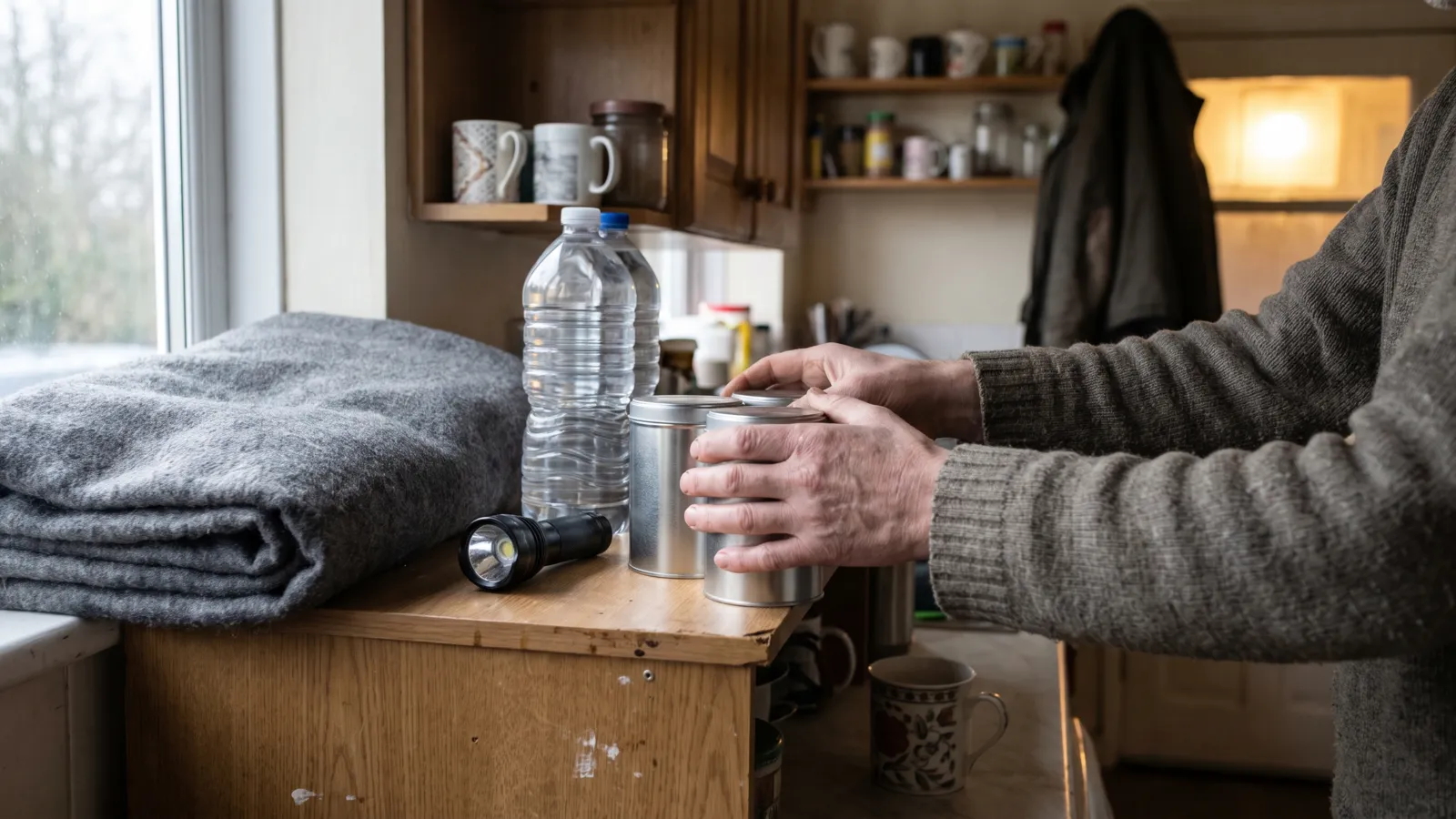
Be Ready says: "Being ready for 3 days helps you manage while support reaches those most in need." Its checklist has 15 lines. Water: bottled water for 3 days, "3 litres per person per day for drinking", with more for cooking and washing. Food: "Non-perishable food for 3 days", which it describes as "Food with a long shelf life that doesn't need refrigeration or cooking e.g. tinned meat, fish or vegetables, dried fruit and nuts." It adds: "It's best to buy food you'd usually eat."
Then: hand sanitiser, wet wipes and bathroom products; a torch and spare batteries ("Torches are safer than candles"); blankets, sleeping bags and warm clothing; a battery or wind-up FM radio; a charged power bank; cash in coins and notes, and cards; printed copies of documents; a written list of phone numbers and regular medicines; a first aid kit; essential medication; baby formula, ideally ready-to-feed, and nappies and wipes; and pet food and bottled water.
Home Alerts members
The full picture, for your home
Each week, what's happening across Britain set against your own address: your water company, your power network, fuel for your car and the gaps in your kit. Free for your own home. Sign up in a minute.
Start free →Britain's figures from our live trackers, 19 November.
The 'do not stockpile' list, checked
The Express list has three items. Frozen food, because supplies "should last you even if the power goes out and your freezer isn't working". Dried pasta, because if water, gas and electricity are cut off "you will have no way to cook the pasta". And perishable food such as bread, which "will go stale". None of the three is on the Be Ready checklist, and the article doesn't say the government told anyone to avoid them: "told not to" in the headline means told by an expert.
On what goes in the emergency store, the list matches Be Ready, which asks for food that doesn't need a fridge or cooking and so leaves out the freezer and anything you would have to boil. Read as "don't buy them at all", it would go too far: frozen food still helps in a short cut, and pasta keeps for a long time once you can cook again.
Frozen food: useful in a short cut, not the plan
The Food Standards Agency's power-cut advice, for England, Wales and Northern Ireland, says: "If the power outage is for less than 4 hours this is unlikely to impact the safety of food in chilled or frozen storage." For longer cuts: "The food in your freezer should stay frozen for up to 48 hours in a full freezer (or 24 hours if it's half full), but these are estimates."
Its advice is to eat the fridge food first, then defrosted frozen food that doesn't need cooking, and save cupboard food for later: "Food that is normally stored at ambient temperature will continue to be safe to eat." So the freezer is a bonus in a short cut, and the three days of cupboard food is the backstop. Keep the doors shut. Our guide to food safety in a power cut has the rest.
Pasta and bread: the catch is cooking and dates
GOV.UK's food labelling guidance lists "dried foods (for example pasta and rice)" alongside tinned foods as foods with a best before date, and says: "After the best before date, the food is usually safe to eat but may not be of the same quality." Pasta has a best before date, not a use-by. The problem the article points to is that it needs boiling water, which you may not have. Pasta in your cupboard is still useful once the power is back; it just doesn't count towards the no-cook three days.
Don't solve the cooking problem indoors with outdoor kit. For camping stoves, barbecues and bottled gas stoves, the FSA says to check the manufacturer's instructions, "as most are designed for outdoor use only". The Scottish Fire and Rescue Service says: "Never use any cooking items designed for outdoor usage like barbecues. These devices can produce poisonous carbon monoxide." Tins, by contrast, need no heat: the FSA says "tinned foods will be safe to eat without heating through".
Building it up, and how long it keeps
Be Ready doesn't ask for a big shop: "You don't need to do it all at once," it says, suggesting "picking up an extra item or two when you can." Some steps cost nothing: checking what you already have, and writing down phone numbers and regular medicines. Our supermarket 72-hour kit builds the core of the list from one shop, and the kit builder sizes it for your household.
On keeping, the checklist's advice is to "Set a reminder every six months to check expiry dates and swap out items that need replacing". Eat the old tins in normal meals and replace them, so nothing goes to waste. How to store emergency water covers bottles, and how much food to store sets out amounts per person.
Common questions
What is the list of things to stockpile in the UK?
The government's Be Ready checklist: bottled water for three days at 3 litres per person per day, non-perishable food that needs no fridge or cooking, hygiene items, a torch and batteries, blankets and warm clothing, an FM radio, a charged power bank, cash, copies of documents, important numbers, first aid, medication, and supplies for babies and pets.
How much cash should I keep at home for an emergency?
The government gives no fixed amount. Its Be Ready checklist asks for cash, a mix of coins and notes, and cards, in case electronic payments or ATMs are disrupted, and says the amount "depends on your family’s specific needs for essentials". The £100 to £300 in some reports is one money expert's suggestion, made to Metro and reported by LADbible, not official advice.
Has the government said what not to stockpile?
We found no official list of things not to stockpile. The Be Ready checklist says what to keep. The Express credits its frozen food, pasta and bread list of 15 November to "an expert". It quotes two food-safety specialists speaking to the Independent, about perishable food, and doesn't say the government drew up the list.
Is frozen food any use in a power cut?
Yes, for a while. The Food Standards Agency says, for England, Wales and Northern Ireland, that a cut under 4 hours is unlikely to affect chilled or frozen food, and a full freezer should stay frozen for up to 48 hours (24 if half full), though these are estimates. Eat fridge food first, then defrosted frozen food that doesn't need cooking, and save cupboard food for last.
Should I stockpile pasta and rice?
GOV.UK's guidance on date labels lists dried pasta and rice as best-before foods: usually safe after the date, but may not be the same quality. They need cooking, so they don't count towards Be Ready's three days of food that needs no cooking. The Scottish Fire and Rescue Service says never to use outdoor cooking items like barbecues in a power cut, because of carbon monoxide.
Should I stock up on toilet paper?
The Be Ready checklist doesn't name toilet paper or give an amount. Under hygiene it lists “Hand sanitiser, wet wipes and bathroom products”, as part of a checklist built around being ready for 3 days. It also says “You don’t need to do it all at once”, suggesting “picking up an extra item or two when you can”, so there's no official call to buy in bulk.
How long does stockpiled food keep?
It depends on the date on the label. Be Ready suggests a reminder every six months to check expiry dates and swap out items that need replacing. Use older tins in normal meals and replace them as you go.
Sources (9)
- GOV.UK Be Ready, Be ready for emergencies (the Be Ready checklist: 15 lines, 3 days, 3 litres per person per day, food that doesn't need refrigeration or cooking, torches safer than candles, six-monthly checks, donating extra items), read 15 November 2026, re-read 16 November 2026cash line: no fixed amount; no mention of a Black Sky event
- GOV.UK Be Ready, Be Ready Checklist (PDF), read 15 November 2026
- Cabinet Office, Households encouraged to take small, simple steps to stay prepared in an emergency (22 October 2026), read 15 November 2026
- Food Standards Agency, Food safety in a power cut: advice for consumers (England, Wales and Northern Ireland; fridge 4 hours, freezer 48 hours full or 24 half full; eating order; outdoor stoves), read 15 November 2026
- GOV.UK, Understanding food labelling: best before and use-by dates (dried pasta and rice, tinned foods), read 15 November 2026
- Scottish Fire and Rescue Service, Power cuts (barbecues and carbon monoxide, candles, torches), read 15 November 2026
- Express (via AOL), Items UK households are told not to stockpile as sales for emergency supplies soar (15 November 2026), the article checked, read 15 November 2026
- Brit Brief, UK households urged to keep cash at home for 'Black Sky event' emergency (15 November 2026), the headline checked, read 16 November 2026
- LADbible, Brits urged to 'doomsday prep' their bank accounts in case of Black Sky event or cyberattack (12 November 2026, quoting Noyan Nihat to Metro on £100 to £300), read 16 November 2026
PreparedBritain is independent and not affiliated with HM Government.
See our checks first on Google. Add PreparedBritain as a preferred source and Google will show our stories to you more often in Top Stories.

The Emergency Kit Checklist
The GOV.UK Prepare essentials on one printable page — tick them off as you go and keep it with the kit. Free, no catch.
Download it straight away. We'll also send the occasional briefing when something genuinely matters — severe weather, live incidents, real price drops. Nothing else.
Latest from our live data
All stories →
For the children this Christmas
Keep reading
All planning & the national picture guides →Will the government send a UK alert for wildfires? What the fire-danger data shows
People are searching for a government wildfire alert. GOV.UK showed no current alerts on 15 November 2026. Emergency…
Could UK flights be grounded like the US? What failed in 2023, 2025 and 2026, and what to carry
After the US ground stop of 13 November: UK air traffic control has failed before, in August 2023, July 2025 and…
US flights grounded: your rights if your flight to or from America was cancelled or delayed
The FAA issued a nationwide ground stop for all US airports on 13 November. What UK law gives you if your flight to…