
Are UK households stockpiling? What October's 0.7% retail sales rise does and doesn't show
Headlines say retail sales beat forecasts after the government told households to stock up. The ONS figures for Great Britain, published on 20 November, show sales volumes up 0.7% in October, with supermarkets reporting more sales of tinned goods and UHT milk after the Be Ready campaign. What rose, what fell, and what the official advice actually asks for.
Some did, a little. The Office for National Statistics (ONS) says shoppers stocked up on long-life food in October, but the figures show a modest rise, not a rush. Retail sales volumes in Great Britain rose 0.7% in October, it said on 20 November, with food stores up 0.8% as supermarkets reported more sales of tinned goods and UHT milk after the government's Be Ready campaign launched on 22 October. That followed a 0.6% fall in September, and on our reading of the ONS index it puts sales volumes back where they were in August. Department stores, household goods stores and fuel sales fell. The bulletin does not mention shortages. And the government did not ask anyone to stock up in bulk: Be Ready asks households to be ready for 3 days, built up gradually, “picking up an extra item or two when you can.”
Water, food and a way to cook it
Our top pick from each comparison
as of 20 Nov 2026, 21:07 GMT · Details
Product prices and availability are accurate as of the date/time indicated and are subject to change. Any price and availability information displayed on Amazon.co.uk at the time of purchase will apply to the purchase of this product.

as of 20 Nov 2026, 21:07 GMT · Details
Product prices and availability are accurate as of the date/time indicated and are subject to change. Any price and availability information displayed on Amazon.co.uk at the time of purchase will apply to the purchase of this product.If you already have these, you're most of the way there.
By Tom Calder · Updated 20 November 2026 · Sourced to the ONS retail sales bulletin for October 2026 and its chart data (published 20 November 2026), the government's Be Ready checklist and the Cabinet Office's launch release of 22 October, read on 20 November 2026
What the ONS figures show
The ONS published its retail sales figures for October on 20 November. They cover Great Britain, not Northern Ireland. It said: “Retail sales volumes are estimated to have risen by 0.7% in October 2026.” Volume is the quantity of goods bought, not the amount spent, so higher prices alone don't push it up.
That follows a fall of 0.6% in September, revised down from the 0.4% fall first reported. Over the three months to October, volumes rose 0.4% on the three months before. Compared with October 2025, they were 2.3% higher. On the ONS index (2024 = 100), October's figure was 103.6, the same as August's, on our reading of the ONS chart data. So the October rise mostly made up for a weak September.
Shops told reporters about bigger jumps in particular items in the days after Be Ready launched. We covered those in what the shops reported after the call to stock up. The ONS figures are the first official measure of what happened across all retailers.
What rose and what fell
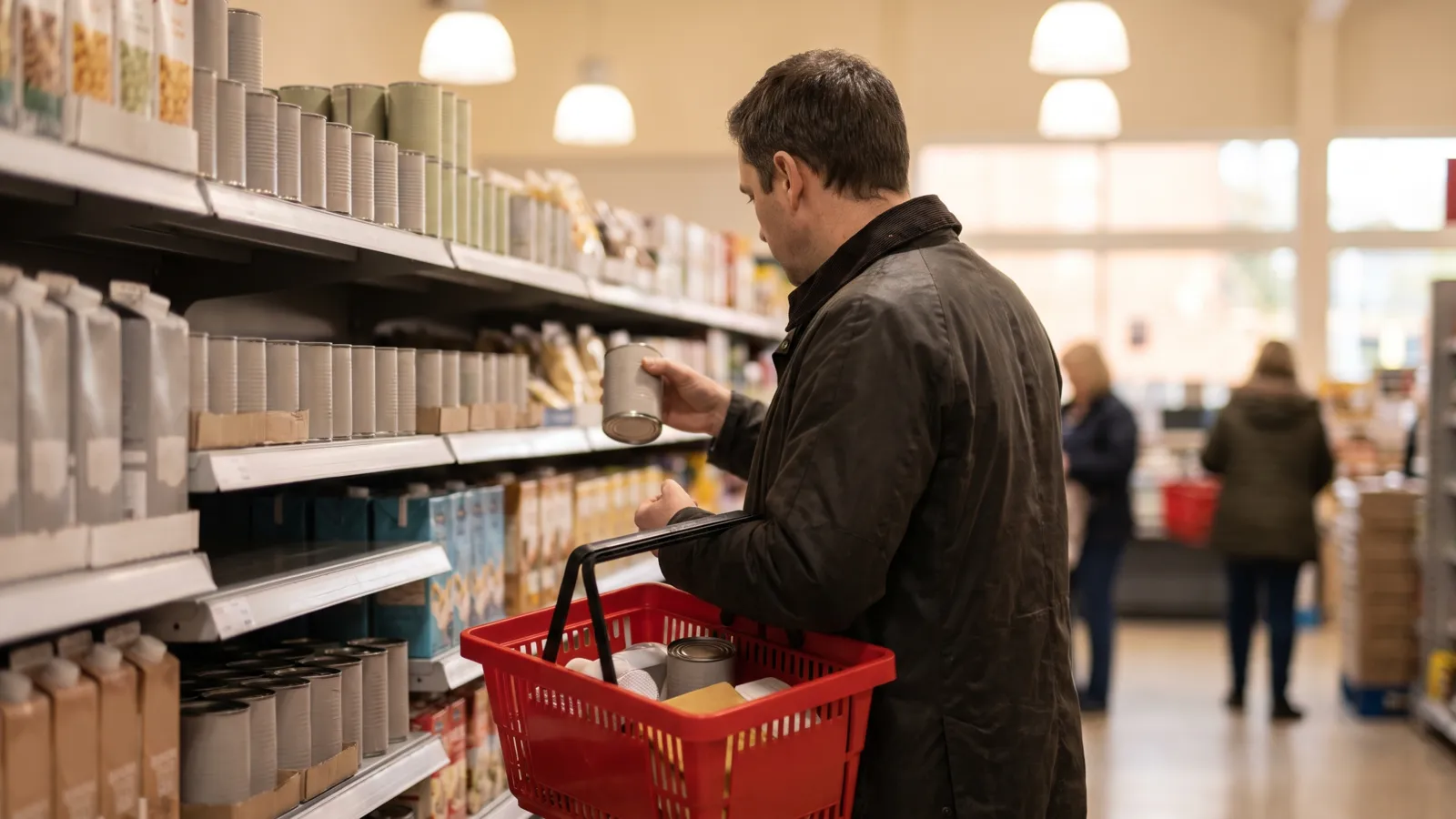
Food stores were the main reason the total rose. Their sales volumes rose 0.8% on the month. The ONS said this was because “supermarkets reported an October uplift on emergency items such as UHT milk and tinned goods following the launch of the UK government's Be Ready campaign on 22 October 2026.” The bulletin's section heading says sales volumes rose “as consumers stocked up on long-life food items”.
Other shops also rose. Clothing and footwear stores were up 1.5%, which retailers put down to people buying more per visit, new launches and more stock after supply problems in September. Other non-food stores were up 3.1%, helped by art galleries and sports, games and toy shops. Online and other non-store sales rose 0.9%.
Some fell. Department store volumes fell 1.2% and household goods stores 1.0%. Automotive fuel fell 2.2%: the ONS said fuel volumes “fell back to August levels as prices rose for the third consecutive month.”
What the figures don't show
The ONS does not give a separate figure for sales linked to Be Ready, and the bulletin does not use the words panic buying or shortage. It also warns that “monthly growth rates can be volatile” and should be used with caution, alongside the three-month figures. Be Ready launched on 22 October, late in the month, and September's figure has already been revised once. These figures may be revised too.
The headlines also say sales beat forecasts. That compares the figure with what economists expected. It isn't in the ONS bulletin, and we haven't checked it. The ONS's next retail sales figures, for November, are due on 18 December.
Home Alerts members
The full picture, for your home
Each week, what's happening across Britain set against your own address: your water company, your power network, fuel for your car and the gaps in your kit. Free for your own home. Sign up in a minute.
Start free →Britain's figures from our live trackers, 20 November.
UK households urged to prepare for emergencies: here's what to buy, by the official list
The government's advice is smaller than the headlines suggest. Be Ready, launched by the Cabinet Office on 22 October, says: “Being ready for 3 days helps you manage while support reaches those most in need.” The launch release asked households to “keep a small supply of non-perishable food and bottled water at home.”
The checklist asks for 3 litres of drinking water per person per day for 3 days, and food that needs no fridge or cooking, such as tinned meat, fish or vegetables, dried fruit and nuts. It says: “It’s best to buy food you’d usually eat.” The rest of the list is a torch and spare batteries, a battery or wind-up FM radio, a charged power bank, cash, warm layers, first aid and medicines. Our explainer of the Be Ready checklist goes through it item by item, and three days or two weeks covers the longer lists in some reports.
If you're building your kit
Be Ready says: “You don’t need to do it all at once.” It suggests picking up missing items “during your regular shopping trips to help spread the cost”, then setting a reminder every six months to check expiry dates. If you have extra items, it suggests you could donate them to people who can't afford to prepare.
Our guides cover how much food to store, how to store emergency water and what is and isn't worth stockpiling. Buying a few extra tins is legal and normal: our guide on whether stockpiling is illegal explains the rules.
Common questions
Are people stockpiling in the UK?
Some shoppers bought more long-life food in October. The ONS says food store sales volumes in Great Britain rose 0.8%, as supermarkets reported more sales of tinned goods and UHT milk after the Be Ready campaign launched on 22 October. All retail sales rose 0.7%. That only took them back to August's level after a weak September.
Did the government tell households to stock up?
Not in bulk. Be Ready asks households to have enough for 3 days: 3 litres of drinking water per person per day, food that needs no fridge or cooking, and basics such as a torch, radio, power bank and cash. It suggests building this up gradually during your regular shopping, an extra item or two when you can.
Did retail sales beat forecasts?
The headlines compare the figure with what economists expected. That comparison isn't in the ONS bulletin, and we haven't checked it. What the ONS says is that retail sales volumes rose 0.7% in October, after a 0.6% fall in September.
Are there shortages in the shops?
The ONS bulletin reports a rise in sales and does not mention shortages. It doesn't cover stock levels, so it can't tell you about any particular shop. Retailers reported bigger rises in some items, such as radios and tins, in the days after Be Ready launched.
When are the next retail sales figures?
The ONS's figures for November are due on 18 December 2026. They will cover the first full month after Be Ready launched.
Sources (5)
- ONS, Retail sales, Great Britain: October 2026 (published 20 November 2026)
- ONS, Retail Sales Index reference tables (released 20 November 2026)
- GOV.UK Be Ready, Be ready for emergencies (the Be Ready checklist)
- Cabinet Office, Households encouraged to take small, simple steps to stay prepared in an emergency (22 October 2026)
- PreparedBritain, Rise in sales of radios and tinned foods after the call to stock up
PreparedBritain is independent and not affiliated with HM Government.
See our checks first on Google. Add PreparedBritain as a preferred source and Google will show our stories to you more often in Top Stories.

The Emergency Kit Checklist
The GOV.UK Prepare essentials on one printable page — tick them off as you go and keep it with the kit. Free, no catch.
Download it straight away. We'll also send the occasional briefing when something genuinely matters — severe weather, live incidents, real price drops. Nothing else.
Latest from our live data
All stories →
For the children this Christmas
Keep reading
All food & growing guides →Bird flu housing order in England from 13 November: is it safe to eat eggs and chicken?
Yes: the Food Standards Agency says properly cooked poultry and poultry products, including eggs, are safe to eat,…
Home freeze dryers in the UK: cost, running cost, and are they worth it?
What a home freeze dryer does and doesn't do, what one costs in the UK to buy and to run, how big and loud it is,…
Survival seeds in the UK: are seed vaults worth it?
What survival seed kits and ‘seed vaults’ are, heirloom and open-pollinated seed versus F1, how long seeds really…