
Will energy bills come down? What Ofgem's price cap and the Budget's standing-charge change say
Not on the official record so far. Ofgem's cap rose 4% in October and January's level isn't set yet. The Budget adds a £100 payment in England and keeps 0% VAT on electricity, and moves the gas standing charge into unit prices from late 2027. What it means for one home's winter.
Not on the official record so far. Ofgem's price cap went up 4% on 1 October, to £1,723 a year for a typical dual-fuel home paying by Direct Debit, and Ofgem has not yet set the cap for January to March 2027: it is due by 25 November 2026. The one fall was the VAT cut on electricity, which Ofgem says kept the October cap around £45 lower than it would have been. The Budget on 28 October keeps 0% VAT on electricity until July 2027, which the Treasury expects to take around £50 off the April 2027 cap, and adds a £100 Household Energy Payment from January 2027 to homes in council tax bands A to D in England. Scrapping the gas standing charge, aimed for the end of 2027, moves about £108 a year into the price of each unit rather than removing it; the Treasury says 60% of gas account holders could save around £45 a year on average.
By Tom Calder · Updated 14 November 2026 · Sourced to Ofgem's price cap release of 26 August 2026, its published announcement schedule, cap levels, unit rates and standing charges pages, HM Treasury's Budget 2026 document and its gas standing charge announcement (both 28 October 2026), and GOV.UK's Warm Home Discount pages, all read on 14 November 2026
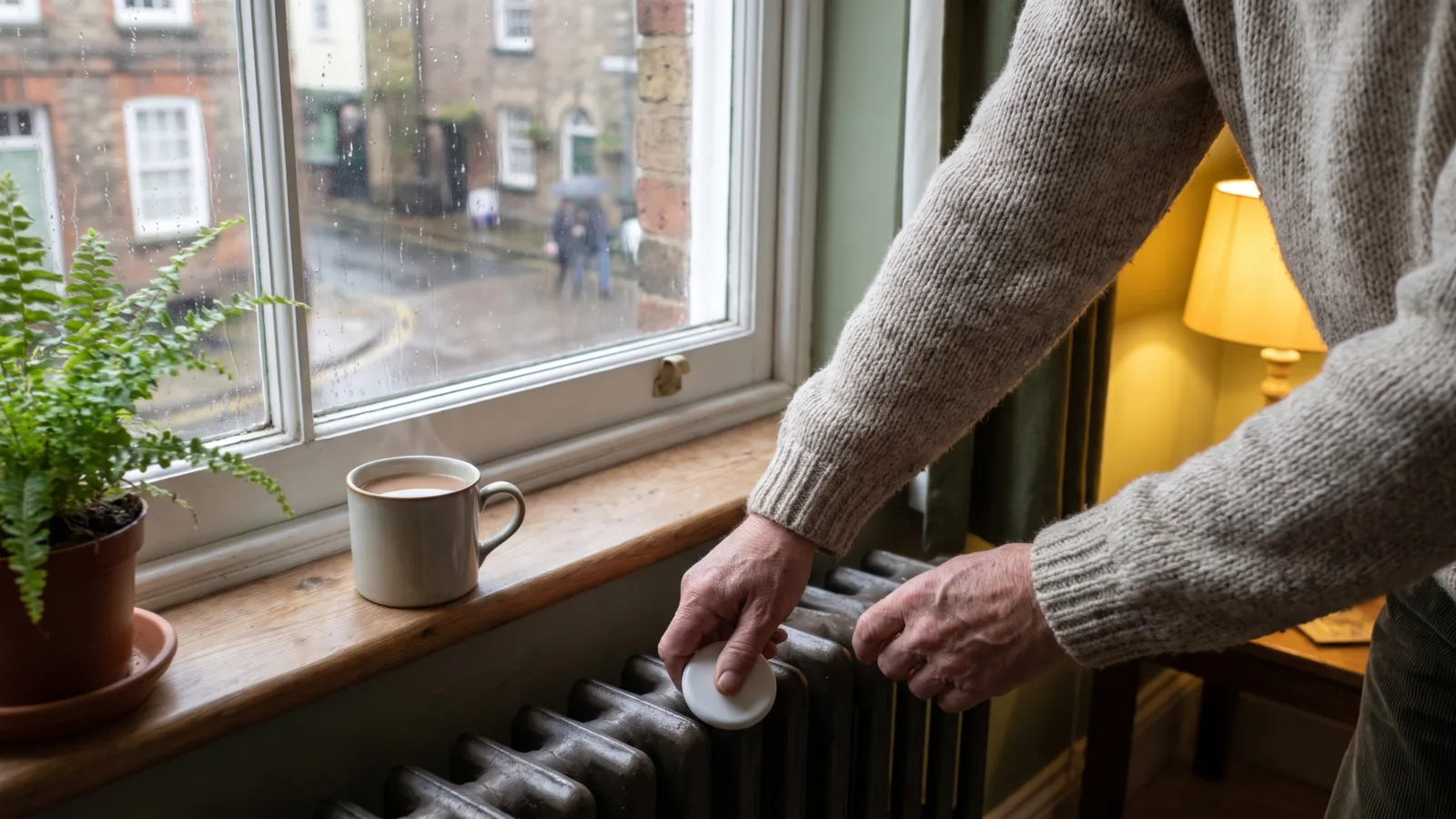
Will energy bills come down this winter?
Nothing official says they will. The last decision on prices was a rise. On 26 August 2026 Ofgem, the energy regulator, announced a 4% increase in the price cap for 1 October to 31 December 2026: from £1,663 to £1,723 a year for a typical household paying by Direct Debit for gas and electricity, if that level lasted a year. That is £60 a year, or £5 a month.
Ofgem said the increase reflects higher wholesale gas prices from the conflict in the Middle East. Gas bills went up by 8%, so homes that don't use gas saw a much smaller rise, of less than 1%. Ofgem also said around 35% of households are on fixed tariffs and were not affected by this rise.
The one fall on the record is the VAT cut on electricity from 1 October. Ofgem said it means electricity bills "will remain broadly stable" and that the October cap would otherwise have been around £45 higher; the Treasury says households on fixed tariffs saw their electricity prices fall when it took effect. The Budget itself describes its £100 payment as help "with the rising cost of energy". No official source we read on 14 November says overall bills are coming down this winter.
January's cap isn't set yet
The cap changes every three months. Ofgem's published schedule says the levels for 1 January to 31 March 2027 "will be announced by: 25 November 2026", and that it may publish earlier "if we need to because of external reasons". On 14 November its price cap levels page still listed October to December 2026 as the latest period.
So any January figure you see before then is a forecast, not a decision. We keep the forecasts, each with its date and who made it, on our January price cap page. Every one we could check at source on 2 November pointed to a rise, not a fall. The next firm number will be Ofgem's.
What the Budget changes, and when
The Budget on 28 October 2026 did not set the price cap, which is Ofgem's job. Its energy measures arrive at different times:
VAT on household electricity in Great Britain is already 0% from 1 October 2026 to 31 March 2027. The Budget extends that until July 2027 and says this "is expected to take around £50 off the annual Ofgem price cap in April 2027". The Treasury says the exact saving depends on how much electricity each home uses and on future prices.
A £100 Household Energy Payment goes to homes in council tax bands A to D in England from January 2027, up to 20 million households. The Budget also gives councils in England £100 million for further targeted support. The governments of Scotland, Wales and Northern Ireland receive their share of the funding.
The Budget also says no new policy costs will be put on bills until a Cost Control Framework is in place at the 2027 spending review, and that electricity standing charges will be reformed, with details next year.
Home Alerts members
The full picture, for your home
Each week, what's happening across Britain set against your own address: your water company, your power network, fuel for your car and the gaps in your kit. Free for your own home. Sign up in a minute.
Start free →Britain's figures from our live trackers, 15 November.
The gas standing charge: moved, not removed
The standing charge is the daily fee you pay for gas whether or not you use any. The Treasury says it is about £108 a year for a typical household. The government has asked Ofgem to abolish it on household gas bills in Great Britain, around 23 million homes, aiming for the end of 2027 or as soon as possible after. The Budget gives no earlier date.
The cost doesn't disappear. The Budget says Ofgem will make sure suppliers recover these costs through gas unit rates instead. The Treasury estimates 60% of households with a gas account could save around £45 a year on average. The Budget says "a number of households may be less able to make the most of the reform", and the government says it will set out "targeted mitigation for a small number of households" in due course.
What it means for one home's winter
The cap is not a limit on your bill. Ofgem says it is the maximum your supplier can charge for each unit of energy and the standing charge together, and "it does not limit the cost of your total bill". What you pay depends on what you use, and winter is when most homes use the most.
Here is how the October to December cap works out, using Ofgem's average Direct Debit rates for England, Scotland and Wales (our arithmetic). Before you use anything, a 31-day month like December costs £17.00 in electricity standing charges (54.83p a day) and £9.20 for gas (29.68p a day), so £26.20 in total. Each 100 kWh of gas then costs £7.97, and each 100 kWh of electricity £26.32. Your region and how you pay change these figures.
From 1 January the January cap's rates will apply instead. Ofgem says it will publish them by 25 November. The quickest way to see your own winter is your usage in kWh on your bill or in your supplier's app, multiplied by the new rates when they're out.
Help that exists now
The Warm Home Discount is a one-off £150 off your electricity bill for eligible households. GOV.UK says you'll usually get it automatically if you're eligible, though in Scotland you may need to apply to your supplier. If one supplier provides both your gas and electricity, you may be able to get it on your gas bill instead. It isn't available in Northern Ireland.
If you're already behind, talk to your supplier before the debt grows. Our guide sets out the grants that exist.
Common questions
Will energy bills come down in 2027?
No official source says so yet. Ofgem sets the cap for January to March 2027 by 25 November 2026. The Treasury expects the extended 0% VAT on electricity to take around £50 off the annual cap in April 2027, but that is one part of the bill, not a forecast of the whole cap.
When is the next price cap announced?
Ofgem's schedule says it will announce the cap for 1 January to 31 March 2027 by 25 November 2026, and may publish earlier if it needs to because of external reasons.
Does scrapping the gas standing charge make gas cheaper?
It moves the cost rather than removing it: the fixed costs go into the price of each unit of gas. The Treasury estimates 60% of households with a gas account could save around £45 a year on average, and says it will set out targeted mitigation for a small number of households. It is aimed for the end of 2027 or as soon as possible after.
Who gets the £100 Household Energy Payment?
Households in council tax bands A to D in England, from January 2027, according to the Budget: up to 20 million homes. The governments of Scotland, Wales and Northern Ireland receive their share of the funding.
Is the price cap a limit on my bill?
No. Ofgem says the cap is the maximum your supplier can charge for each unit of energy and the standing charge together, and it does not limit your total bill. The more energy you use, the more you pay.
Sources (8)
- Ofgem: Energy price cap will rise by 4% from October 2026 (press release, 26 August 2026)
- Ofgem: Changes to the energy price cap between 1 October and 31 December 2026announcement schedule: January 2027 cap by 25 November 2026
- Ofgem: Energy price cap default tariff levelslatest period listed 1 October to 31 December 2026, read 14 November 2026
- Ofgem: Energy price cap unit rates and standing charges, 1 October to 31 December 2026
- Ofgem: Energy price cap and standing charges explained
- HM Treasury: Budget 2026 (28 October 2026)
- HM Treasury: Chancellor abolishes standing charges on gas bills to make payments fairer (28 October 2026)
- GOV.UK: The Warm Home Discount Scheme
PreparedBritain is independent and not affiliated with HM Government.
See our checks first on Google. Add PreparedBritain as a preferred source and Google will show our stories to you more often in Top Stories.

The Emergency Kit Checklist
The GOV.UK Prepare essentials on one printable page — tick them off as you go and keep it with the kit. Free, no catch.
Download it straight away. We'll also send the occasional briefing when something genuinely matters — severe weather, live incidents, real price drops. Nothing else.
Latest from our live data
All stories → News · 15 NovYellow cold-health alert for North East, North West and Yorkshire and The Humber, 15 to 19 Nov
 News · 15 NovCould UK flights be grounded like the US? What failed in 2023, 2025 and 2026, and what to carry
 News · 15 NovUS flights grounded: your rights if your flight to or from America was cancelled or delayed
For the children this Christmas

Keep reading
All planning & the national picture guides →Is there an outage in my area? How to check power, broadband and mobile in the UK
Each service has its own check. For power, a postcode check and the free 105 line. For internet and mobile, your…
Is there going to be a worldwide blackout? What the UK record says, and what it doesn't
None of the official sources we read forecasts a worldwide blackout. Friday's 'global outage' was Microsoft's IT…
Is there going to be a war in England? What the official record says, and what it doesn't
None of the official sources we read says a war in England is coming or gives a date. The National Risk Register…