
Will there be a shortage of water in the UK? What reservoirs and drought data show
England is short of rain, not tap water: reservoirs are 60.1% full, 17% below average, 11 areas are in drought and 10 water companies have hosepipe bans, but the government says customer supplies will not be interrupted. What the data shows and what it means at home.
Not of tap water, on the official record so far. The government said in October that customer water supplies "will not be interrupted" in England's drought, and the UK Health Security Agency says that if a supply is interrupted, your water company will provide an alternative. What England is short of is rain. In the Environment Agency's newest weekly report, published on 6 November, England's reservoirs were 60.1% full, "17% below average for the time of year", up from 57.9% a week earlier. Eleven of its areas are in drought, parts of the South West and Sussex are in severe drought, and 10 water companies have hosepipe bans in force. The agency says public supplies "remain under pressure in some drought-affected areas" and that ending the drought by spring needs at least 120% of average rainfall over six months. Wales has parts in drought but no Welsh Water restrictions; eastern Scotland has largely recovered. At home: follow any hosepipe ban, keep drinking and washing as normal, and cut waste.
By Tom Calder · Updated 13 November 2026 · Sourced to the Environment Agency's weekly report Dry weather and drought in England, 30 October to 5 November 2026 (the newest on 13 November), its October 2026 water situation report, the government's drought releases of 16 September, 15 October and 20 October 2026, the UK Health Security Agency's drought advice, South West Water's reservoir levels, hosepipe ban page and 12 November release, Natural Resources Wales, Welsh Water and SEPA, all read on 13 November 2026, and to our own drought and hosepipe-ban trackers
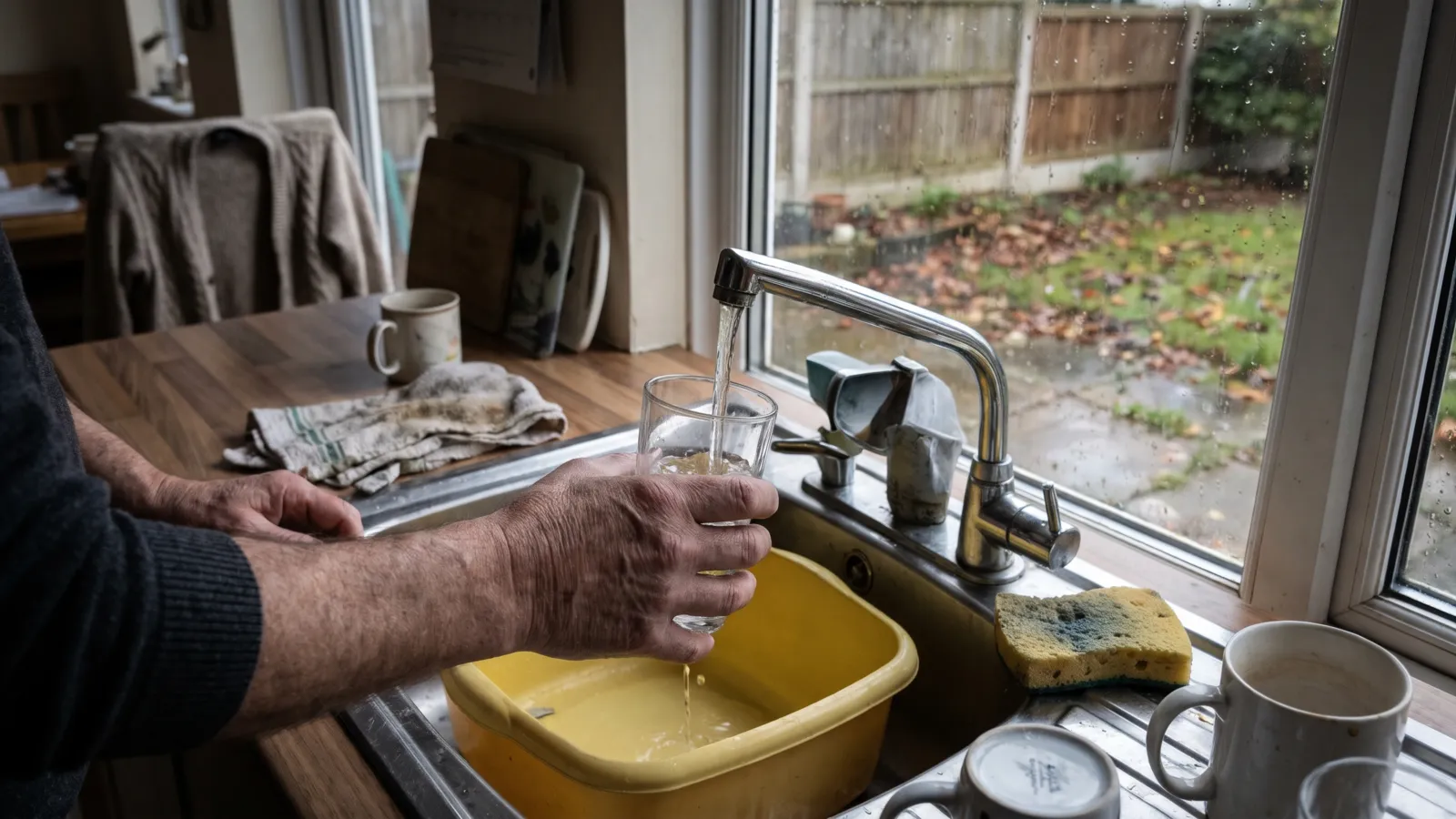
Will there be a shortage of water?
The question is being searched as South West Water asks customers in Devon and Cornwall to "continue to use water wisely". The short answer from the official record: England is in a drought, which is a shortage of rain, and the response so far is restrictions on non-essential use, not taps running dry. On 20 October the water minister, Emma Hardy, said: "While customer water supplies will not be interrupted, declaring a severe drought allowed us to ensure proactive steps are taken to safeguard water."
That is not the same as no pressure. The Environment Agency's report for 30 October to 5 November says: "Public water supplies remain under pressure in some drought-affected areas despite good rainfall in October." Our story on why Storm Austen won't end the drought follows the weekly figures in more detail.
Where England's reservoirs stand
The agency's newest report says: "Total storage for England rose to 60.1% as of 3 November, although this remains 17% below average for the time of year." It was 57.9% as of 27 October. Fifteen reservoirs are less than half full and eight reservoirs or groups are exceptionally low; just three are normal for the time of year. These are England's figures only.
October helped: England had 101mm of rain, 112% of the long-term average. But the agency's October water situation report says April to October was "the ninth driest April to October period for England since records began in 1871", with 72% of average rainfall. The first week of November was very dry, with an average of 2mm across England, and river flows fell at every site the agency reports on.
The South West is lowest. South West Water's own figure for its area was 36% on 11 November, against 57% at the same point last year. On 12 November the company said: "The South West is in a critical phase of an exceptionally prolonged drought."
Drought areas and hosepipe bans
"There have been no changes to Environment Agency drought status this week," the agency says. Eleven of its areas in England are in drought: Devon, Cornwall and the Isles of Scilly; Wessex; Kent and South London; Solent and South Downs; East Anglia; Hertfordshire and North London; Thames; the West Midlands; the East Midlands; Lincolnshire and Northamptonshire; and Yorkshire. Parts of Cornwall, Devon, Dorset, Somerset and East and West Sussex are in severe drought. The Northeast is in prolonged dry weather, and two areas in the North West moved to recovery on 28 October.
Ten water companies have hosepipe bans in force: South East Water, Southern Water (Hampshire and the Isle of Wight), Anglian Water, Affinity Water (central and east regions), Cambridge Water, Thames Water, Essex and Suffolk Water, South West Water, Wessex Water and Bristol Water. The report lists none lifted. Our hosepipe ban tracker shows whether your area is covered, and our drought tracker carries each weekly figure.
Home Alerts members
The full picture, for your home
Each week, what's happening across Britain set against your own address: your water company, your power network, fuel for your car and the gaps in your kit. Free for your own home. Sign up in a minute.
Start free →Britain's figures from our live trackers, 13 November.
Wales, Scotland and Northern Ireland
The reservoir figures above are England's. In Wales, Natural Resources Wales said on 5 November that "Southeast Wales, Northeast Wales & Upper Severn catchments, remain in drought", with the southwest and northwest in recovery. Welsh Water's hosepipe ban page says: "There are now no restrictions in place for Welsh Water customers."
In Scotland, SEPA's report of 29 October was headed "Stormy weather brings widespread recovery in eastern Scotland after months of water scarcity". Seven catchments remained at early warning, none at alert or scarcity, and it was SEPA's last weekly report of 2026. We found no hosepipe ban or drought notice in Northern Ireland Water's recent news.
What it would take to end the drought
The agency says: "We need at least 120% of average rainfall over the next 6 months for the entire country to be out of drought by next spring." Its outlook for the week after the report was dry: "High pressure is expected to dominate much of England next week, bringing mainly dry conditions with little rainfall expected."
The agency also says it expects "water companies to follow their drought plans and act early to ensure there are sufficient supplies." Three companies, South East Water, South West Water and Southern Water, have applied for drought orders banning some non-essential uses of water; the government said on 20 October these were under consideration by the Environment Secretary.
What it means at home
If your company has a hosepipe ban, its rules apply: South West Water's, for example, covers watering the garden, washing the car and filling a paddling pool with a hosepipe, and says: "Water can still be used as normal for drinking, washing and cooking." Our guide to hosepipe ban rules covers what is allowed.
The UK Health Security Agency's drought advice is clear on health: "Do not reduce your water intake in an attempt to conserve water," and keep washing your hands. It suggests showers instead of baths. South West Water says a leaking toilet can waste up to 400 litres a day. If your taps ever do stop, our guide to what to do when there's no water supply covers your rights.
Common questions
Will there be a shortage of water in the UK?
Not of tap water, on the official record so far. The government said in October that customer water supplies will not be interrupted in England's drought. England is short of rain: reservoirs were 60.1% full on 3 November, 17% below average, and 10 water companies have hosepipe bans. The Environment Agency says supplies remain under pressure in some drought-affected areas.
How full are England's reservoirs?
60.1% as of 3 November, which the Environment Agency says is 17% below average for the time of year. That is up from 57.9% a week earlier. Fifteen reservoirs are under half full, and South West Water's area was at 36% on 11 November.
Which water companies have a hosepipe ban?
Ten, in the Environment Agency's report for 30 October to 5 November: South East Water, Southern Water (Hampshire and the Isle of Wight), Anglian, Affinity (central and east), Cambridge, Thames, Essex and Suffolk, South West, Wessex and Bristol Water. Welsh Water has no restrictions.
When will the drought end?
The Environment Agency says at least 120% of average rainfall over the next six months is needed for the whole of England to be out of drought by next spring. It gives no date.
Should I drink less water to save it?
No. The UK Health Security Agency says: do not reduce your water intake in an attempt to conserve water, and keep washing your hands. Save water elsewhere: shorter showers, fixing leaks and following any hosepipe ban.
Sources (11)
- Environment Agency, Dry weather and drought in England: 30 October to 5 November 2026 (published 6 November 2026), read 13 November 2026
- Environment Agency, Water situation: October 2026 summary (published 11 November 2026), read 13 November 2026
- Defra and Environment Agency, Water company bosses update National Drought Group on resilience (20 October 2026), read 13 November 2026
- Defra, Government activates plan to protect consumers as severe drought declared in parts of England (15 October 2026), read 13 November 2026
- UK Health Security Agency, Public health impact of drought: advice for the public (updated 9 November 2026), read 13 November 2026
- South West Water, Reservoir levels (11 November 2026), read 13 November 2026
- South West Water, Helping to keep water flowing (12 November 2026), read 13 November 2026
- South West Water, Hosepipe ban, read 13 November 2026
- Natural Resources Wales, Dry weather blog 2026 (entry of 5 November 2026), read 13 November 2026
- Welsh Water, Hosepipe ban, read 13 November 2026
- SEPA, Water scarcity report, 29 October 2026, read 13 November 2026
PreparedBritain is independent and not affiliated with HM Government.
See our checks first on Google. Add PreparedBritain as a preferred source and Google will show our stories to you more often in Top Stories.

The Emergency Kit Checklist
The GOV.UK Prepare essentials on one printable page — tick them off as you go and keep it with the kit. Free, no catch.
Download it straight away. We'll also send the occasional briefing when something genuinely matters — severe weather, live incidents, real price drops. Nothing else.
Latest from our live data
All stories →
Keep reading
All planning & the national picture guides →Why are we being told to prepare for an emergency? What the government says it's for
Headlines say UK households are being urged to prepare for emergencies and 'attacks'. The government's own reasons…
Should you stockpile for two weeks, not three days? What the government actually says
A Daily Mail headline told Brits to forget three days and stockpile for two weeks. The two weeks is one academic's…
The Santa tracker is live: see what time he reaches your town
Our Santa tracker went live on 12 November 2026. Put in a postcode and it shows the time Santa is due in your town…