
Why are we being told to prepare for an emergency? What the government says it's for
Headlines say UK households are being urged to prepare for emergencies and 'attacks'. The government's own reasons are everyday disruption such as storms, freeing up emergency services for those most in need, and matching France, Ireland and the Netherlands. What Be Ready and the National Risk Register say, and what they don't.
You are being asked to prepare so that households who can manage for three days on their own do, leaving emergency services free to help those who need them most. That is the reason the Cabinet Office gave when it launched Be Ready on 22 October 2026, pointing to severe weather such as last winter's storms and this summer's wildfires, which can occasionally affect power, water, phones and the internet. The launch release does not mention war or attacks, and we found no new household advice from the Cabinet Office since then. Attacks do appear on the Be Ready website, which opens "From severe weather to cyber attacks" and lists terrorism and cyber among 18 hazards. The National Risk Register, the government's assessment of the most serious risks to the UK, sets out worst plausible cases for planners, not predictions. The advice is three days of basics, built up during your normal shopping, and the minister says it is for "those who can".
By Tom Calder · Updated 12 November 2026 · Sourced to the Cabinet Office's Be Ready launch release (22 October 2026), the Be Ready website, and the National Risk Register 2025 and its GOV.UK page, all read on 12 November 2026
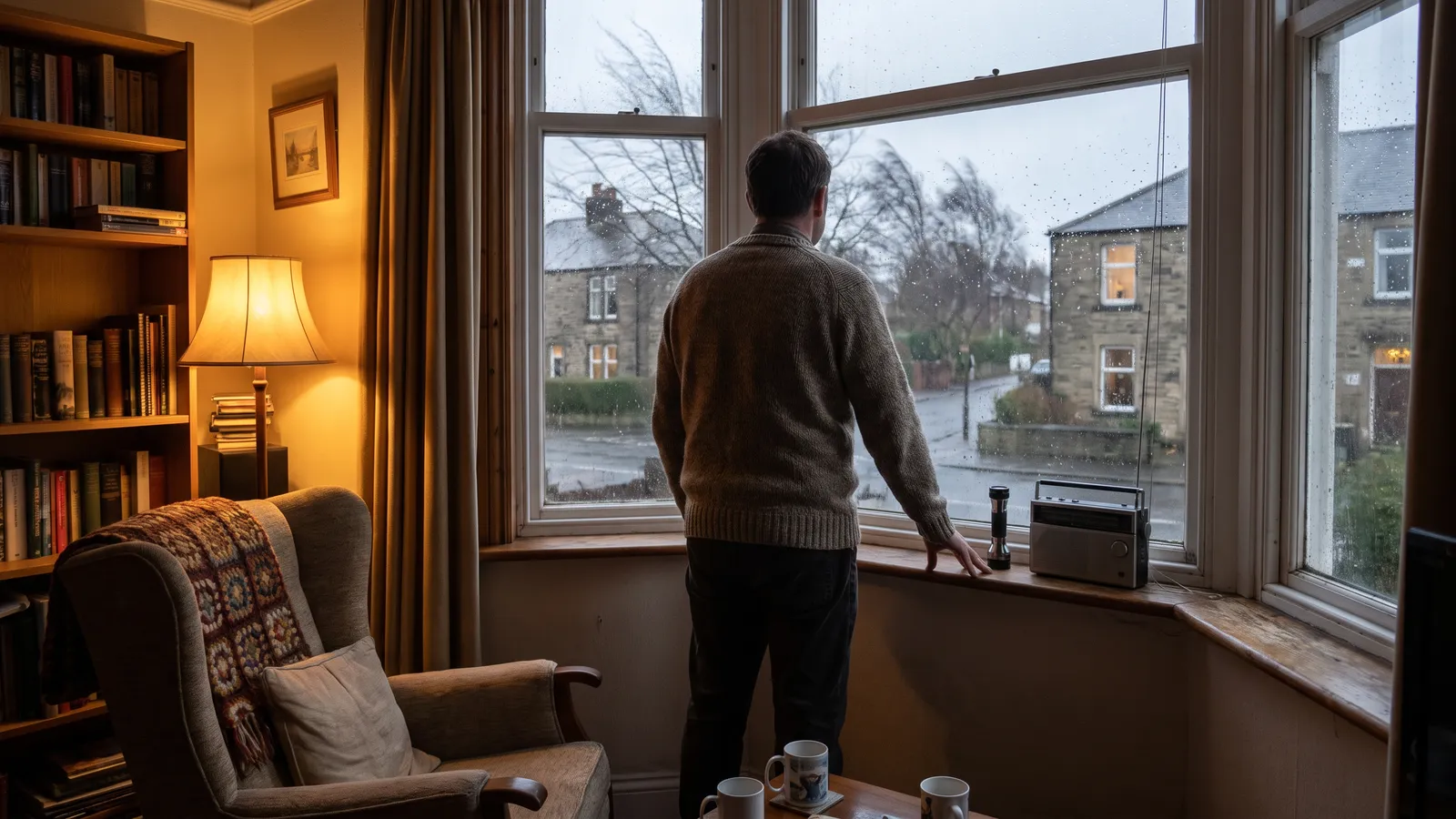
Why are we being told to prepare for an emergency?
The question follows headlines such as "UK households urged to prepare for emergencies and 'attacks'. Here's what to buy". The government's own answer is in the release the Cabinet Office published when it launched Be Ready on 22 October 2026. It says the advice helps "people feel better prepared for events such as severe weather, which can occasionally affect services like power, water, and the internet."
It gives a recent reason, "storms last winter and the wildfires this summer", and a practical one: "if households that can take these steps do, emergency services will be able to prioritise those most in-need if an emergency were to happen." Our story on the checklist goes through what it asks for, item by item.
The three reasons the government gives
First, everyday disruption. Be Ready is "the first stage of a three-year campaign" for events such as severe weather, the release says. Second, taking pressure off the emergency services. Dan Jarvis, the Security Minister, said that by taking simple steps "people can reduce pressure on emergency services, helping them prioritise people who need more support in an emergency."
Third, catching up with neighbours. The release says launching the campaign "brings the UK into line with European peers who all run similar campaigns already", and that the three-day advice "is also used by France, Ireland and The Netherlands." It is not brand new either: "The Government has published resilience advice for households since May 2024", and "much of the advice has not changed".
Where the word 'attacks' comes from
It is on the Be Ready website, not in the launch release. The site's home page opens: "From severe weather to cyber attacks, emergencies can disrupt the services you rely on." Its hazards section lists 18 types of emergency, from storms, flooding, power cuts and water supply interruptions to cyber, terrorism, infectious disease outbreaks and wildfires, which it says "could be natural, human-induced, or both."
The 22 October release itself does not use the words attack, war or cyber, and does not point to any particular coming event. When we checked GOV.UK on 12 November, the Cabinet Office had published no further household preparedness announcement since the launch. Our pieces on whether the UK is preparing for war and what the NCSC said about cyber attacks cover those headlines.
Home Alerts members
The full picture, for your home
Each week, what's happening across Britain set against your own address: your water company, your power network, fuel for your car and the gaps in your kit. Free for your own home. Sign up in a minute.
Start free →Britain's figures from our live trackers, 13 November.
What the National Risk Register is, and isn't
The National Risk Register, published by the Cabinet Office on 16 January 2025, is "the government's assessment of the most serious risks facing the UK". It "includes information about 89 risks, within 9 risk themes", from terrorism, cyber and state threats to storms and heatwaves.
It is often quoted as if it were a forecast. It says otherwise: its scenarios "are not a prediction of what is most likely to happen, instead they represent the worst plausible manifestation of that particular risk." It is written for planners: "This edition of the NRR is not targeted at the general public." For households, it points to the advice that is now Be Ready, saying "Taking action now will make it easier to manage if an emergency does happen."
What you are actually being asked to do
Be ready for three days. "Being ready for 3 days helps you manage while support reaches those most in need," the Be Ready site says. The checklist is ordinary: bottled water, food you would usually eat that needs no cooking, a torch, a radio, a power bank, some cash, blankets, copies of documents, medicines, and supplies for babies and pets. Our story on two weeks versus three days covers how much that is.
It is advice, not an order. "Those who can follow this advice should follow this advice," Mr Jarvis said, and the site accepts that "not everyone will be able to take all the actions in the guidance". It says you don't need to do it all at once: pick up missing items "during your regular shopping trips to help spread the cost". Some steps are free, such as signing up to the Priority Services Register if you are eligible.
Common questions
Why are we being told to prepare for an emergency?
The Cabinet Office says it wants households that can manage for three days to do so, so emergency services can prioritise those most in need. Its example is severe weather, such as last winter's storms and this summer's wildfires, which can occasionally affect power, water, phones and the internet.
Is the Be Ready advice because of a war or an attack?
The launch release of 22 October 2026 does not mention war or attacks. The Be Ready website does list cyber and terrorism among 18 hazards, alongside storms, flooding, power cuts and disease outbreaks, and opens "From severe weather to cyber attacks".
Is the National Risk Register a prediction?
No. It says its scenarios "are not a prediction of what is most likely to happen" but the worst plausible version of each risk, set out so that planners can prepare. It says it is not targeted at the general public.
Do I have to follow the Be Ready advice?
No. It is advice, not an order. The Security Minister said "Those who can follow this advice should follow this advice", and the site says not everyone will be able to take every step.
How long does the government say to prepare for?
Three days. Be Ready asks for bottled water at 3 litres per person per day for drinking, non-perishable food for 3 days, and a short list of basics, built up gradually.
Sources (5)
- Cabinet Office, Households encouraged to take small, simple steps to stay prepared in an emergency (22 October 2026: severe weather, three-year campaign, emergency services, France, Ireland and the Netherlands, Dan Jarvis), read 12 November 2026
- GOV.UK Be Ready, home page ("From severe weather to cyber attacks"), read 12 November 2026
- GOV.UK Be Ready, Be ready for emergencies (3 days, build up gradually, not everyone can take every step), read 12 November 2026
- GOV.UK Be Ready, Be informed about hazards (18 hazard types), read 12 November 2026
- Cabinet Office, National Risk Register 2025 (16 January 2025: 89 risks in 9 themes, reasonable worst-case scenarios, not targeted at the general public), read 12 November 2026
PreparedBritain is independent and not affiliated with HM Government.
See our checks first on Google. Add PreparedBritain as a preferred source and Google will show our stories to you more often in Top Stories.

The Emergency Kit Checklist
The GOV.UK Prepare essentials on one printable page — tick them off as you go and keep it with the kit. Free, no catch.
Download it straight away. We'll also send the occasional briefing when something genuinely matters — severe weather, live incidents, real price drops. Nothing else.
Latest from our live data
All stories →
Keep reading
All planning & the national picture guides →Should you stockpile for two weeks, not three days? What the government actually says
A Daily Mail headline told Brits to forget three days and stockpile for two weeks. The two weeks is one academic's…
The Santa tracker is live: see what time he reaches your town
Our Santa tracker went live on 12 November 2026. Put in a postcode and it shows the time Santa is due in your town…
Is stockpiling illegal in the UK? What the rules say about buying extra food and water
We found no law limiting the food and water you keep at home, and the government's Be Ready campaign asks for three…