Best personal & careline alarms UK (2026) — compared & price-tracked
A personal alarm puts a single button on someone's wrist, around their neck or on the back of a phone — and the entire decision is what happens after it is pressed. The thirteen devices compared here run from inexpensive siren alarms that make noise but call nobody, through big-button 4G phones with an SOS key, to GPS pendants and watches with two-way SOS calling, from budget pendants to high-end watches. Almost every one is self-monitored: alerts go to family or friends you choose, not to a staffed response centre — and the siren alarms reach nobody at all. The one exception is the CPR Guardian IV Pro, which its maker will sell on a plan that does include a 24/7 monitoring centre, at a price we compare openly below. Round-the-clock monitored careline services — Careline365, LifeConnect24, Taking Care, or your council's telecare team, typically £15–25 a month — are a different category, which we describe for comparison but do not link to. So the useful question is not which device has the most features, but who will answer when the button is pressed — and whether they would genuinely answer at three in the morning. Prices and monthly costs below are tracked against UK retailers and checked against manufacturer documentation wherever we could obtain it.
By Tom Calder · Updated 4 November 2026 · 13 products, all price-tracked
Our picks
 Photo: Amazon
Doro Leva E30-4G Flip Phone for Elderly - Large 2.8" Screen, External Display, High Contrast Keys, Loud & Clear Sound, Camera, Secure Button - Charging Cradle
An independent older adult who wants one simple, big-button phone with a one-touch way to ring family — not someone who needs automatic fall alerts.
as of 4 Nov 2026, 20:07 GMT · Details
Product prices and availability are accurate as of the date/time indicated and are subject to change. Any price and availability information displayed on Amazon.co.uk at the time of purchase will apply to the purchase of this product. Photo: Amazon
Locàite Fall Alarm Watch
A family happy to be the first responder — someone wants live GPS and automatic fall alerts sent straight to their own phone rather than a call centre.
as of 4 Nov 2026, 20:07 GMT · Details
Product prices and availability are accurate as of the date/time indicated and are subject to change. Any price and availability information displayed on Amazon.co.uk at the time of purchase will apply to the purchase of this product. Photo: Amazon
CPR Guardian IV Pro 4G GPS SOS Personal Alarm Watch
Someone who wants a smartwatch-style alarm with live GPS tracking and a family monitoring app, and is prepared to pay an ongoing monthly service fee on top of the device.
as of 4 Nov 2026, 20:07 GMT · Details
Product prices and availability are accurate as of the date/time indicated and are subject to change. Any price and availability information displayed on Amazon.co.uk at the time of purchase will apply to the purchase of this product.All 13 compared
| Alarm | Connectivity | Fall detection | Monitoring | Battery / charging | Price |
|---|---|---|---|---|---|
4G flip phone, needs own SIM (~£5-10/mo) · None — basic phone, no fall sensor · Self-monitored only: Secure button dials preset · Rechargeable battery, charging cradle included An independent older adult who wants one simple, big-button phone with a one-touch way to ring family — not someone who needs automatic fall alerts. | 4G flip phone, needs own SIM (~£5-10/mo) | None — basic phone, no fall sensor | Self-monitored only: Secure button dials preset | Rechargeable battery, charging cradle included | £83.99 at Amazon as of 4 Nov 2026, 20:07 GMT · DetailsProduct prices and availability are accurate as of the date/time indicated and are subject to change. Any price and availability information displayed on Amazon.co.uk at the time of purchase will apply to the purchase of this product.In stockCheck price → |
Our verdictOur verdictResearched The Leva E30-4G is best understood as an easy-to-use 4G flip phone with an SOS shortcut, not a dedicated careline alarm. Its Secure button rings a shortlist of family or friends in turn, which is a genuinely useful safety net for someone still mobile and independent, but it won't detect a fall or share a location the way a proper telecare pendant does. Best for An independent older adult who wants one simple, big-button phone with a one-touch way to ring family — not someone who needs automatic fall alerts. Good
Worth knowing
Who shouldn't buy it: Skip this if you want automatic fall alerts or 24/7 professional monitoring — for that, look at a proper self-monitored SOS pendant with a fall sensor, or a monitored telecare service such as Careline365, LifeConnect24 or your local council's telecare team (typically £15-25/month). This is a phone with an SOS shortcut, not a monitoring device. | |||||
4G (EE network) · Automatic fall detection sends SOS alert + call · Self-monitored via family app · Up to 4 days on power-saving mode A family happy to be the first responder — someone wants live GPS and automatic fall alerts sent straight to their own phone rather than a call centre. | 4G (EE network) | Automatic fall detection sends SOS alert + call | Self-monitored via family app | Up to 4 days on power-saving mode | £129.99 at Amazon as of 4 Nov 2026, 20:07 GMT · DetailsProduct prices and availability are accurate as of the date/time indicated and are subject to change. Any price and availability information displayed on Amazon.co.uk at the time of purchase will apply to the purchase of this product.In stockCheck price → |
Our verdictOur verdictResearched A genuinely 4G device, so it isn't affected by the UK's 2G/3G switch-off, and the automatic fall alert plus GPS tracking are useful if a relative can realistically answer day or night. It's not a substitute for a monitored careline service, and the true running cost is the watch plus a mandatory £14.99/month SIM plan. Best for A family happy to be the first responder — someone wants live GPS and automatic fall alerts sent straight to their own phone rather than a call centre. Good
Worth knowing
Who shouldn't buy it: Skip this if no family member can reliably answer alerts around the clock — a monitored careline service (roughly £15-25/month, e.g. Careline365, Taking Care or your local authority's telecare team) is the safer fit there. Read the full review → | |||||
4G · Automatic fall detection, alerts contacts · Requires an active subscription to function · Manufacturer claims up to 4 days Someone who wants a smartwatch-style alarm with live GPS tracking and a family monitoring app, and is prepared to pay an ongoing monthly service fee on top of the device. | 4G | Automatic fall detection, alerts contacts | Requires an active subscription to function | Manufacturer claims up to 4 days | £179.99 at Amazon as of 4 Nov 2026, 20:07 GMT · DetailsProduct prices and availability are accurate as of the date/time indicated and are subject to change. Any price and availability information displayed on Amazon.co.uk at the time of purchase will apply to the purchase of this product.In stockCheck price → |
Our verdictOur verdictResearched The IV Pro is one of the few personal alarm watches already running on 4G rather than 2G/3G, so it won't be caught out by the UK network switch-off. It's a capable, well-specced device, but treat the watch and the monitoring subscription as one purchase, not two — without a plan the SOS and GPS features don't work. Best for Someone who wants a smartwatch-style alarm with live GPS tracking and a family monitoring app, and is prepared to pay an ongoing monthly service fee on top of the device. Good
Worth knowing
Who shouldn't buy it: Don't buy if you want a one-off purchase with no ongoing bill — a monitoring plan (from about £15/month self-monitored, up to £43/month for 24/7 call-centre cover, or a £29.99/month all-in bundle) is required to use the watch's SOS and GPS features at all. | |||||
 4G LTE with VoLTE calling · None — no automatic fall detection · Self-monitored only: Doro Secure Button · 1,150mAh battery An older relative who wants a simple, loud, easy-to-hold 4G phone with a one-press help button they operate themselves — not an automatic fall-alert or monitored telecare service. | 4G LTE with VoLTE calling | None — no automatic fall detection | Self-monitored only: Doro Secure Button | 1,150mAh battery | £70 at Amazon as of 4 Nov 2026, 20:07 GMT · DetailsProduct prices and availability are accurate as of the date/time indicated and are subject to change. Any price and availability information displayed on Amazon.co.uk at the time of purchase will apply to the purchase of this product.In stockCheck price → |
Our verdictOur verdictResearched This is a straightforward big-button phone rather than a personal alarm: the Doro Secure Button calls or messages the contacts you've set up, but nothing detects a fall or watches location automatically. It's a sensible, future-proof choice for calls and peace-of-mind messaging on the UK's 4G-only networks, at a fair price. Best for An older relative who wants a simple, loud, easy-to-hold 4G phone with a one-press help button they operate themselves — not an automatic fall-alert or monitored telecare service. Good
Worth knowing
Who shouldn't buy it: Don't buy this if you want a device that detects a fall automatically or is watched 24/7 by a response centre — this phone only alerts your own chosen contacts when the button is pressed. For automatic fall detection or round-the-clock monitoring, look at a dedicated telecare pendant or a monitored service such as Careline365 or LifeConnect24 (roughly £15–25/month) instead. | |||||
 4G + outdoor GPS + Wi-Fi home-zone detection · Early-access automatic fall detection · Self/family-monitored via the CPR Guardian PRO+ · Not officially specified for standard use An active older adult who wants an all-in-one wrist alarm with GPS and 4G, and has family willing to monitor alerts via an app rather than pay for a 24/7 call centre. | 4G + outdoor GPS + Wi-Fi home-zone detection | Early-access automatic fall detection | Self/family-monitored via the CPR Guardian PRO+ | Not officially specified for standard use | £119.98 at Amazon as of 4 Nov 2026, 20:07 GMT · DetailsProduct prices and availability are accurate as of the date/time indicated and are subject to change. Any price and availability information displayed on Amazon.co.uk at the time of purchase will apply to the purchase of this product.In stockCheck price → |
Our verdictOur verdictResearched A capable 4G smartwatch-style alarm with real GPS tracking and two-way calling, but it is family-monitored, not professionally monitored, and its fall detection is explicitly an early-access feature rather than a mature one. Budget for the mandatory SIM plan on top of the device price. Best for An active older adult who wants an all-in-one wrist alarm with GPS and 4G, and has family willing to monitor alerts via an app rather than pay for a 24/7 call centre. Good
Worth knowing
Who shouldn't buy it: Don't buy this if you want a proper 24/7 professionally monitored response service (like Careline365, LifeConnect24 or your local authority's telecare) — this device alerts family members via an app, not a trained operator, so it only works if someone reliable is watching their phone. Read the full review → | |||||
 None · Not applicable · None · 2 x CR2032 coin-cell batteries included Carrying in a bag, on a keyring or in a coat pocket as a low-cost personal safety deterrent when out and about — not for home fall or health monitoring. | None | Not applicable | None | 2 x CR2032 coin-cell batteries included | £9.95 at Amazon as of 4 Nov 2026, 20:07 GMT · DetailsProduct prices and availability are accurate as of the date/time indicated and are subject to change. Any price and availability information displayed on Amazon.co.uk at the time of purchase will apply to the purchase of this product.In stockCheck price → |
Our verdictOur verdictResearched This is a keyring-sized personal attack alarm, not a careline pendant: pull the pin or press the button and it lets out a genuinely startling 125dB siren with a flashing strobe, meant to draw attention and buy time to get away. There's no monthly fee, SIM or app — it's a buy-once, carry-anywhere device, but it plays no part in fall detection or 24/7 health monitoring. Best for Carrying in a bag, on a keyring or in a coat pocket as a low-cost personal safety deterrent when out and about — not for home fall or health monitoring. Good
Worth knowing
Who shouldn't buy it: You're buying for an older relative who needs automatic fall detection or a 24/7 monitored SOS line — this is a personal attack alarm for out-and-about safety, not a telecare pendant. For that, look at a monitored careline service (e.g. Careline365, LifeConnect24, or your local authority's telecare team), typically £15–25/month. Read the full review → | |||||
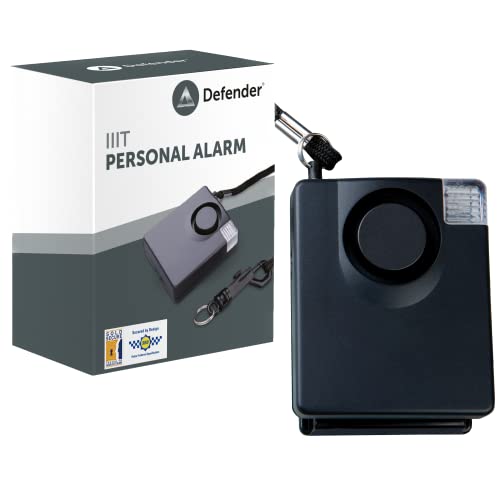 None · None · None · Single 9V PP3 battery included, user-replaceable Carrying as a personal safety/attack-deterrent alarm on a keyring or bag — not for fall detection or telecare monitoring. | None | None | None | Single 9V PP3 battery included, user-replaceable | £12.95 at Amazon as of 4 Nov 2026, 20:07 GMT · DetailsProduct prices and availability are accurate as of the date/time indicated and are subject to change. Any price and availability information displayed on Amazon.co.uk at the time of purchase will apply to the purchase of this product.In stockCheck price → |
Our verdictOur verdictResearched This is a manual panic alarm, not a monitored careline device: pull the pin and it sounds a genuinely startling manufacturer-rated 143dB siren with a bright strobe to deter an attacker and draw attention from passers-by. It has no fall detection and does not call or alert anyone — for that you need a proper telecare pendant. Best for Carrying as a personal safety/attack-deterrent alarm on a keyring or bag — not for fall detection or telecare monitoring. Good
Worth knowing
Who shouldn't buy it: Don't buy this expecting fall detection or a device that calls for help — it's a manual panic/deterrent alarm only. If you need automatic fall alerts or a 24/7 monitored response, look at a proper telecare pendant (e.g. Careline365, LifeConnect24, or your local authority telecare service) instead. | |||||
 4G, unlocked for all UK networks · None — no fall-detection sensor, SOS button only · Self-monitored: SOS button dials up to 5 saved · 1000mAh battery, rated up to 5 days standby An independent older relative who's comfortable using a simple mobile phone and mainly wants one-touch SOS calling to family, not a dedicated monitored alarm. | 4G, unlocked for all UK networks | None — no fall-detection sensor, SOS button only | Self-monitored: SOS button dials up to 5 saved | 1000mAh battery, rated up to 5 days standby | £42.99 at Amazon as of 4 Nov 2026, 20:07 GMT · DetailsProduct prices and availability are accurate as of the date/time indicated and are subject to change. Any price and availability information displayed on Amazon.co.uk at the time of purchase will apply to the purchase of this product.In stockCheck price → |
Our verdictOur verdictResearched The TT760 is a genuinely 4G flip phone (so it's safe from the 2G/3G switch-off) with a dedicated Emergency Assistance button that rings up to five saved contacts in sequence. It's good value for what it is, but it's a phone with an SOS button rather than a purpose-built fall-detection or careline device. Best for An independent older relative who's comfortable using a simple mobile phone and mainly wants one-touch SOS calling to family, not a dedicated monitored alarm. Good
Worth knowing
Who shouldn't buy it: Don't buy this if you need automatic fall detection or guaranteed 24/7 monitored response — for that, a proper telecare pendant or a monitored service such as Careline365, LifeConnect24, Taking Care or your local authority's telecare scheme (typically £15-25/month) is the honest choice instead. Read the full review → | |||||
None · None · None · USB rechargeable (cable included) A loud personal-attack deterrent for lone walking, commuting or door answering — not a fall-detection or telecare device. | None | None | None | USB rechargeable (cable included) | |
Our verdictOur verdictResearched The Ashley Alarm 2 is a well-made rechargeable siren-and-strobe personal safety alarm, not a fall-detection pendant. It has no GPS, no fall sensor and no monitoring service, so it only helps if you or someone nearby can react to the noise. Best for A loud personal-attack deterrent for lone walking, commuting or door answering — not a fall-detection or telecare device. Good
Worth knowing
Who shouldn't buy it: Don't buy this if you need automatic fall detection or a monitored pendant for an older or vulnerable relative — this is a personal-attack alarm, not telecare. For that, look at a proper monitored service (e.g. Careline365, LifeConnect24, or local-authority telecare, typically £15-25/month) rather than this device. Worth knowing too: activation is a pin-pull mechanism that needs reasonable grip strength and dexterity, which can be a genuine barrier if arthritis or limited hand strength is a factor. Read the full review → | |||||
 4G, unlocked for any UK SIM/network · None; no automatic fall detection · Self-monitored only · USB-C charging Someone who wants a simple, affordable big-button mobile with a one-touch SOS key — not a replacement for a monitored pendant alarm. | 4G, unlocked for any UK SIM/network | None; no automatic fall detection | Self-monitored only | USB-C charging | £32.99 at Amazon as of 4 Nov 2026, 20:07 GMT · DetailsProduct prices and availability are accurate as of the date/time indicated and are subject to change. Any price and availability information displayed on Amazon.co.uk at the time of purchase will apply to the purchase of this product.In stockCheck price → |
Our verdictOur verdictResearched The TT890 is a straightforward big-button phone with a rear SOS button that dials your chosen contacts in turn — a low-cost safety net for someone happy to carry a phone. It's self-monitored rather than a 24/7 telecare service, and there's no automatic fall detection, so it only helps if the person is conscious and able to press the button. Best for Someone who wants a simple, affordable big-button mobile with a one-touch SOS key — not a replacement for a monitored pendant alarm. Good
Worth knowing
Who shouldn't buy it: Don't buy this if you need automatic fall detection or a 24/7 monitored response — for that, a proper telecare pendant service (Careline365, LifeConnect24, Taking Care, or your council's telecare team, typically £15-25/month) is the right category, not a mobile phone. | |||||
 4G LTE + GPS/WiFi/mobile-network positioning · Automatic fall alert plus manual SOS button · Self-monitored via companion app · 1000mAh rechargeable Families who want a low-cost, self-monitored GPS pendant for a relative who's still confident living independently, and who can reliably keep an eye on app alerts themselves. | 4G LTE + GPS/WiFi/mobile-network positioning | Automatic fall alert plus manual SOS button | Self-monitored via companion app | 1000mAh rechargeable | £35.99 at Amazon as of 4 Nov 2026, 20:07 GMT · DetailsProduct prices and availability are accurate as of the date/time indicated and are subject to change. Any price and availability information displayed on Amazon.co.uk at the time of purchase will apply to the purchase of this product.In stockCheck price → |
Our verdictOur verdictResearched The V50 is a basic 4G pendant that pushes location and fall/SOS alerts to a family member's phone via an app, rather than to a professional monitoring centre. It's a reasonable low-cost option if someone can reliably watch for those alerts, but as a generic marketplace listing it gives little detail on call quality, charging time, or long-term app support. Best for Families who want a low-cost, self-monitored GPS pendant for a relative who's still confident living independently, and who can reliably keep an eye on app alerts themselves. Good
Worth knowing
Who shouldn't buy it: Don't buy this if you or your relative need guaranteed 24/7 professional response to a fall — for that you need a monitored telecare service (e.g. Careline365, LifeConnect24, or your council's telecare team, typically £15–25 a month), not a self-monitored pendant like this. | |||||
Sold out right now (2)
The shop says these are sold out today. We check stock every hour, and each one moves back up the list when it returns.
| Alarm | Connectivity | Fall detection | Monitoring | Battery / charging | Price |
|---|---|---|---|---|---|
 SureSafe states 4G roaming SIM + GPS · Automatic fall detection plus manual SOS button · Family-monitored, not a 24/7 call centre · 3-4 days per charge (manufacturer figure) Families who want GPS location, fall alerts and two-way calling routed straight to their own phones, without paying for a round-the-clock monitoring centre. | SureSafe states 4G roaming SIM + GPS | Automatic fall detection plus manual SOS button | Family-monitored, not a 24/7 call centre | 3-4 days per charge (manufacturer figure) | Out of stockCheck price → |
Our verdictOur verdictResearched A well-specified smartwatch alarm, though the headline claim that it runs on 4G rather than 2G/3G comes from SureSafe alone — we've asked them to confirm the modem generation, since an archived manual for this model describes older 2G-era hardware, so check carefully before buying a used or refurbished unit. Fall detection and GPS work as a sensible backup to the SOS button rather than the main event. Because it's family-monitored rather than professionally monitored, it suits households where someone is realistically available to respond, not someone living alone with no one nearby. Best for Families who want GPS location, fall alerts and two-way calling routed straight to their own phones, without paying for a round-the-clock monitoring centre. Good
Worth knowing
Who shouldn't buy it: Don't buy it if you live alone with no family realistically available around the clock — a professionally staffed 24/7 monitoring service (Careline365, LifeConnect24, Taking Care, or your local authority's telecare team, typically £15-25/month) is the safer fit there. | |||||
 4G, with 3G/2G fallback · Not included on this base model · Self-monitored · Rechargeable ~700mAh battery Families who want simple, self-monitored GPS location and an SOS button for a relative not yet ready for a full 24/7 monitored careline service. | 4G, with 3G/2G fallback | Not included on this base model | Self-monitored | Rechargeable ~700mAh battery | Out of stockCheck price → |
Our verdictOur verdictResearched A budget self-monitored tracker watch that handles live location, geofencing and SOS calling reasonably well, but the base model has no fall detection — that's reserved for the pricier Plus version, which sits on the same Amazon listing. A reasonable entry-level wandering-support tool if bought with the right expectations. Best for Families who want simple, self-monitored GPS location and an SOS button for a relative not yet ready for a full 24/7 monitored careline service. Good
Worth knowing
Who shouldn't buy it: Don't buy this variant if fall detection matters to you — step up to the Plus model or a proper monitored careline service instead — or if you want 24/7 professional monitoring rather than alerts going straight to family. Also worth confirming with UBEEQUEE that the voice subscription runs over 4G (VoLTE) rather than 2G before you pay for it — this isn't confirmed in the published specs, and UK 2G networks are being phased out. | |||||
ⓘ As an Amazon Associate, PreparedBritain earns from qualifying purchases. We may earn a commission when you buy, or a fee when you request a quote, through our links. When two products are close, commission can decide which one we pick. A clearly better product always wins. Amazon prices come from Amazon's own product data and show the date and time they were retrieved. Prices at other retailers are checked by us, less often. Prices and stock can change at any time, so always check the retailer's price before you buy.
Before you buy
Match the device to the person, because this category covers three genuinely different things.
The siren alarms — Defender's Luna 2.0 and IIIT, and the Ashley Alarm 2 — are out-and-about deterrents: activate them and they produce a piercing siren and strobe to attract attention, but they contact nobody and play no part in fall or health monitoring. Big-button 4G phones with an SOS key — TTfone's TT890 and TT760, Doro's Leva E10 and E30 — suit someone still independent and mobile who wants one press to ring a shortlist of family in turn. The GPS pendants and watches — from the budget V50 to the SureSafeGO and the CPR Guardian IV Pro — add location tracking, two-way calling (a paid add-on rather than a standard feature on the UBEE SAFE) and, on most, automatic fall alerts, all routed to a family app. And if nobody can reliably watch that app, the right answer is usually the category this page doesn't link to: a monitored careline service at the typical £15–25 a month.
The connectivity column is the one with a deadline attached, though a longer one than the marketing implies.
The UK's 3G networks are already off; 2G follows on Ofcom's published timetable, with EE starting in May 2029, Vodafone during 2030 and every operator committed to finishing by 2033 — so a device that depends on 2G will go silent inside the years you'd expect to own it, which is why nothing 2G-only appears here. Read the detail even so: on some budget devices the tracking runs on 4G while voice calls can still drop to 2G — the V50 pendant is the clearest case, and UBEE SAFE's optional voice add-on carries the same question mark — so confirm 4G calling (VoLTE) with the seller before relying on the phone function, and note that Three has no 2G network at all, so there is nothing to fall back to on a Three SIM today. VoLTE is also unconfirmed on the TTfone handsets, so ask before buying if the SOS call is the whole point. The CPR Guardian watches ship with a pre-installed multi-network roaming SIM that switches between UK networks when one signal fades, a real advantage in patchy coverage; the Locàite runs on EE by default, with a multi-network SIM offered. The siren alarms sidestep all of it — no SIM, no network, nothing to switch off.
"Self-monitored" in the monitoring column means alerts go to phones belonging to people you nominate
Up to three app users on the SureSafeGO, up to five contacts on the CPR Guardian Active — and nothing happens if none of them answers. So the honest test of any device here is organisational rather than technical: is there genuinely a rota of people who keep a phone switched on and audible overnight? If yes, family monitoring works well and costs less over the years. If not, the 24/7 route is right — either a dedicated careline service at the typical £15–25 a month, or CPR Guardian's Gold plan, which adds a professional monitoring centre to the IV Pro at about £43 a month. That is well above the going rate for monitored telecare, so compare it squarely against a dedicated service, and ask your council what its telecare team charges before deciding.
Read the fall detection column alongside the battery column, because they interact.
No sensor of this kind catches every fall: SureSafe's manual tells users to press the button first where possible, and CPR Guardian labels the Active's detection an early-access feature. Where a manufacturer offers no such caveat — Locàite states its fall alerts without qualification — treat the silence as marketing confidence, not better engineering. Check what a model actually includes, too: the UBEE SAFE base watch has no fall detection at all (it's reserved for the pricier Plus), and none of the big-button phones carries a sensor. Then the batteries. CPR Guardian says the Active drops to around 12 hours per charge with fall detection enabled — daily charging in practice — against a claimed three to four days on the SureSafeGO and about a week's standby on the V50. A watch sitting on its charger detects nothing, so for a forgetful wearer those gaps matter more than any feature list.
Price the whole first year, not the box.
The SureSafeGO adds a £9-a-month plan to the watch price. The Locàite needs its mandatory £14.99-a-month plan on top of the watch price — worth setting against the £15–25 monthly band where fully monitored services live. The CPR Guardian watches do not function without a plan, from roughly £15 a month — and convert any per-week price to monthly before comparing. The phones just need an ordinary £5–10-a-month SIM; the siren alarms have no running cost beyond a replacement battery. Two ways to pay less: VAT relief under HMRC's VAT Notice 701/7 for buyers with a long-term illness or disability, which you claim by signing a short eligibility declaration at the checkout — the gap between CPR's two IV Pro prices — and Attendance Allowance, which is not means-tested; we cover who qualifies in a separate guide. Ignore decibel one-upmanship — loudness figures are manufacturer-rated, not independently tested — and treat "Police Accredited" in listing titles as marketing; the checkable labels are Secured by Design's Police Preferred Specification and Sold Secure.
We verify every product's specifications against at least two independent sources, re-check its UK price and stock on a schedule where we can track it automatically, and cross-check safety-relevant claims against official guidance. Every review is labelled Researched or Used and reviewed by us: where we've bought a product, or been sent it free, and used it ourselves, its review says which; where we haven't, our verdict is a considered spec-and-evidence comparison, not a hands-on test. When two products are close, commission can decide which one we pick. A clearly better product always wins. Read our full methodology →
Related kit comparisons
Guides that go with this
The UK's old copper phone network is being switched off by January 2027. What the digital switchover means, wh…
What the free Priority Services Register is, who's eligible, the help it gives in a power, gas or water emerge…
Attendance Allowance is tax-free, not means-tested help for people over State Pension age who need care or sup…
Pepper spray and CS spray are prohibited weapons across the UK. What the law says and the sentence it carries,…
Common questions
What is the difference between a personal alarm and a monitored careline service?
Almost everything reviewed on this page is self-monitored: pressing the button calls and texts family or friends you have chosen, and nothing more — and the three siren alarms don't even do that, they simply make a noise. A careline or telecare service adds a staffed monitoring centre — press the button and a trained operator answers, day or night, and can escalate to a keyholder, relative or ambulance. Providers such as Careline365, LifeConnect24 and Taking Care, and many councils' telecare teams, typically charge £15–25 a month. The one device here that can reach a monitoring centre is the CPR Guardian IV Pro on its maker's Gold plan, at about £43 a month. If no family member could dependably answer an alert themselves, the monitored route is the safer choice — we describe it for comparison but don't link to any provider.
Will a personal alarm stop working when 2G is switched off?
It will if it relies on 2G, though not immediately. The UK's 3G networks have already been switched off; 2G goes next on Ofcom's published timetable, with EE beginning in May 2029, Vodafone during 2030 and all operators committed to finishing by 2033. Older pendants with 2G-era modems are therefore a dead end over the life of the device, and none appears in this guide. Two cautions remain. On some budget 4G devices, such as the V50 pendant, tracking uses 4G but voice calls can still fall back to 2G, so confirm 4G calling (VoLTE) with the seller — and remember Three has never run a 2G network, so on a Three SIM there is no fallback at all. And be careful with used or refurbished units: an archived manual for the SureSafeGO describes earlier 2G hardware, so a second-hand bargain may be exactly the stranded device you were trying to avoid.
Does fall detection work on every fall?
No, and the manufacturers say so themselves. SureSafe's manual for the SureSafeGO is explicit that not every fall will be detected and advises pressing the SOS button first where possible; CPR Guardian describes the Active's fall detection as an early-access feature that can miss falls or raise false alarms. These sensors are built to spot hard, sudden falls — that is how the manufacturers themselves describe them — which leaves slower slips and stumbles less certain. We treat automatic detection as a backup for the button, never a substitute. If falls are happening often, mention it to a GP as well — a device raises the alarm after a fall, it does nothing to reduce the risk of the next one.
How much do personal alarms cost to run each month?
Anywhere from nothing to more than a monitored careline. The Defender and Ashley siren alarms have no SIM or subscription at all. The big-button phones need only an ordinary SIM, realistically £5–10 a month. Among pendants and watches, UBEE SAFE's mandatory plan comes as a data-only tier or a dearer one with voice calling; the SureSafeGO costs £9, the Locàite's compulsory plan is £14.99, and the CPR Guardian watches need a plan from about £15 self-monitored up to about £43 with 24/7 centre monitoring. Over a first year, add twelve months of plan to the device price and compare with the £15–25 a month of a fully monitored service.
Can I get help paying for a personal alarm?
Two routes are worth checking. Personal alarms can qualify for VAT relief under HMRC's VAT Notice 701/7 when the user has a long-term illness or disability — you sign a short eligibility declaration for the retailer at the checkout — which is why CPR Guardian lists the IV Pro for less with relief than without, and TTfone also sells the TT890 with VAT relief. Separately, Attendance Allowance — which is not means-tested — can help people over State Pension age who have needed help with personal care for at least six months to meet ongoing costs; we cover who qualifies in a separate guide. Your council's adult social care team may also supply telecare directly, so it is worth asking about an assessment before buying privately.
Do personal alarms keep working in a power cut?
The devices themselves do, for as long as their batteries last — a claimed three to four days on the SureSafeGO, about a week's standby on the V50, but roughly 12 hours on the CPR Guardian Active with fall detection enabled — and chargers need mains power to top anything up. The weaker links are everything either side of the device: a connected pendant needs the mobile network to still be up, and family phones, broadband and app notifications all assume power somewhere. Households relying on a powered alarm or medical device can join the Priority Services Register — the free scheme run by energy suppliers, electricity network operators and water companies to give extra support during outages — and it's the network operator's register that matters most for power cuts. We cover it in a separate guide, along with what the digital landline switchover means for older plug-in careline units.
Are siren alarms any good for an older relative?
As an extra layer when out and about, yes; as the main safety net, no. The Defender Luna 2.0, Defender IIIT and Ashley Alarm 2 are deterrents: they produce a piercing siren and strobe to attract attention, and they contact nobody — no call, no text, no monitoring. Defender's own instructions are candid that the alarm should not be relied on as the sole means of protection, and warn that the siren can damage hearing at close range and should be kept out of children's reach and earshot. Note too that the ripcord models need grip strength and two hands to set off — a real obstacle with arthritis — and a siren only helps if someone is within earshot. For anyone at risk of falling at home alone, this is the wrong category entirely.
