Best DIY home alarm systems UK (2026): wireless kits you fit yourself
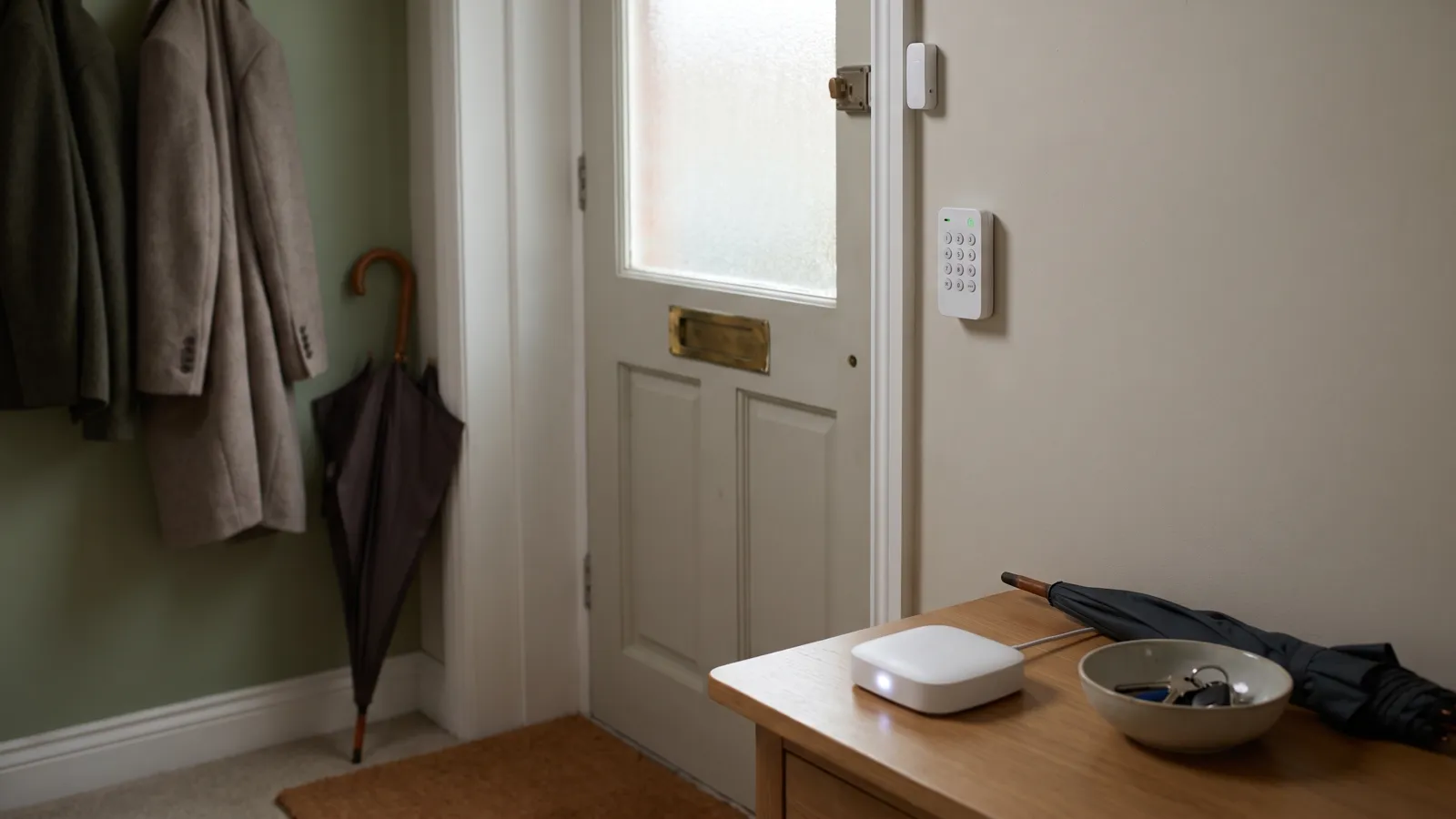
A DIY alarm kit is a hub, a keypad and a set of door, window and motion sensors that you fit yourself and arm from the keypad. This page compares Ring's UK alarm packs on what actually separates them: how many sensors come in the box, what Ring puts behind its paid plan, whether there is an outdoor siren, and how long the hub keeps running when the power goes off. We have not fitted or tested any of them ourselves; every figure is credited to the maker or a UK retailer listing.
By Tom Calder · Updated 21 October 2026 · 4 products, all price-tracked
Our picks
 Photo: Amazon
Ring Alarm XL
A larger home with three or more bedrooms and many openings.
as of 21 Oct 2026, 10:37 BST · Details
Product prices and availability are accurate as of the date/time indicated and are subject to change. Any price and availability information displayed on Amazon.co.uk at the time of purchase will apply to the purchase of this product. Photo: Amazon
Ring Alarm L
A two to three bedroom home with several doors and windows to cover.
as of 21 Oct 2026, 10:37 BST · Details
Product prices and availability are accurate as of the date/time indicated and are subject to change. Any price and availability information displayed on Amazon.co.uk at the time of purchase will apply to the purchase of this product. Photo: Amazon
Ring Alarm L + siren
A two to three bedroom home where the alarm should be audible from the street.
as of 21 Oct 2026, 10:37 BST · Details
Product prices and availability are accurate as of the date/time indicated and are subject to change. Any price and availability information displayed on Amazon.co.uk at the time of purchase will apply to the purchase of this product.All 4 compared
| Alarm kit | In the kit | Monitoring | Connectivity | Siren | Price |
|---|---|---|---|---|---|
Hub, keypad, 6 contact, 3 motion, extender, siren · Optional Ring Home plan, sold separately · Z-Wave sensors to Base Station; Ring app alerts · Base Station 104 dB at 30 cm plus outdoor siren A larger home with three or more bedrooms and many openings. | Hub, keypad, 6 contact, 3 motion, extender, siren | Optional Ring Home plan, sold separately | Z-Wave sensors to Base Station; Ring app alerts | Base Station 104 dB at 30 cm plus outdoor siren | £389.99 at Amazon as of 21 Oct 2026, 10:37 BST · DetailsProduct prices and availability are accurate as of the date/time indicated and are subject to change. Any price and availability information displayed on Amazon.co.uk at the time of purchase will apply to the purchase of this product.In stockCheck price → |
Our verdictOur verdictResearched Ring sizes this pack for homes with three or more bedrooms. Alongside the Base Station and keypad you get six door or window contacts, three motion sensors, the extender and Ring's outdoor siren. The Base Station carries the same siren and up to 24 hours of battery backup, per Ring, so it suits homes with many openings to cover. Best for A larger home with three or more bedrooms and many openings. Good
Worth knowing
Who shouldn't buy it: Don't buy it if you want monitoring included in the price: Ring lists Assisted Monitoring as an optional extra on a paid plan. | |||||
Hub, keypad, 4 contact, 3 motion, extender · Optional Ring Home plan, sold separately · Z-Wave sensors to Base Station; Ring app alerts · Base Station siren, 104 dB at 30 cm A two to three bedroom home with several doors and windows to cover. | Hub, keypad, 4 contact, 3 motion, extender | Optional Ring Home plan, sold separately | Z-Wave sensors to Base Station; Ring app alerts | Base Station siren, 104 dB at 30 cm | £289.99 at Amazon as of 21 Oct 2026, 10:37 BST · DetailsProduct prices and availability are accurate as of the date/time indicated and are subject to change. Any price and availability information displayed on Amazon.co.uk at the time of purchase will apply to the purchase of this product.In stockCheck price → |
Our verdictOur verdictResearched The L pack doubles the contact sensors of the M and adds a third motion detector, which Ring says suits two to three bedroom homes. The Base Station keeps the same built-in siren and battery backup of up to 24 hours. There is no outdoor siren in this version. Best for A two to three bedroom home with several doors and windows to cover. Good
Worth knowing
Who shouldn't buy it: Don't buy it if you want monitoring included in the price: Ring lists Assisted Monitoring as an optional extra on a paid plan. | |||||
Hub, keypad, 4 contact, 3 motion, extender, siren · Optional Ring Home plan, sold separately · Z-Wave sensors to Base Station; Ring app alerts · Base Station 104 dB at 30 cm plus outdoor siren A two to three bedroom home where the alarm should be audible from the street. | Hub, keypad, 4 contact, 3 motion, extender, siren | Optional Ring Home plan, sold separately | Z-Wave sensors to Base Station; Ring app alerts | Base Station 104 dB at 30 cm plus outdoor siren | £349.99 at Amazon as of 21 Oct 2026, 10:37 BST · DetailsProduct prices and availability are accurate as of the date/time indicated and are subject to change. Any price and availability information displayed on Amazon.co.uk at the time of purchase will apply to the purchase of this product.In stockCheck price → |
Our verdictOur verdictResearched This is the L pack with Ring's Alarm Outdoor Siren added, so an alarm can be heard outside the house as well as indoors. Everything else matches the standard L, including the Base Station battery that Ring rates at up to 24 hours. Ring does not publish a volume for the outdoor siren on this pack page. Best for A two to three bedroom home where the alarm should be audible from the street. Good
Worth knowing
Who shouldn't buy it: Don't buy it if you want monitoring included in the price: Ring lists Assisted Monitoring as an optional extra on a paid plan. | |||||
 Hub, keypad, 2 contact, 2 motion, extender · Optional Ring Home plan, sold separately · Z-Wave sensors to Base Station; Ring app alerts · Base Station siren, 104 dB at 30 cm A two-bedroom home or flat that wants a simple DIY starter alarm. | Hub, keypad, 2 contact, 2 motion, extender | Optional Ring Home plan, sold separately | Z-Wave sensors to Base Station; Ring app alerts | Base Station siren, 104 dB at 30 cm | £239.99 at Amazon as of 21 Oct 2026, 10:37 BST · DetailsProduct prices and availability are accurate as of the date/time indicated and are subject to change. Any price and availability information displayed on Amazon.co.uk at the time of purchase will apply to the purchase of this product.In stockCheck price → |
Our verdictOur verdictResearched Ring pitches this pack at two-bedroom homes: a Base Station, keypad, two door or window contacts, two motion detectors and a range extender. The Base Station has its own siren and a battery that Ring says keeps it going for up to 24 hours in a power cut. Alerts reach your phone through the Ring app, while extras such as Alarm Calls sit behind a paid plan. Best for A two-bedroom home or flat that wants a simple DIY starter alarm. Good
Worth knowing
Who shouldn't buy it: Don't buy it if you want monitoring included in the price: Ring lists Assisted Monitoring as an optional extra on a paid plan. | |||||
ⓘ As an Amazon Associate, PreparedBritain earns from qualifying purchases. We may earn a commission when you buy, or a fee when you request a quote, through our links — it never affects what we recommend. Amazon prices come from Amazon's own product data and show the date and time they were retrieved. Prices at other retailers are checked by us, less often. Prices and stock can change at any time, so always check the retailer's price before you buy.
Before you buy
Start by counting what you want to cover, not by picking a brand.
Ring sizes its packs by home: the M pack (two contact sensors, two motion detectors) for two-bedroom homes, the L packs (four contacts, three motions) for two to three bedrooms, and the XL (six contacts, three motions) for three or more. Contact sensors sit on a door or window frame and trigger when it opens; motion detectors watch a room. Count your ground-floor doors and reachable windows, add a motion detector for the hall and living room, and buy the closest pack. Ring says extra sensors and an outdoor siren can be added later.
Then be clear about what a plan adds, because this is where listings are least clear.
Ring sells its Ring Home plan separately and describes the kit as having no long-term commitment. The features Ring's own listing puts behind the plan are Alarm Calls (the system phoning your chosen contacts), cellular backup when the broadband drops, and arming or disarming from the app or by voice. Keypad arming and the Base Station siren are not on that list. Read Ring's plans page before you buy: for many households the keypad and the siren are the whole point.
Professional monitoring, where a staffed centre watches your alarm and calls you or a keyholder, is an ongoing cost on top of the hardware.
Ring's listings describe Assisted Monitoring as optional. None of the DIY kits on this page is sold as a police-responded alarm. If a police response is what you need, treat it as a separate purchase: a professionally installed and monitored system from a company certified by NSI or SSAIB, the two bodies that certify UK alarm companies, and a word with your local force about how it applies the national police response policy.
Think about the power cut, because an alarm that stops when the lights do is not much of an alarm.
The Ring Base Station plugs into a UK socket and has a built-in rechargeable battery that Ring rates at up to 24 hours, so the siren and keypad keep working through a typical outage. Phone alerts are another matter: they travel over your broadband, and your router will go dark with the power unless it has its own backup battery (our router backup page covers that) or you pay for Ring's cellular backup. Decide which of those you actually want before you buy a plan for it.
Finally, fit it where it will work.
Ring says the Base Station, keypad and sensors are for indoor use only, so an alarm that should be heard from the street needs a pack with the outdoor siren. The Base Station siren is rated at 104 dB at 30 cm and the keypad at 75 dB, loud in the house but not necessarily outside it. If you have a pet, Ring says its motion detectors ignore pets under 22 kg only at the lowest sensitivity and when mounted 2.1 metres above the ground. Tell your insurer what you have fitted and keep the receipt.
We verify every product's specifications against at least two independent sources, re-check its UK price and stock on a schedule where we can track it automatically, and cross-check safety-relevant claims against official guidance. Every review is labelled Researched or Used and reviewed by us: where we've bought a product, or been sent it free, and used it ourselves, its review says which; where we haven't, our verdict is a considered spec-and-evidence comparison, not a hands-on test — and commissions never change a ranking either way. Read our full methodology →
Related kit comparisons
Guides that go with this
A simple, practical household emergency plan — the official GOV.UK Prepare approach: contacts, meeting points,…
The free number to save today, what to have ready, food safety, staying warm safely, and the compensation you …
The UK's old copper phone network is being switched off by January 2027. What the digital switchover means, wh…
A safe word (the government calls it a safe phrase) takes ten minutes to agree and costs nothing. How to choos…
A calm, sourced look at the 'national blackout' scenario: why it's a low-likelihood risk the grid is engineere…
Common questions
Do DIY home alarms work without a subscription?
For the core job, yes, on Ring's terms. Ring sells its Ring Home plan separately and says the kit has no long-term commitment. The features its listing puts behind the plan are Alarm Calls, cellular backup, and arming or disarming from the app or by voice; keypad arming and the Base Station siren are not among them. Other brands draw the line in different places, so read the maker's own plan page rather than the box before you decide.
Will the police respond to a DIY alarm?
Do not count on it. The kits on this page are self-monitored: they alert you, and acting on that alert is down to you, a neighbour or a keyholder. Police response to alarms is governed by a National Police Chiefs' Council policy and tied to professionally installed, monitored systems. If that level of response is what you need, speak to your local force and an installer certified by NSI or SSAIB before you buy, and treat the monitoring charge as part of the cost.
Does a wireless alarm keep working in a power cut?
The hub usually does, for a while. Ring's Base Station has a built-in rechargeable battery that Ring rates at up to 24 hours, and Ring lists a built-in backup battery in the keypad and coin-cell batteries in the contact sensors, so the siren and keypad keep working through a typical cut. What stops is the phone alert, because your router loses power too. A small battery backup for the router keeps the broadband up, or Ring's paid cellular backup sends alerts over the mobile network instead.
How many sensors do I need?
Count the doors and reachable windows first, then add a motion detector for the main rooms. Ring suggests its two-contact, two-motion M pack for two-bedroom homes, the four-contact, three-motion L packs for two to three bedrooms, and the six-contact XL for three or more. Upstairs windows nobody can reach can usually wait. Ring says you can add more sensors later, so start with the closest pack and build on it.
Can I use a DIY alarm with pets?
Usually, with care. Ring says its motion detectors ignore pets under 22 kg only when set at the lowest sensitivity and mounted 2.1 metres above the ground. A larger dog, or a cat that climbs onto furniture in front of a detector, can still set it off. Keep detectors away from stairs, shelves and the backs of sofas, and rely more on door and window contacts in rooms where the animals roam.
Will a DIY alarm reduce my home insurance?
It might, but ask first. Insurers treat a self-fitted, self-monitored kit differently from a professionally installed and monitored one, and policy terms vary. Tell your insurer exactly what you have fitted, keep the receipt and the maker's documents, and never describe a DIY kit as a monitored alarm on a policy, because an inaccurate answer can affect a claim.
