Best door & window alarms UK (2026) — compared & price-tracked
A door or window alarm makes an opening announce itself — nothing more. This page covers two quite different tiers of that idea. Standalone contact, vibration and wedge alarms (from the likes of tiiwee, VOXON, SABRE, Defender and KERUI) sound a siren on the spot and stop there. DIY smart alarm kits (from eufy, Ring, ERA, SimpliSafe and Yale) build door and window sensors into a hub system with app alerts, keypads and motion detection. The useful question before buying is who needs to hear the alarm. If the answer is whoever is in or near the house, a cheap contact alarm on each vulnerable opening already does the job. If the answer is you, wherever you happen to be, you need a hub kit — and you should check what its alerts cost to keep before the headline price settles it. Either way, this is the cheapest layer of home security, working alongside decent locks rather than replacing them. Prices below are tracked against UK retailers and checked against manufacturers' documentation.
By Tom Calder · Updated 4 November 2026 · 22 products, all price-tracked
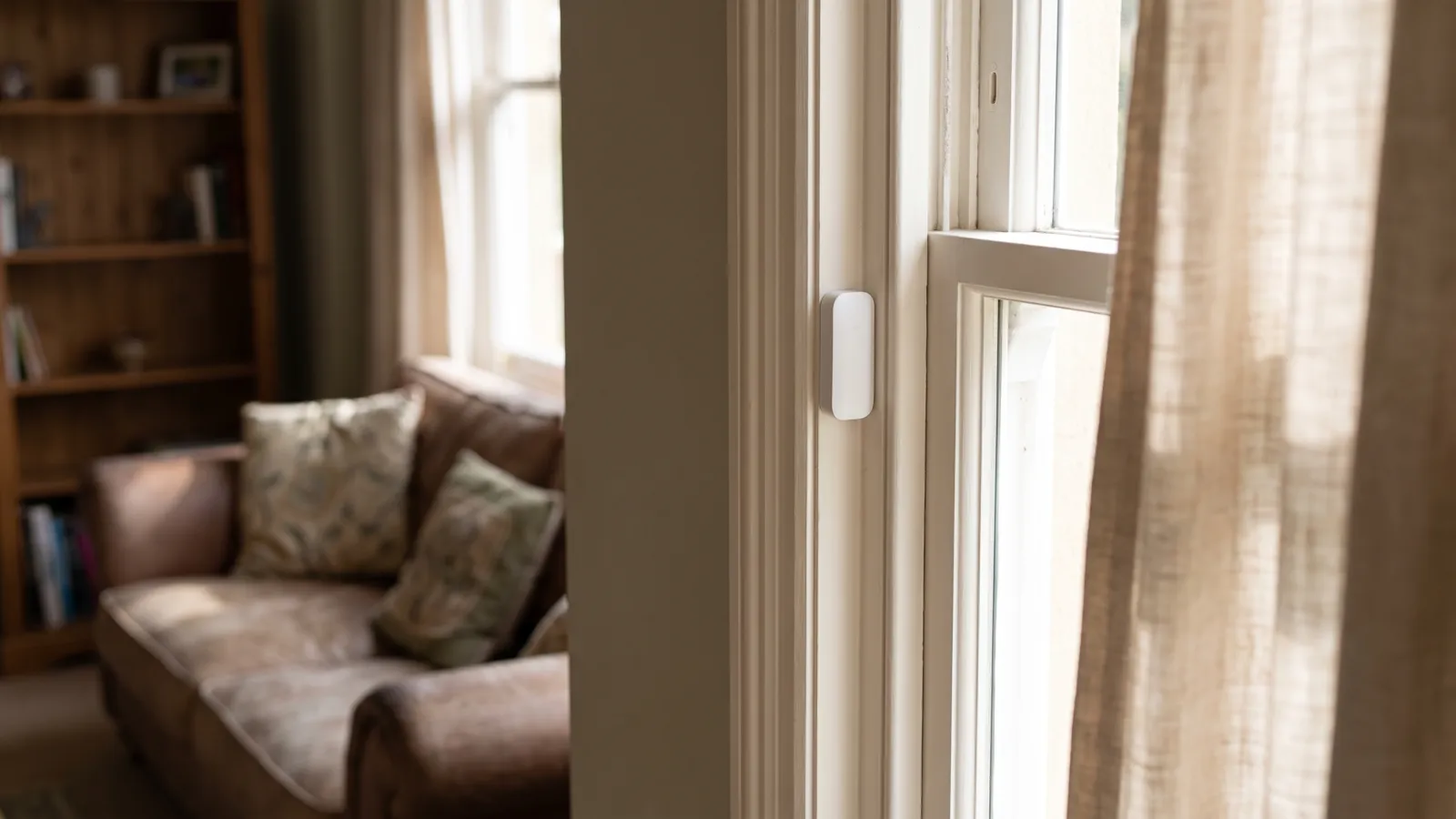
Our picks
 Photo: Amazon
Ring Alarm Pack XL
Homeowners wanting whole-house DIY alarm coverage — doors, windows, motion, an indoor camera and an outdoor siren — set up in one go rather than bought piecemeal.
as of 4 Nov 2026, 19:07 GMT · Details
Product prices and availability are accurate as of the date/time indicated and are subject to change. Any price and availability information displayed on Amazon.co.uk at the time of purchase will apply to the purchase of this product. Photo: Amazon
Ring Alarm 5 Piece Kit – Home Security System with optional Assisted Monitoring, Works with Alexa
Renters and homeowners who want an affordable, self-fit smart alarm layer without a monitoring contract
as of 4 Nov 2026, 19:07 GMT · Details
Product prices and availability are accurate as of the date/time indicated and are subject to change. Any price and availability information displayed on Amazon.co.uk at the time of purchase will apply to the purchase of this product.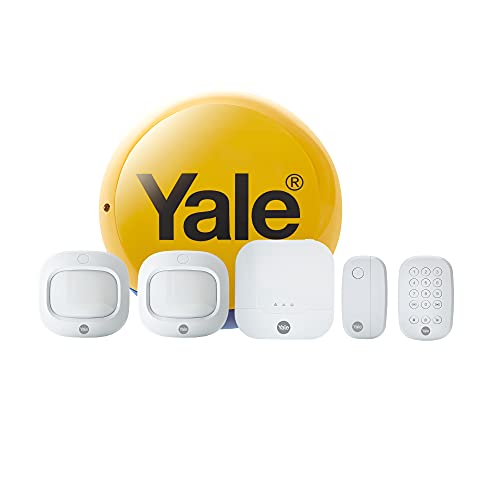 Photo: Amazon
Yale IA-320 Sync Alarm Kit
Households wanting a self-monitored, no-subscription smart alarm that also covers a shed, garage or side access via its 200m wireless range.
as of 4 Nov 2026, 19:07 GMT · Details
Product prices and availability are accurate as of the date/time indicated and are subject to change. Any price and availability information displayed on Amazon.co.uk at the time of purchase will apply to the purchase of this product.All 22 compared
| Alarm | Type | Siren volume | Power | Smart features | Price |
|---|---|---|---|---|---|
13-piece DIY wireless alarm kit · Base station siren: 104 dB @ 30cm · Base station: mains socket + 24hr backup battery · Ring app control, Alexa voice integration Homeowners wanting whole-house DIY alarm coverage — doors, windows, motion, an indoor camera and an outdoor siren — set up in one go rather than bought piecemeal. | 13-piece DIY wireless alarm kit | Base station siren: 104 dB @ 30cm | Base station: mains socket + 24hr backup battery | Ring app control, Alexa voice integration | £409.99 at Amazon as of 4 Nov 2026, 19:07 GMT · DetailsProduct prices and availability are accurate as of the date/time indicated and are subject to change. Any price and availability information displayed on Amazon.co.uk at the time of purchase will apply to the purchase of this product.In stockCheck price → |
Our verdictOur verdictResearched This is the biggest Ring Alarm bundle sold on Amazon UK and it covers a full house out of the box: six contact sensors, three motion detectors, a keypad, an indoor camera and an outdoor siren. It's a genuinely cheap first layer of home security, but treat the on-screen '£X saved' framing with a pinch of salt and budget for a Ring Home subscription if you want remote control or cellular backup. Best for Homeowners wanting whole-house DIY alarm coverage — doors, windows, motion, an indoor camera and an outdoor siren — set up in one go rather than bought piecemeal. Good
Worth knowing
Who shouldn't buy it: Don't buy the XL pack if you live in a flat or small house — a basic 4-5 piece Ring Alarm kit covers that for well under half the price, and you can add sensors later as needed. Read the full review → | |||||
2. Ring Alarm 5 Piece Kit – Home Security System with optional Assisted Monitoring, Works with Alexa Runner-up Wireless DIY alarm kit · Approx 100–104 dB at 30cm (base station siren) · Mains + rechargeable battery backup · Ring app control, Works with Alexa Renters and homeowners who want an affordable, self-fit smart alarm layer without a monitoring contract | Wireless DIY alarm kit | Approx 100–104 dB at 30cm (base station siren) | Mains + rechargeable battery backup | Ring app control, Works with Alexa | £249 at Amazon as of 4 Nov 2026, 19:07 GMT · DetailsProduct prices and availability are accurate as of the date/time indicated and are subject to change. Any price and availability information displayed on Amazon.co.uk at the time of purchase will apply to the purchase of this product.In stockCheck price → |
Our verdictOur verdictResearched The Ring Alarm 5 Piece Kit is a solid entry point into DIY home security — it's quick to fit yourself and works fine as a stand-alone system with no subscription. Treat it as an affordable notification and deterrent layer, not a replacement for a professionally monitored, insurance-recognised alarm. Best for Renters and homeowners who want an affordable, self-fit smart alarm layer without a monitoring contract Good
Worth knowing
Who shouldn't buy it: Skip it if you want a professionally monitored, insurance-recognised system — Ring's optional Assisted Monitoring calls your own emergency contacts rather than a certified monitoring station or the police, and this alarm on its own won't reduce your home insurance premium. | |||||
DIY wire-free alarm kit · ~100–104 dB (external box siren) · Mains-powered hub with battery backup · App control, works with Alexa & Google Assistant Households wanting a self-monitored, no-subscription smart alarm that also covers a shed, garage or side access via its 200m wireless range. | DIY wire-free alarm kit | ~100–104 dB (external box siren) | Mains-powered hub with battery backup | App control, works with Alexa & Google Assistant | £203.40 at Amazon as of 4 Nov 2026, 19:07 GMT · DetailsProduct prices and availability are accurate as of the date/time indicated and are subject to change. Any price and availability information displayed on Amazon.co.uk at the time of purchase will apply to the purchase of this product.In stockCheck price → |
Our verdictOur verdictResearched A solid entry-level layer of security: wire-free to fit, no monthly fee, and loud enough to matter as a deterrent. It's self-monitored though, so treat it as an alert system for you, not a substitute for a professionally monitored alarm. Best for Households wanting a self-monitored, no-subscription smart alarm that also covers a shed, garage or side access via its 200m wireless range. Good
Worth knowing
Who shouldn't buy it: Skip it if you want a professionally monitored system with 24/7 call-centre response or an insurer-recognised grade — this alerts you directly, it doesn't dispatch anyone. Read the full review → | |||||
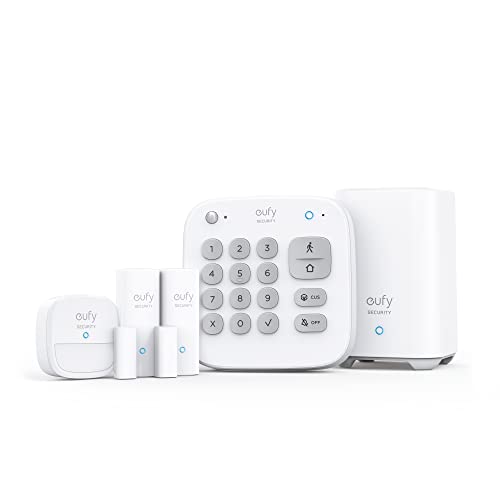 Wireless DIY alarm kit · 100dB local siren · HomeBase2 is mains-powered · eufy Security app: arm/disarm and phone alerts (needs broadband) Renters and first-time buyers who want a quick, no-subscription starter alarm for a flat, small home, or single entry point. | Wireless DIY alarm kit | 100dB local siren | HomeBase2 is mains-powered | eufy Security app: arm/disarm and phone alerts (needs broadband) | £149 at Amazon as of 4 Nov 2026, 19:07 GMT · DetailsProduct prices and availability are accurate as of the date/time indicated and are subject to change. Any price and availability information displayed on Amazon.co.uk at the time of purchase will apply to the purchase of this product.In stockCheck price → |
Our verdictOur verdictResearched A sensible, well-reviewed way to add a basic deterrent layer — fit it yourself in minutes and there's nothing more to pay. It's a local, self-monitored system rather than a professionally monitored one, which is worth knowing before you buy. Best for Renters and first-time buyers who want a quick, no-subscription starter alarm for a flat, small home, or single entry point. Good
Worth knowing
Who shouldn't buy it: Don't buy this if you want a monitored alarm that calls a control room or the police automatically — this is a self-monitored deterrent that only alerts your phone, not a substitute for a graded, monitored system. Read the full review → | |||||
 13-piece DIY kit: base station · Outdoor siren (no published dB rating) · Battery-powered sensors/keypad/fobs · App control (iOS/Android), Alexa-compatible A house or flat that wants a proper alarm-plus-camera kit, self-installed in an afternoon, without a professional call-out. | 13-piece DIY kit: base station | Outdoor siren (no published dB rating) | Battery-powered sensors/keypad/fobs | App control (iOS/Android), Alexa-compatible | £299.99 at Amazon as of 4 Nov 2026, 19:07 GMT · DetailsProduct prices and availability are accurate as of the date/time indicated and are subject to change. Any price and availability information displayed on Amazon.co.uk at the time of purchase will apply to the purchase of this product.In stockCheck price → |
Our verdictOur verdictResearched A capable, no-drill DIY kit that adds a real extra layer of protection alongside good locks and lighting. The base system self-monitors for free via the app, but recorded camera footage, cellular backup and 24/7 professional monitoring all sit behind a paid plan on top of the kit price. Best for A house or flat that wants a proper alarm-plus-camera kit, self-installed in an afternoon, without a professional call-out. Good
Worth knowing
Who shouldn't buy it: Don't buy this if you're not prepared to fit the sensors with screws (not just the adhesive pads) or you specifically want fully monitored 24/7 security with zero ongoing cost — the free tier is self-monitoring only. | |||||
 Wireless DIY alarm kit (7 pieces) · 100 dB base-station siren · Base station mains-powered with roughly 24h · Alexa compatible; app control Renters or homeowners who want a proper DIY smart alarm covering the main entry points, with monitoring left optional rather than forced. | Wireless DIY alarm kit (7 pieces) | 100 dB base-station siren | Base station mains-powered with roughly 24h | Alexa compatible; app control | £189.99 at Amazon as of 4 Nov 2026, 19:07 GMT · DetailsProduct prices and availability are accurate as of the date/time indicated and are subject to change. Any price and availability information displayed on Amazon.co.uk at the time of purchase will apply to the purchase of this product.In stockCheck price → |
Our verdictOur verdictResearched A capable DIY kit that covers two entry points and general motion out of the box, with a loud local siren included at the kit price — but full app control, alerts and monitoring sit behind an optional Pro Premium plan (up to £360/year), making this more of a step-up pick once that's budgeted for than the cheapest way into home security. It won't reduce insurance premiums either, since SimpliSafe UK is self-install and not an NSI/SSAIB-graded system. Best for Renters or homeowners who want a proper DIY smart alarm covering the main entry points, with monitoring left optional rather than forced. Good
Worth knowing
Who shouldn't buy it: Don't buy this expecting an insurance premium reduction, or if you need guaranteed 24/7 monitored response from day one without budgeting for the optional subscription. Read the full review → | |||||
 Wireless door/window contact alarm with central · Manufacturer markets the siren at around 120 dB · Battery powered; 2x AAA in the siren · None; no WiFi, app or subscription Renters, sheds and outbuildings, or anyone wanting a cheap first layer of security with zero recurring cost. | Wireless door/window contact alarm with central | Manufacturer markets the siren at around 120 dB | Battery powered; 2x AAA in the siren | None; no WiFi, app or subscription | £38.42 at Amazon as of 4 Nov 2026, 19:07 GMT · DetailsProduct prices and availability are accurate as of the date/time indicated and are subject to change. Any price and availability information displayed on Amazon.co.uk at the time of purchase will apply to the purchase of this product.In stockCheck price → |
Our verdictOur verdictResearched A straightforward, no-frills door/window alarm that does one job well: make a very loud noise if a door or window is forced. It won't call anyone or send an alert, but as the cheapest layer of home security it's honest value. Best for Renters, sheds and outbuildings, or anyone wanting a cheap first layer of security with zero recurring cost. Good
Worth knowing
Who shouldn't buy it: You want a phone notification when you're away from home — this is a local siren only, not a monitored or app-connected system, so it can't alert you remotely. | |||||
 DIY 8-piece alarm kit: base station, keypad, 2 contact sensors, 2 motion detectors, range extender and Alarm Outdoor Siren · Base station siren · Base station mains-powered with rechargeable · Ring app arm/disarm A two-bedroom home wanting an affordable, easy-to-fit DIY alarm with app control. | DIY 8-piece alarm kit: base station, keypad, 2 contact sensors, 2 motion detectors, range extender and Alarm Outdoor Siren | Base station siren | Base station mains-powered with rechargeable | Ring app arm/disarm | £289.99 at Amazon as of 4 Nov 2026, 19:07 GMT · DetailsProduct prices and availability are accurate as of the date/time indicated and are subject to change. Any price and availability information displayed on Amazon.co.uk at the time of purchase will apply to the purchase of this product.In stockCheck price → |
Our verdictOur verdictResearched A solid, easy-to-install DIY alarm kit that covers a typical two-bed home out of the box, with app alerts working free of charge. Think of it as the cheapest layer of home security, not a professionally monitored, insurance-recognised system — budget for a Ring Home subscription if you want cellular backup or emergency-contact call-outs. Best for A two-bedroom home wanting an affordable, easy-to-fit DIY alarm with app control. Good
Worth knowing
Who shouldn't buy it: Don't buy if you need a professionally monitored, insurance-recognised alarm — this is a DIY, self-monitored kit, not a graded system, and it won't reduce your home insurance premium. Read the full review → | |||||
 Smart wireless alarm kit · Built-in hub siren · Mains-powered hub with 12-hour backup battery · Yale Home app, Wi-Fi/Ethernet, Alexa/Google Home Larger homes wanting one whole-property smart alarm across up to four independent zones, without being locked into a monthly contract for basic use. | Smart wireless alarm kit | Built-in hub siren | Mains-powered hub with 12-hour backup battery | Yale Home app, Wi-Fi/Ethernet, Alexa/Google Home | £549.99 at Amazon as of 4 Nov 2026, 19:07 GMT · DetailsProduct prices and availability are accurate as of the date/time indicated and are subject to change. Any price and availability information displayed on Amazon.co.uk at the time of purchase will apply to the purchase of this product.In stockCheck price → |
Our verdictOur verdictResearched A serious multi-area system rather than a simple door sensor — core arming, disarming and app alerts work with no subscription, but you'll need Yale's paid Alarm plan for 4G cellular backup and automated call alerts, and a separate, higher-tier plan for professional call-out monitoring. Best for Larger homes wanting one whole-property smart alarm across up to four independent zones, without being locked into a monthly contract for basic use. Good
Worth knowing
Who shouldn't buy it: Skip this if you just want a cheap sensor on the back door — it's a whole-property hub-based system, and a £30-£50 basic contact alarm covers that single-door job for far less. Read the full review → | |||||
 Wireless DIY smart alarm kit · 104dB external siren · Hub is mains-powered with battery backup · Yale's Smart Home Alarm app for arm/disarm Households wanting a full DIY alarm covering multiple entry points and rooms, not just one door. | Wireless DIY smart alarm kit | 104dB external siren | Hub is mains-powered with battery backup | Yale's Smart Home Alarm app for arm/disarm | £263.72 at Amazon as of 4 Nov 2026, 19:07 GMT · DetailsProduct prices and availability are accurate as of the date/time indicated and are subject to change. Any price and availability information displayed on Amazon.co.uk at the time of purchase will apply to the purchase of this product.In stockCheck price → |
Our verdictOur verdictResearched A capable step up from a single stick-on alarm — motion sensors and door contacts across the house, controlled from one app, with no ongoing fees. It's the cheapest layer of home security, not a substitute for locks or a monitored system, and it won't affect your insurance premium. Best for Households wanting a full DIY alarm covering multiple entry points and rooms, not just one door. Good
Worth knowing
Who shouldn't buy it: Don't buy it if you only need to secure one or two entry points — a simple standalone door/window alarm covers that for a fraction of the price. | |||||
 Self-contained vibration/shock-sensor alarm · 130dB siren, claimed at source · 3 x LR44 button-cell batteries per unit · None A cheap first layer of alarm cover on ground-floor windows or a shed/outbuilding door. | Self-contained vibration/shock-sensor alarm | 130dB siren, claimed at source | 3 x LR44 button-cell batteries per unit | None | £14.95 at Amazon as of 4 Nov 2026, 19:07 GMT · DetailsProduct prices and availability are accurate as of the date/time indicated and are subject to change. Any price and availability information displayed on Amazon.co.uk at the time of purchase will apply to the purchase of this product.In stockCheck price → |
Our verdictOur verdictResearched A basic vibration-triggered siren that does one job well: make a loud noise on the spot if a window is struck or forced. It's not a monitored system and won't notify anyone remotely, but as a low-cost deterrent per window it's straightforward and does what it says. Best for A cheap first layer of alarm cover on ground-floor windows or a shed/outbuilding door. Good
Worth knowing
Who shouldn't buy it: You want an alert sent to your phone or a keyholder while you're out — this only sounds an alarm on the spot, so look at a monitored or smart sensor instead if remote notification matters to you. | |||||
 Standalone magnetic contact door/window alarm · 120 dB siren · Battery-powered · None Renters and anyone wanting a cheap, no-fuss first layer of window and door security. | Standalone magnetic contact door/window alarm | 120 dB siren | Battery-powered | None | £42.24 at Amazon as of 4 Nov 2026, 19:07 GMT · DetailsProduct prices and availability are accurate as of the date/time indicated and are subject to change. Any price and availability information displayed on Amazon.co.uk at the time of purchase will apply to the purchase of this product.In stockCheck price → |
Our verdictOur verdictResearched A simple, inexpensive way to add a loud deterrent siren to windows and doors, with no wiring, no app and nothing to subscribe to. It won't replace a monitored alarm system, but as a first layer of protection — or for renters who can't fit anything permanent — it does the basic job well. Best for Renters and anyone wanting a cheap, no-fuss first layer of window and door security. Good
Worth knowing
Who shouldn't buy it: Skip this if you want a monitored system or a phone alert while you're out — this is a local siren only, useless if nobody's around to hear it, and it won't affect your home insurance premium. It also needs a snug 1–9mm gap between sensor and magnet, so it's a poor fit for warped frames, deeply recessed sashes or wide-reveal uPVC frames. | |||||
 DIY wireless smart alarm kit · 104dB battery-powered live siren · Hub: mains-powered with ethernet-to-router + · ERA Protect app for remote arm/disarm and push Renters and homeowners who want a proper self-monitored alarm with a real siren, not just an app notification, and don't want a wired install or a monitoring contract. | DIY wireless smart alarm kit | 104dB battery-powered live siren | Hub: mains-powered with ethernet-to-router + | ERA Protect app for remote arm/disarm and push | £381.68 at Amazon as of 4 Nov 2026, 19:07 GMT · DetailsProduct prices and availability are accurate as of the date/time indicated and are subject to change. Any price and availability information displayed on Amazon.co.uk at the time of purchase will apply to the purchase of this product.In stockCheck price → |
Our verdictOur verdictResearched A competent, expandable DIY kit with a genuine 104dB siren rather than a dummy box, and app control that works over the hub's ethernet connection or its built-in 4G SIM. It's a decent step up from a video doorbell alone — ERA also sells the same hub, siren and sensors as separate components and in other bundles direct from eraprotect.com, so it's worth comparing prices there before choosing this exact Amazon bundle. Best for Renters and homeowners who want a proper self-monitored alarm with a real siren, not just an app notification, and don't want a wired install or a monitoring contract. Good
Worth knowing
Who shouldn't buy it: Don't buy this exact Amazon bundle if you're comfortable building your own kit — ERA sells the same base hub, live siren and sensors individually (and in other bundles) direct from eraprotect.com, so it's worth comparing prices there first; buy this one only for one-box simplicity. | |||||
 Hub-based smart alarm kit · 104dB (live siren) · Hub: mains-powered via an included power supply · iOS/Android app for arm/disarm and Households wanting a proper app-controlled alarm covering motion and door/window entry points, with a visible dummy siren box added for extra deterrent effect. | Hub-based smart alarm kit | 104dB (live siren) | Hub: mains-powered via an included power supply | iOS/Android app for arm/disarm and | £298.33 at Amazon as of 4 Nov 2026, 19:07 GMT · DetailsProduct prices and availability are accurate as of the date/time indicated and are subject to change. Any price and availability information displayed on Amazon.co.uk at the time of purchase will apply to the purchase of this product.In stockCheck price → |
Our verdictOur verdictResearched This is a genuine step up from a single battery contact alarm — a hub-based system with real motion and door sensors, backed by both a working siren and a bonus replica siren for visible deterrence. It's a reasonable buy for a full flat or ground-floor setup, but it sits well above simpler alarms in this category on price, and the cellular backup relies on a subscription once the included trial ends. Best for Households wanting a proper app-controlled alarm covering motion and door/window entry points, with a visible dummy siren box added for extra deterrent effect. Good
Worth knowing
Who shouldn't buy it: Don't buy this if you only need a cheap alarm on one door or a shed — a standalone battery contact alarm does that job for a fraction of the price with no subscription to think about. | |||||
 Standalone magnetic contact alarm · 100dB siren · 4x LR44 per unit, up to ~3 years · None Renters and budget-conscious households wanting the cheapest possible first layer of door/window security. | Standalone magnetic contact alarm | 100dB siren | 4x LR44 per unit, up to ~3 years | None | £8.49 at Amazon as of 4 Nov 2026, 19:07 GMT · DetailsProduct prices and availability are accurate as of the date/time indicated and are subject to change. Any price and availability information displayed on Amazon.co.uk at the time of purchase will apply to the purchase of this product.In stockCheck price → |
Our verdictOur verdictResearched A simple, no-frills magnetic alarm that does one job well — sound a loud siren if a door or window opens. There's no app and nothing to monitor it remotely, but as an audible deterrent, or a chime to alert you when a child opens a door, it does what it promises for well under a tenner. Worth flagging: B&Q lists just a three-month guarantee on this line, shorter than is typical for the category. Best for Renters and budget-conscious households wanting the cheapest possible first layer of door/window security. Good
Worth knowing
Who shouldn't buy it: You want to know if a door's been opened while you're out. This has no app, hub, or cellular link — for that you need a monitored smart sensor, which comes with its own subscription cost. | |||||
 Two-piece door/window contact alarm · 120 dB · 4x LR44 batteries (included), replaceable · None — standalone, no app or subscription Renters and anyone wanting a cheap, no-fuss first layer of security on vulnerable windows and back doors. | Two-piece door/window contact alarm | 120 dB | 4x LR44 batteries (included), replaceable | None — standalone, no app or subscription | £9.99 at Amazon as of 4 Nov 2026, 19:07 GMT · DetailsProduct prices and availability are accurate as of the date/time indicated and are subject to change. Any price and availability information displayed on Amazon.co.uk at the time of purchase will apply to the purchase of this product.In stockCheck price → |
Our verdictOur verdictResearched A simple two-piece contact alarm that does one job well — it sounds a genuinely loud 120dB alert the moment a door or window opens. There's no app, no monitoring and no subscription; it's a basic, battery-powered deterrent, not a security system, and it's priced accordingly. It runs on small LR44 button batteries, so keep spares away from young children. Best for Renters and anyone wanting a cheap, no-fuss first layer of security on vulnerable windows and back doors. Good
Worth knowing
Who shouldn't buy it: Skip this if you want to know a door's been opened while you're out — it's audible-only with no app or cellular backup, so pair it with a monitored smart system if remote alerts matter to you. Read the full review → | |||||
 5-piece DIY smart alarm kit: base station · Base station siren rated approx 100dB+ · Base station & keypad mains-powered · Ring app arm/disarm and alerts included free Renters or homeowners wanting a cheap first layer of alert on one entry point, without signing up to a monitoring contract. | 5-piece DIY smart alarm kit: base station | Base station siren rated approx 100dB+ | Base station & keypad mains-powered | Ring app arm/disarm and alerts included free | £219 at Amazon as of 4 Nov 2026, 19:07 GMT · DetailsProduct prices and availability are accurate as of the date/time indicated and are subject to change. Any price and availability information displayed on Amazon.co.uk at the time of purchase will apply to the purchase of this product.In stockCheck price → |
Our verdictOur verdictResearched A sensible, low-cost way to get app alerts on a front door and one room — not a burglar deterrent claim, just an affordable early-warning layer. The free tier covers push notifications; cellular backup needs a paid Ring Protect plan, and human-monitored alerts (Assisted Monitoring) are a further paid add-on — there's no UK police-dispatch service. Best for Renters or homeowners wanting a cheap first layer of alert on one entry point, without signing up to a monitoring contract. Good
Worth knowing
Who shouldn't buy it: You want whole-house coverage or monitored alerts out of the box — buy a bigger pack or add sensors, and budget for Ring Protect plus Assisted Monitoring if you want that; this alarm alone won't affect your home insurance premium. | |||||
 Wireless magnetic door/window contact sensor · No built-in siren · Battery-powered (CR2032, included in the box) · No smart features on its own Households who already own a Yale Sync or Yale Intruder wireless alarm panel and want to add contact coverage to one more door or window. | Wireless magnetic door/window contact sensor | No built-in siren | Battery-powered (CR2032, included in the box) | No smart features on its own | £22.73 at Amazon as of 4 Nov 2026, 19:07 GMT · DetailsProduct prices and availability are accurate as of the date/time indicated and are subject to change. Any price and availability information displayed on Amazon.co.uk at the time of purchase will apply to the purchase of this product. |
Our verdictOur verdictResearched A straightforward, wire-free add-on sensor rather than a standalone alarm. It does its one job — flag when a monitored door or window opens — reliably, but only if you already have a compatible Yale panel to plug it into. Best for Households who already own a Yale Sync or Yale Intruder wireless alarm panel and want to add contact coverage to one more door or window. Good
Worth knowing
Who shouldn't buy it: Don't buy this if you don't already have a compatible Yale alarm panel installed — on its own it does nothing; you'd need a full kit, not just a sensor. Read the full review → | |||||
 Wire-free magnetic door/window contact sensor · N/A; no built-in siren · Battery-powered (battery supplied) · Not smart Households who already have a Yale HSA6000-series alarm panel (or, per some retailers, an older HSA3000 system) and want to add contact cover to another door or window. | Wire-free magnetic door/window contact sensor | N/A; no built-in siren | Battery-powered (battery supplied) | Not smart | £15.29 at Amazon as of 4 Nov 2026, 19:07 GMT · DetailsProduct prices and availability are accurate as of the date/time indicated and are subject to change. Any price and availability information displayed on Amazon.co.uk at the time of purchase will apply to the purchase of this product. |
Our verdictOur verdictResearched A tidy way to extend an existing Yale HSA6000-series alarm (and, per some retailers, older HSA3000 panels) — but it's an accessory, not a standalone alarm, and it isn't cheap per opening. It has no siren, app or subscription of its own; it just tells your existing panel a door or window has opened. Best for Households who already have a Yale HSA6000-series alarm panel (or, per some retailers, an older HSA3000 system) and want to add contact cover to another door or window. Good
Worth knowing
Who shouldn't buy it: Don't buy this if you don't already own a Yale HSA6000-series (or compatible HSA3000) alarm panel, or if you want an app-connected smart contact sensor — this won't pair with Yale Sync and won't do anything as a standalone unit. Buying one per door is also an expensive way to cover several doors compared with a standalone contact alarm. Read the full review → | |||||
 Standalone wireless kit · 130dB siren · Battery-powered (no mains wiring needed) · None A cheap, self-contained alarm for a shed, garage, caravan or outbuilding rather than a whole house | Standalone wireless kit | 130dB siren | Battery-powered (no mains wiring needed) | None | £29.95 at Amazon as of 4 Nov 2026, 19:07 GMT · DetailsProduct prices and availability are accurate as of the date/time indicated and are subject to change. Any price and availability information displayed on Amazon.co.uk at the time of purchase will apply to the purchase of this product. |
Our verdictOur verdictResearched This is the cheapest realistic layer of physical security you can add to a single door — a loud siren plus a motion sensor that arms and disarms with a fob or PIN code, no wiring or subscription involved. It won't replace a proper monitored system, but as a low-cost deterrent for one entry point it does the job. Best for A cheap, self-contained alarm for a shed, garage, caravan or outbuilding rather than a whole house Good
Worth knowing
Who shouldn't buy it: Don't buy it if you want a phone notification when you're away, or need to cover a full house rather than one shed, garage or door — a smart hub-based kit will do that; this won't. Read the full review → | |||||
 Pressure-triggered floor wedge door stop alarm · 120dB siren · One 9V battery per unit · None Renters, travellers and anyone wanting a cheap, no-drill alarm for a spare door, hotel room, shed or static caravan. | Pressure-triggered floor wedge door stop alarm | 120dB siren | One 9V battery per unit | None | £16.14 at Amazon as of 4 Nov 2026, 19:07 GMT · DetailsProduct prices and availability are accurate as of the date/time indicated and are subject to change. Any price and availability information displayed on Amazon.co.uk at the time of purchase will apply to the purchase of this product.In stockCheck price → |
Our verdictOur verdictResearched This is a mechanical trip alarm, not a connected security system: wedge it under a door and it fires a loud 120dB siren if someone pushes it open. It's a genuinely useful, low-cost extra layer for a door you can't otherwise secure, but it won't deter a determined intruder and it can't tell you anything when you're not there to hear it. Best for Renters, travellers and anyone wanting a cheap, no-drill alarm for a spare door, hotel room, shed or static caravan. Good
Worth knowing
Who shouldn't buy it: Don't buy this if you want to know about an intrusion while you're out — it only makes noise where it's fitted. Pair it with (or choose instead) a monitored or app-connected alarm if remote alerts matter to you. | |||||
Sold out right now (1)
The shop says these are sold out today. We check stock every hour, and each one moves back up the list when it returns.
| Alarm | Type | Siren volume | Power | Smart features | Price |
|---|---|---|---|---|---|
 Wedge-shaped door stop with built-in · 125dB siren · Battery-powered, no mains power needed · None Renters, students and travellers who want the cheapest possible extra layer of door security — hotel rooms, rental flats, or doors where a proper contact alarm isn't practical. | Wedge-shaped door stop with built-in | 125dB siren | Battery-powered, no mains power needed | None | Out of stockCheck price → |
Our verdictOur verdictResearched A simple wedge that sounds a loud siren if someone forces the door it's under — inexpensive, needs no wiring, app or hub, and is easy to pack for travel. It's a doorstop with a siren rather than a security system, so it's best thought of as the cheapest add-on layer, not a replacement for a decent lock. Best for Renters, students and travellers who want the cheapest possible extra layer of door security — hotel rooms, rental flats, or doors where a proper contact alarm isn't practical. Good
Worth knowing
Who shouldn't buy it: Skip it if you want a phone alert when you're out, if your door opens outward rather than inward (the wedge only works on inward-opening doors), if your door has deep carpet or an uneven threshold the wedge won't grip well on, or if you're after a real security upgrade rather than a loud noise — a monitored door/window contact sensor or a proper lock upgrade does that job. | |||||
ⓘ As an Amazon Associate, PreparedBritain earns from qualifying purchases. We may earn a commission when you buy, or a fee when you request a quote, through our links. When two products are close, commission can decide which one we pick. A clearly better product always wins. Amazon prices come from Amazon's own product data and show the date and time they were retrieved. Prices at other retailers are checked by us, less often. Prices and stock can change at any time, so always check the retailer's price before you buy.
Before you buy
Start by counting the openings you worry about, because the two tiers scale differently.
For a rented flat, a shed or a few ground-floor windows, multipacks of standalone alarms cover each opening most cheaply: VOXON's 2-pack and tiiwee's 4-pack are both self-adhesive with no drilling. Buy singles, such as SABRE's one-unit alarm, and the cost per opening rises. Defender's vibration pair suits windows you never open, reacting to the glass being struck rather than the frame parting. Wedge alarms from KERUI and Mengshen, sold in threes, need no fixing at all, which makes them the travel and hotel pick. A hub kit earns its price when you want one system across the whole house with alerts on your phone — eufy's 5-piece kit is usually the cheapest way in, with Ring's 5-piece and Yale's Sync 9-piece above it. Security cameras are a separate job we compare in their own guide; so are personal attack alarms, which protect people rather than buildings.
The Type column is the mechanism, and it decides where a unit can go.
Contact alarms trigger when magnet and body part — tiiwee's needs a 1–9mm gap, so warped or wide-reveal uPVC frames are a poor fit. Vibration alarms like Defender's react to impact on the glass. Wedges are pressure-triggered and only work on inward-opening doors with enough floor grip. Siren volume is a manufacturer's rating taken close to the sounder, not what you'll hear across a garden: Ring quotes its base station at 104dB at 30cm and its outdoor siren as over 100dB at a metre — different measurements that shouldn't be compared directly. Anything from 100dB up is unmissable indoors, so don't pay extra for a bigger number. Power tells you outage behaviour and battery housekeeping: hub kits pair a mains base with a backup battery, while standalone units run on cells from AAA to LR44 — and tiiwee's A1 sensors take an uncommon 12V A23 worth stocking spares of.
The Smart features column is really a running-cost column, and it separates lookalike kits.
Decide first whether you want anything to happen automatically when you're unreachable. If yes, budget the plan, not the box: Ring puts cellular backup and its call-out features behind a Ring Protect plan, which starts at £4.99 a month and tops out at £29.99 for the Guard Response tier with 24/7 guard dispatch; SimpliSafe gates phone alerts and professional monitoring the same way, with monitored plans from £19.99 a month and the Pro Premium tier — cellular backup and dispatch included — at £29.99, up to £360 a year on top of the hardware; ERA includes a 4G SIM and a three-month trial, then from £8 a month to keep cellular backup and automated calls; Yale's newer Smart Alarm range adds 4G backup for about £5 a month. If no, the honest zero-fee picks are Yale's Sync kits and eufy — nothing monthly ever, but no cellular path exists at any price, so remote alerts live and die with your broadband.
Piece counts are marketing, so translate them into openings covered before comparing prices.
Ring's 5-piece kit contains one contact sensor and one motion detector — a front door and a hallway, not a house. Yale's IA-320 6-piece includes a single door contact; eufy's 5-piece manages two entry sensors; SimpliSafe's 7-piece covers exactly two openings out of the box. Expansion is where budgets drift: extra Yale Sync contacts are sold one at a time, and the HSA6010 only pairs with Yale's older HSA panels — neither does anything without the matching system, so don't buy an add-on sensor as a standalone alarm. The Yale Mini kit covers one door or room and cannot expand at all, which is why it's sold as a shed and garage kit. Standalone alarms sidestep the arithmetic: they scale at a few pounds per opening in multipacks, however many you add, with nothing else to buy.
Finally, the things to ignore and the details that matter more.
Ignore audible-range claims — SABRE's listing quotes both 230 and 395 metres for the same siren, which tells you how much weight such figures deserve. Ignore bundle 'saving' banners. And check plan names against the manufacturer's current page rather than an older review: Ring alone has renamed its subscription twice, to Ring Home in November 2024 and back to Ring Protect in January 2026, so a review's plan name tells you nothing reliable about today's price. What does matter is where the siren physically is: eufy's sounds from the hub itself, so a HomeBase tucked away in a back room is a quiet alarm, while Ring's siren-included packs and Yale's Sync kits hang a sounder outside where neighbours can hear it. Fit sensors properly — adhesive pads alone are the usual failure point, so use the screws where the kit supplies them. And never put a wedge alarm on a door you would escape through: fire and rescue services' standing advice is to keep escape routes clear, and a wedge is deliberately an obstruction.
We verify every product's specifications against at least two independent sources, re-check its UK price and stock on a schedule where we can track it automatically, and cross-check safety-relevant claims against official guidance. Every review is labelled Researched or Used and reviewed by us: where we've bought a product, or been sent it free, and used it ourselves, its review says which; where we haven't, our verdict is a considered spec-and-evidence comparison, not a hands-on test. When two products are close, commission can decide which one we pick. A clearly better product always wins. Read our full methodology →
Related kit comparisons
Guides that go with this
A simple, practical household emergency plan — following the government's Be Ready advice: contacts, meeting p…
What the loud siren means, when the government sends Emergency Alerts, what a real one looks like, and how — a…
What the UK government's 2026 risk assessment says — and the calm, practical steps every household can take.
Common questions
Are cheap door and window alarms actually worth it?
Yes, provided you buy them for what they do. A contact alarm on each opening, bought in a multipack such as VOXON's 2-pack or tiiwee's 4-pack, gives you a loud on-the-spot deterrent and tells anyone in or near the house that a door or window has just opened. That is genuinely the cheapest layer of home security, and for a shed, a student room or ground-floor windows it is often all that's proportionate. What it cannot do is tell you anything remotely: no app, no call, no record. If being informed while you're out matters, the money belongs in a hub kit instead.
Will a door or window alarm reduce my home insurance premium?
No — and be wary of any listing that implies it. Where insurers offer alarm discounts at all, they generally specify a system installed to BS EN 50131, usually Grade 2, by a firm certificated by NSI or SSAIB, and maintained under contract. Everything on this page is self-installed and ungraded, so none of it meets that description — not the standalone alarms, and not the Ring, Yale, SimpliSafe, ERA or eufy kits, even on the paid plans that add genuine professional monitoring. Buy these alarms for deterrence and early warning, not for a premium saving, and if an alarm question appears on your policy, answer it exactly: an ungraded DIY kit is not a professionally installed alarm.
Do smart alarm kits need a monthly subscription?
It depends what you want to keep running. Ring kits work self-monitored out of the box, but cellular backup and its call-out features need a paid Ring Protect plan — from £4.99 a month, rising to £29.99 for the Guard Response tier with 24/7 guard dispatch. SimpliSafe gates phone alerts and monitoring behind a plan too: monitored tiers start at £19.99 a month, and Pro Premium, which adds cellular backup and dispatch, is £29.99 — SimpliSafe's own line is that without a plan the system still works as a siren. ERA bundles a three-month trial, then from £8 a month to keep 4G backup and automated calling — its push alerts stay free over broadband. Yale Sync and eufy genuinely charge nothing monthly, at the cost of having no cellular backup or monitoring option at all.
What happens in a power cut or broadband outage?
The standalone tier doesn't notice: battery-powered contact alarms, vibration alarms and wedges carry on regardless. Hub kits are mixed. Ring's base station has a backup battery Ring estimates at up to 24 hours, and Yale's Premium Kit hub quotes 12 — sirens keep sounding locally. Remote alerts are the weak point: Wi-Fi and ethernet hubs with no SIM (Yale Sync, eufy) go silent to your phone the moment the router loses power. The only route to alerts that survive a broadband failure is cellular backup — exactly the feature Ring, SimpliSafe, ERA and Yale's newer Smart Alarm range place behind a subscription. If outage resilience is why you're buying, read that line of the comparison first.
Can I fit door and window alarms in a rented home?
Renters are this category's home crowd. The standalone alarms are adhesive-mounted — no drilling, nothing permanent — and wedge alarms need no fixing at all, which also makes them the pick for hotel rooms and student halls. Two practical checks: tiiwee's contact alarms need the magnet within 1–9mm of the sensor body, so badly warped frames or deep uPVC reveals frustrate them, and adhesive pads want a clean, rigid surface. The smart kits are also designed as self-fit and removable — Ring, eufy and SimpliSafe all install without an engineer — though an external siren box like Yale's usually means screws, so ask your landlord before anything goes on an outside wall.
How loud is a 120dB door alarm really?
Loud enough indoors, and less impressive than the number suggests. Decibel ratings are taken close to the sounder — Ring, for instance, specifies its base station siren at 104dB measured at 30cm — and loudness falls away quickly with distance, so a '130dB' unit will not carry across a street. Every siren here is unmissable in the room it sounds in, which is the job; just note that eufy's sounds from the hub rather than at the door, and the Yale add-on contacts have no sounder of their own at all. Treat the figures as marketing precision rather than a buying criterion, and treat them with respect at close range: the Health and Safety Executive sets 85dB(A) as the daily average exposure at which hearing protection becomes compulsory at work. That is an averaged workplace measure rather than a limit for a single blast, but it is reason enough not to test a siren beside your ear or a child's.
Are door wedge alarms safe to use every night?
Used thoughtfully, yes — with a few cautions. A wedge is deliberately an obstruction, so never place one on a door you'd escape through in a fire; fire and rescue services' standing advice is to keep escape routes clear. They also only work on inward-opening doors with enough floor grip, so thick carpet or a smooth threshold defeats them. And check the batteries before you rely on one: Mengshen's three-pack needs a 9V battery per unit, not included, while KERUI's listings don't settle the exact cell type, so check before buying spares. Finally, the button cells in many contact alarms are a hazard to small children — the NHS advises going straight to A&E if one is swallowed, and not trying to make the child sick.
