Best window locks and restrictors for UK homes (2026)
A window lock does one of two jobs: it holds a closed window shut against a push or a lever, or it limits how far a window opens so a child cannot climb out, and this page keeps those two products apart. We compare the locks and restrictors sold in the UK on what you can actually check: which frame they fit, whether a key is needed to release them, how they fix, and whether the maker states any standard, which none of them does for forced entry or child safety. We have not fitted any of them ourselves; every figure is credited to the maker, a stockist or owners.
By Tom Calder · Updated 21 October 2026 · 8 products, all price-tracked
Our picks by window type
Yale 8K103
Keyed extra lock for uPVC windows that already close properly.
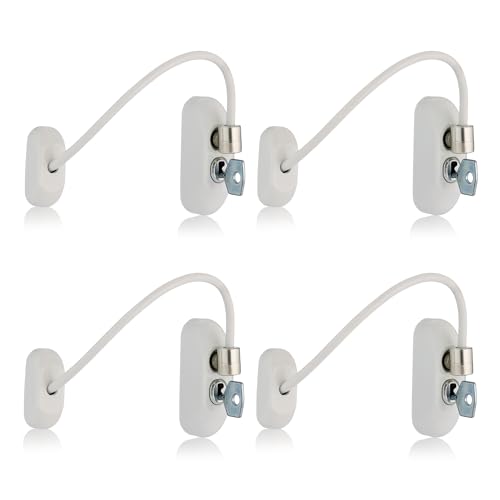 Photo: Amazon
XFORT Viper
Limiting how far uPVC or timber windows open where children live.
as of 21 Oct 2026, 10:37 BST · Details
Product prices and availability are accurate as of the date/time indicated and are subject to change. Any price and availability information displayed on Amazon.co.uk at the time of purchase will apply to the purchase of this product.Yale P-123
Timber sash windows that need a discreet keyed lock.
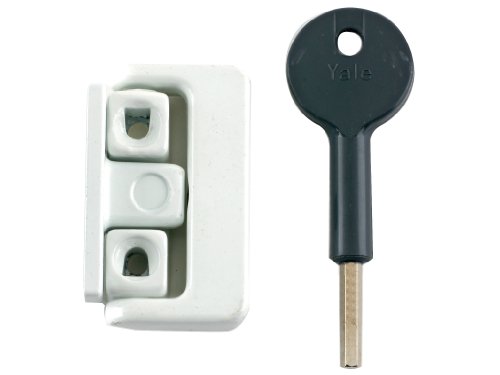 Photo: Amazon
Yale 8K101
Several timber casements secured on one budget.
as of 21 Oct 2026, 10:37 BST · Details
Product prices and availability are accurate as of the date/time indicated and are subject to change. Any price and availability information displayed on Amazon.co.uk at the time of purchase will apply to the purchase of this product.All 8 compared
| Lock | Type | Fits | Key | Standard | Price |
|---|---|---|---|---|---|
Surface-fixed push-to-lock stop · uPVC windows · Key to release Keyed extra lock for uPVC windows that already close properly. | Surface-fixed push-to-lock stop | uPVC windows | Key to release | — | £12.49 at Yale Store Checked 21 OctIn stockCheck price → |
Our verdictOur verdictResearched A simple surface-fixed stop for uPVC frames: push to lock, key to release. Yale supplies packers for different window sizes. It suits a household wanting a visible second lock beside the handle. It is a lock, not a child restrictor, and Yale gives no forced-entry rating; the 8K123 on this page is Yale's other keyed uPVC option. Best for Keyed extra lock for uPVC windows that already close properly. Good
Worth knowing
Who shouldn't buy it: Don't buy it if you need a child restrictor that limits how far the window opens; the XFORT cable restrictor on this page does that job. Do not fit a keyed lock to a bedroom escape window unless the key is kept close by. | |||||
Surface-fixed keyed lock · uPVC windows only · Key supplied A visible keyed lock for uPVC casements that need extra resistance. | Surface-fixed keyed lock | uPVC windows only | Key supplied | — | £22 at Yale Store Checked 21 OctIn stockCheck price → |
Our verdictOur verdictResearched Yale supplies this for uPVC windows only, with the lock fixed to the window section and locked around a frame-fixed staple by key. A stockist lists an angled locking point with through-frame bolting. It suits a ground-floor uPVC window where the handle alone feels light. Unlike the 8K103 stop on the page it locks onto a staple, though Yale gives no tested rating for either. Best for A visible keyed lock for uPVC casements that need extra resistance. Good
Worth knowing
Who shouldn't buy it: Don't buy it if the window is your bedroom escape route and you cannot keep a key beside it, or your windows are timber. | |||||
Press-bolt sash lock · Timber sliding sash windows · Press to lock, key to open Timber sash windows that need a discreet keyed lock. | Press-bolt sash lock | Timber sliding sash windows | Press to lock, key to open | — | £11.99 at Yale Store Checked 21 OctIn stockCheck price → |
Our verdictOur verdictResearched Yale's pressbolt stops the inner and outer sash frames passing each other: press to lock, key to unlock. A stockist lists it for wooden sash frames, one lock per pack. It suits a single vulnerable sash; for several sashes, the six-bolt P119 pack on the page covers more windows per pack. Best for Timber sash windows that need a discreet keyed lock. Good
Worth knowing
Who shouldn't buy it: Don't buy it if you have uPVC or casement windows; use the casement or uPVC options instead. | |||||
Concealed bolt-through sash lock · Timber sash windows · Key to lock Several timber sash windows secured with hidden bolts. | Concealed bolt-through sash lock | Timber sash windows | Key to lock | — | £19.99 at Yale Store Checked 21 OctIn stockCheck price → |
Our verdictOur verdictResearched Six concealed bolts that join the inner and outer frames of a timber sash, locked with a key. A stockist's listing advises two bolts on each frame, so a pack covers three sashes. The lock barrel is fitted into the inner frame, so this is a fitting job, not a quick add-on. Good for period homes where visible hardware is unwelcome. Best for Several timber sash windows secured with hidden bolts. Good
Worth knowing
Who shouldn't buy it: Don't buy it if you only need to secure one sash; the single P-123 presslock suits that better. | |||||
Surface-fixed keyed latch · Hinged timber casements · Key to lock Several timber casements secured on one budget. | Surface-fixed keyed latch | Hinged timber casements | Key to lock | — | £25.02 at Amazon as of 21 Oct 2026, 10:37 BST · DetailsProduct prices and availability are accurate as of the date/time indicated and are subject to change. Any price and availability information displayed on Amazon.co.uk at the time of purchase will apply to the purchase of this product.In stockCheck price → |
Our verdictOur verdictResearched A four-pack of keyed surface latches for hinged timber casements, each locking around a staple fixed to the frame. The listing says the latch pulls the window towards the frame, which can reduce draughts. It is a sound pick for a run of old timber windows, with the usual caveat that keyed locks on escape windows need a key kept near. Best for Several timber casements secured on one budget. Good
Worth knowing
Who shouldn't buy it: Don't buy it if you have uPVC windows, or sash windows that slide rather than hinge. | |||||
Key-locking cable restrictor · uPVC, aluminium and timber · Key to release cable Limiting how far uPVC or timber windows open where children live. | Key-locking cable restrictor | uPVC, aluminium and timber | Key to release cable | — | £18.99 at Amazon as of 21 Oct 2026, 10:37 BST · DetailsProduct prices and availability are accurate as of the date/time indicated and are subject to change. Any price and availability information displayed on Amazon.co.uk at the time of purchase will apply to the purchase of this product.In stockCheck price → |
Our verdictOur verdictResearched A hardened steel cable restricts how far the window opens, and a key releases it so the window can open fully. B&Q lists the four-pack with a cable of around 20cm and fixings for several frame materials; the actual gap depends on where the two ends are fixed. It suits homes wanting to limit window openings, with ventilation. Check the gap you actually get once fitted. Best for Limiting how far uPVC or timber windows open where children live. Good
Worth knowing
Who shouldn't buy it: Don't buy it if the window is a bedroom escape route and the key will not be kept beside it, or you need a fixed small gap; measure the opening after fitting. | |||||
Surface-fixed push-to-lock · Hinged timber casements, 38mm · Key to release Timber casements and fanlights that need a keyed push-to-lock fitting. | Surface-fixed push-to-lock | Hinged timber casements, 38mm | Key to release | — | £22.99 at Yale Store Checked 21 OctIn stockCheck price → |
Our verdictOur verdictResearched Yale designs this pair for hinged timber casement windows of 38mm section. A stockist also lists it for timber fanlights. It suits older timber frames that need a simple keyed lock. It is a closing lock only, so check it will not sit on a window you may need to leave in an emergency. Best for Timber casements and fanlights that need a keyed push-to-lock fitting. Good
Worth knowing
Who shouldn't buy it: Don't buy it if you have uPVC windows or sash windows; there are better-fitting locks on this page. | |||||
 Keyed sash window stop · Timber sliding sash windows · Key to lock Timber sash windows you want to lock shut or on ventilation. | Keyed sash window stop | Timber sliding sash windows | Key to lock | — | £8.74 at Amazon as of 21 Oct 2026, 10:37 BST · DetailsProduct prices and availability are accurate as of the date/time indicated and are subject to change. Any price and availability information displayed on Amazon.co.uk at the time of purchase will apply to the purchase of this product.In stockCheck price → |
Our verdictOur verdictResearched ERA's stop is a key-operated device for timber sliding sashes. One stockist lists it for use in either a closed or a ventilated position. It suits a sash you want to lock shut or hold slightly open, but no listing gives the gap size, so it is not a child restrictor. Both locks in the pack share one key, so keep that key near any escape window. Best for Timber sash windows you want to lock shut or on ventilation. Good
Worth knowing
Who shouldn't buy it: Don't buy it if you have uPVC or casement windows, or want a child restrictor an adult can release without a key. | |||||
ⓘ As an Amazon Associate, PreparedBritain earns from qualifying purchases. We may earn a commission when you buy, or a fee when you request a quote, through our links — it never affects what we recommend. Amazon prices come from Amazon's own product data and show the date and time they were retrieved. Prices at other retailers are checked by us, less often. Prices and stock can change at any time, so always check the retailer's price before you buy.
Before you buy
Start with the window you would escape through.
In England, Approved Document B volume 1 expects habitable rooms other than kitchens on the ground and first floors to have an emergency escape window or door, unless they open onto a protected route out. It allows locks, with or without removable keys, on those windows, provided any opening stay has a release catch. Fire Kills and London Fire Brigade escape-plan advice add the household rule: keep door and window keys where everyone can find them. So a keyed lock or key-release restrictor belongs on an escape window only if its key hangs beside it.
Then match the device to the frame, because every product here is built for one window type.
For uPVC casements, Yale's 8K103 stop and 8K123 keyed lock are both surface-fixed and both for PVCu only. For hinged timber casements, Yale's 8K102 pair is sized for 38mm sections and the 8K101 four-pack locks around a frame staple. For timber sliding sashes, the Yale P-123 presslock and the ERA 822 stop fit on the surface, while the Yale P119 bolts are drilled through the meeting frames and hidden. Fitting a timber lock to a uPVC frame can crack the plastic or miss the steel reinforcement, so do not improvise.
Separate locks from restrictors.
A lock holds a shut window shut. A restrictor lets the window open a short way for air and no further, which is what RoSPA and the Child Accident Prevention Trust advise for upstairs rooms used by children. HSE guidance for care settings uses an opening of no more than 100mm, a sensible benchmark at home. The XFORT Viper is the only restrictor here: XFORT rates its hardened cable at more than 1000N, and B&Q lists the cable at around 20cm, so set the fixing points to keep the gap small. The ERA 822 gives no gap, so it is not a child-safety device.
Standards tell you what has been tested, and here the honest answer is very little.
BS EN 16281 is the European standard for child-resistant window and balcony door locking devices; no product on this page states compliance with it, so none is a certified child-safety restrictor. Likewise none states a Secured by Design, Sold Secure or BSI Kitemark rating for forced entry. That does not make them useless: a visible lock lengthens the job for an opportunist, and a cable stops a window swinging wide. It does mean you should ignore any listing that implies a rating the maker does not print.
Finally, think about keys and upkeep.
Several products here share one key across a pack, which is convenient until it goes missing, so keep a spare on a labelled hook; Yale sells replacement keys for its 8K101 separately. Count how many windows need covering: the four-pack and six-pack options suit a run of old timber windows, while single sash locks suit one vulnerable window. Check the lock still turns every few months, and that paint has not sealed a sash bolt. If a window is your escape route, test that you can open it from inside, in the dark, in under a few seconds.
We verify every product's specifications against at least two independent sources, re-check its UK price and stock on a schedule where we can track it automatically, and cross-check safety-relevant claims against official guidance. Every review is labelled Researched or Used and reviewed by us: where we've bought a product, or been sent it free, and used it ourselves, its review says which; where we haven't, our verdict is a considered spec-and-evidence comparison, not a hands-on test — and commissions never change a ranking either way. Read our full methodology →
Related kit comparisons
Guides that go with this
The fire service's own advice: get out, stay out, call 999 — plus how to plan your escape, what to do if you'r…
A simple, practical household emergency plan — the official GOV.UK Prepare approach: contacts, meeting points,…
What actually cools a UK home — curtains, timing, fans and water — plus the heat-health alerts to watch and wh…
How to tell condensation from penetrating and rising damp, fix each properly, when a dehumidifier helps — and …
Common questions
Can I put a lock on a bedroom window that is a fire escape route?
Yes, with conditions. Approved Document B volume 1 allows locks, with or without removable keys, on emergency escape windows in England, provided any opening stay has a release catch. The Fire Kills campaign and fire services add that keys must be kept where everyone in the home can find them. So fit a keyed lock or a key-release restrictor there only if the key hangs beside the window, and make sure an adult can open it fully from inside straight away.
Do I need extra window locks on uPVC windows?
Usually not for security alone. Most modern uPVC casements have a lockable handle driving a multi-point espagnolette, which is already a decent lock. An add-on stop or keyed lock is a visible deterrent and a comfort on a ground-floor window beside a path, but it is not a substitute for a working handle lock. If the handle no longer locks, replacing the handle usually fixes more than adding a second device.
What is the difference between a window lock and a window restrictor?
A lock holds a closed window shut. A restrictor lets the window open a few centimetres for ventilation and stops it going further, which is the device that helps stop a child falling out. Most restrictors use a cable or a stay with a key or a push-release so an adult can open the window fully for cleaning or escape. On this page the Yale and ERA products are locks; the XFORT Viper is the only restrictor.
Which window locks fit sash windows?
Traditional timber sliding sashes need a sash-specific lock, because the two frames slide past each other rather than hinge. Surface options such as the Yale P-123 presslock and the ERA 822 stop sit on the meeting rail and are quick to fit. Through-frame bolts such as the Yale P119 are drilled into the inner frame so they are hidden, which suits period homes but needs careful drilling. A stockist advises two bolts per window, so a six-pack covers three sashes.
Are window restrictors a legal requirement in the UK?
Not in ordinary private homes. Building regulations in England set rules for escape windows and for guarding, and landlords must keep windows safe under the Housing Health and Safety Rating System, but no law obliges a homeowner to fit a restrictor. Care homes, schools and some rented accommodation follow stricter guidance from the Health and Safety Executive. For a family home, RoSPA's advice is to fit restrictors on upstairs windows where children are, and to keep furniture away from them.
Can I fit window locks in a rented home?
Ask first. Fitting a surface lock or restrictor means screwing into the frame, and most tenancy agreements treat that as an alteration needing the landlord's written agreement. Many landlords will say yes to a child restrictor, or fit one themselves, because window safety is part of their repair duties. Keep the agreement in writing, keep the original fixings, and remember the fire rule still applies: anything on an escape window must be releasable quickly from inside.