Storm damage: who pays for a fallen tree, a blown-down fence or lost roof tiles?
What counts as a storm for home insurance, how the ombudsman settles disputes, who pays for fallen trees, fences and roof tiles, and what to do first.
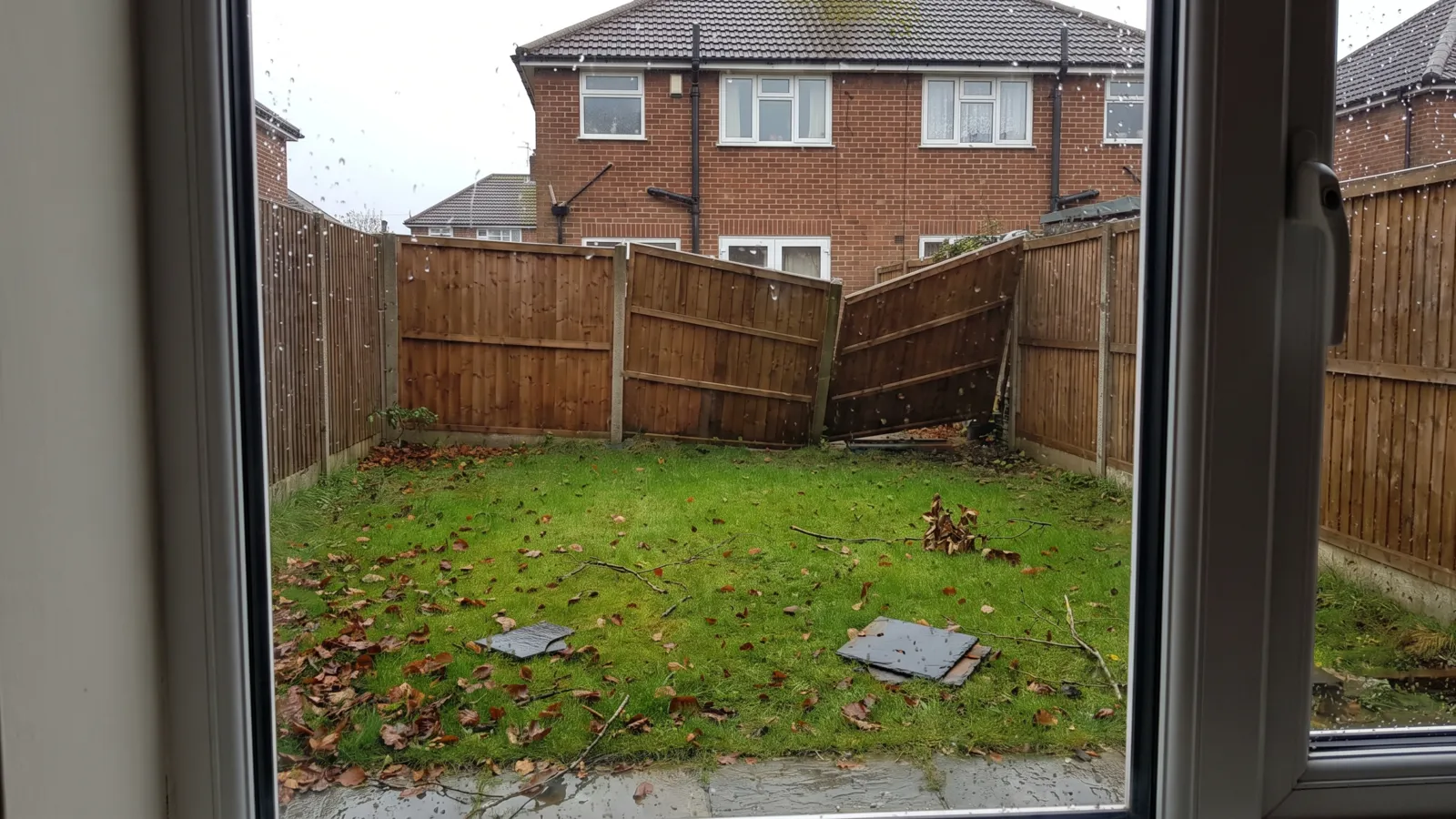
Storm damage to the house itself, such as lost roof tiles, is usually covered by buildings insurance, but insurers and the Financial Ombudsman Service check the weather at your address and whether the storm, rather than wear and tear, caused the damage. The ABI says most standard buildings policies exclude fences and gates blown down by the wind. If a tree falls on your home, you normally claim on your own policy, even if it was a neighbour’s; to make the owner pay, you would generally need to show they were at fault. Make safe, photograph everything, ring your insurer before any repairs if you can, keep the receipts, and don’t hire a trader who knocks at the door.
By Tom Calder · Updated 24 September 2026 · Sourced to the Financial Ombudsman Service, the ABI, the Met Office, GOV.UK, Citizens Advice, Trading Standards and the ENA
What counts as a storm for home insurance
Home insurance usually covers storm damage, but ‘storm’ has a specific meaning. The Financial Ombudsman Service, the free service that settles disputes with insurers, says a storm ‘usually involves violent winds, usually with rain, hail or snow’, and that rain, hail or snow alone can count.
Some policies set numbers. The Association of British Insurers (ABI) says insurers take into account its description: wind gusts of at least 55mph (which it equates to Force 10 on the Beaufort scale, the level the Met Office calls ‘storm’), rain of at least 25mm an hour, snow at least 30cm deep within 24 hours, or hail that damages hard surfaces or breaks glass. That is the insurers’ trade body’s guide, not a legal definition, and policies differ: if yours defines a storm, your insurer will expect those conditions; if it doesn’t, the ombudsman uses its own definition.
A name helps but isn’t required: the Met Office names storms that could bring amber or red warnings, and the ombudsman treats a name as ‘a good indication’ but still checks local weather records. See this season’s storm names.
How the ombudsman decides a disputed claim
If your insurer turns down a storm claim and you take it to the ombudsman, it asks three questions: ‘Do we agree that there was a storm on the date the damage happened? Is the damage consistent with what we generally see as storm damage? Were storm conditions the main cause of the damage, or did other factors mean the damage might have happened anyway?’ In individual decisions, ombudsmen have said they are only likely to uphold a complaint where the answer to all three is yes.
It weighs weather records, expert reports, photos and your own account. Wind speed isn’t everything: in one published case, when an insurer refused a claim for roof tiles because local winds hadn’t reached Force 10, the ombudsman found the policy set no wind speed and told the insurer to deal with the claim, helped by local reports of other homes damaged by the wind. The ABI says insurers also check whether nearby properties were affected, so if neighbours’ homes were damaged too, make a note of it.
Buildings or contents: which policy pays
In the ABI’s words, buildings insurance covers ‘the structure of your home and any permanent fixtures and fittings’, and contents insurance covers your possessions: the roof is a buildings claim, the rain-soaked sofa beneath it a contents claim. Watch the limits. Garden furniture and other things kept outdoors can have a lower cap, £500 in one 2025 ombudsman case. Both policies normally pay the reasonable cost of somewhere to stay, up to a limit, if you can’t live at home during repairs. If someone holds you responsible for damage your tiles or tree caused, tell your buildings insurer: the ABI says buildings policies usually include liability cover.
Roofs, tiles and wear and tear
The ombudsman says disputes usually turn on whether it was a storm and whether the storm caused the damage. Many policies exclude wear and tear and gradual deterioration, and the ABI is plain that home insurance ‘is not a maintenance contract’. Its examples of ageing, not storm damage: tiles loosened by corroded nails or clips, cracked pointing around chimneys and ridges, and flat felt roofs sagging or splitting, which it says typically need maintenance or renewal every 10 to 15 years.
But an old roof isn’t an automatic no. The ombudsman says imperfect condition ‘won’t necessarily mean the damage was a result of wear and tear’, and the insurer has to prove an exclusion applies. An insurer that blamed rusty nails on the strength of phone notes and unclear photos was told to reconsider after a second contractor blamed the storm. The ombudsman is unlikely to side with you, though, if the roof was already in a poor state that ‘would (or should) have been clear’ to you, so the storm ‘merely highlighted’ it.
Fallen trees: whose tree, and who pays
Citizens Advice says that if a tree’s trunk is on your land, you own it. For damage to your home, the usual route is your own buildings policy, whoever owned the tree. Some policies name falling trees as an insured event, and one wording in an ombudsman case covered ‘the cost of removing the fallen object which has caused the loss or damage’.
Two opposite assumptions are both wrong: that the tree’s owner automatically pays, and that a storm automatically lets them off. To make a neighbour, landowner or council pay, you generally need to show they were at fault. The ABI says so for a car hit by someone else’s property; Citizens Advice Scotland says a claim against a neighbour for accidental damage only succeeds if you can prove they didn’t take reasonable care; and Waltham Forest Council, for example, pays for damage from its trees only where negligence is ‘clearly shown’, with the onus on you. Your insurer may try to recover its costs, but in a 2025 case it couldn’t show a neighbour’s garage roof blew off through poor fixing rather than the storm, and the claim stayed on the customer’s record.
Citizens Advice says you can report a neighbour’s dangerous tree to the council. If your own tree has a tree preservation order, guidance for England allows urgent work to remove an immediate risk of serious harm without consent, but only as far as needed, with written notice to the council as soon as practicable. If the danger isn’t immediate, that exception doesn’t apply, and if a protected tree has to come down you may have to plant a replacement.
Trees on power lines and roads
Keep well away from a tree on a power line. The Energy Networks Association says to keep yourself and others as far away as possible and report it: 105 in Great Britain, 03457 643643 in Northern Ireland, or 999 if there is an immediate risk to life. Both numbers are also for reporting power cuts, and a long storm cut may earn you power cut compensation, which the ABI notes doesn’t touch your insurance claims history.
Report a tree down across a road or pavement to the council (GOV.UK’s find-your-council tool will name it). In Northern Ireland, roads are the job of DfI Roads, not councils: report it online through nidirect, or on 0300 200 7899 if it’s a danger. On motorways and major A roads in England, call National Highways on 0300 123 5000. If a fallen tree puts anyone in immediate danger, call 999.
Fences, gates and garden walls
The ABI says gates and fences are ‘excluded by most standard buildings insurance policies’ because wind damages them so easily, and an ombudsman deciding one 2022 complaint called the exclusion common. The wording decides the edge cases: one policy covered fences only if the house was damaged at the same time by the same cause; under another, which excluded storm damage to timber fences, the ombudsman told the insurer to settle the claim when falling trees destroyed one; a third excluded fences under its falling-trees cover too. Read the storm and falling-trees sections side by side.
The ABI’s point is about fences and gates. Some policies count boundary and garden walls as part of the buildings, but check whether your storm exclusions name walls too, and a fallen wall is judged on why it fell. The ombudsman doesn’t count a retaining wall collapsing because the earth behind it became saturated over time as storm damage, though other cover might apply, and it won’t blame you for missing weep-holes in a wall built without them.
The first 24 hours
Make safe first. Don’t put yourself or your household at risk, and keep away from damaged lines. Photograph and film everything before anything is moved, and note when it happened or when you found it. Ring your insurer: the ABI says most have 24-hour emergency lines. Keep the number with your household emergency plan.
Stop it getting worse, if it’s safe. The ABI says to speak to your insurer first where you can, photograph the damage, and keep an itemised invoice and receipts, which form part of the claim; home emergency cover, if you have it, can help pay for emergency roof repairs. Don’t rush to throw damaged things away unless they are a danger to health: the ABI says they may be repairable. If water came in, see our after-a-flood guide.
Say no to the knock at the door. Trading Standards warns that after storms, rogue traders quote low, then raise the price or leave the job unfinished. Never agree work on the doorstep; check with your insurer; get at least three written quotes, a fixed price and a written contract; and never pay up front. Citizens Advice says you don’t automatically get the usual 14-day cooling-off period if you invite a trader in for urgent repairs. For help, call the Citizens Advice consumer helpline on 0808 223 1133 (England and Wales), Advice Direct Scotland on 0808 164 6000 or Consumerline on 0300 123 6262 (Northern Ireland).
If you rent, or have no insurance
Renting? In England, GOV.UK says your landlord is always responsible for repairs to ‘the property’s structure and exterior’. Tell them straight away, don’t do repairs yourself unless your tenancy agreement allows it, and if nothing happens, contact the council’s environmental health team. Your belongings are for your own contents insurance. Scotland, Wales and Northern Ireland have their own rules.
Uninsured? The fault rule above still applies to anyone you ask to pay. For essentials, there is emergency help. In England, ask your council about a Crisis Payment from the Crisis and Resilience Fund. It is for low-income households, though not only people on benefits; the government’s guidance lists ‘disasters’ that cause significant damage to possessions or property among the crises councils can consider; and payments are discretionary but can cover essentials such as food, heating, furniture and appliances. Scotland has Crisis Grants, Wales the Discretionary Assistance Fund and Northern Ireland Discretionary Support. If you have nowhere safe to live, being homeless ‘after a flood, fire or other disaster’ may give you priority need in England.
If your insurer says no
Ask for the reasons and the surveyor’s report in writing, and ask the insurer to check the rest of the policy: the ombudsman expects it to, and accidental damage cover can sometimes pay where storm cover doesn’t. Clear, detailed expert reports with photos tend to be the most persuasive evidence, the ombudsman says, so a report from your own roofer or surveyor can help. Complain to the insurer first. If it hasn’t sent a final response within eight weeks, you can take the complaint to the Financial Ombudsman Service; if it has and you disagree, you have six months from the date of that response. It’s free, and it can tell the insurer to deal with the claim, add interest and pay compensation.
Common questions
Does home insurance cover storm damage?
Usually, yes. The Financial Ombudsman Service says home and buildings policies usually cover storm damage, but the weather has to count as a storm under your policy (or the ombudsman’s own definition if the policy has none), the damage has to be consistent with storm damage, and the storm has to be the main cause rather than wear and tear. The ABI says most standard buildings policies exclude fences and gates.
What wind speed counts as a storm for insurance?
The ABI’s description, which insurers take into account, includes wind gusts of at least 55mph, which it equates to Force 10 on the Beaufort scale; rain of at least 25mm an hour, snow at least 30cm deep within 24 hours or hail that damages hard surfaces or breaks glass can also count. It is industry guidance, not a legal definition, and your policy may set its own figures. The ombudsman considers the Beaufort scale but says it isn’t the only factor, and in one published case, where the policy set no wind speed, it said wind speed shouldn’t be the deciding factor.
My neighbour’s tree fell on my house in a storm. Who pays?
Usually you claim on your own buildings insurance. To make your neighbour pay, you or your insurer would generally need to show they were at fault, for example that they didn’t take reasonable care. If your insurer recovers its costs from them, your excess and no-claims discount may be restored; if it can’t, the claim can stay on your record, as it did in a 2025 ombudsman case.
Will my insurance cover a fence blown down in a storm?
Often not. The ABI says gates and fences are excluded by most standard buildings policies because wind damages them so easily, and an ombudsman deciding one complaint called the exclusion common. Some policies cover fences if the house was damaged at the same time, and in one case the ombudsman decided a storm exclusion for timber fences didn’t apply because falling trees, not the wind, destroyed the fence. Read your wording before you rule it out.
A tree fell on my car in the storm. Am I covered?
Usually, if you have comprehensive cover: the ABI says comprehensive motor insurance covers storm damage to your vehicle. Third party, fire and theft doesn’t. To claim from the tree’s owner instead, you would need to show they were at fault.
Does it have to be a named storm for me to claim?
No. What matters is the weather at your address when the damage happened. The ombudsman treats a Met Office name as a good indication of storm conditions but still checks the weather records for your area, and neither its definition of a storm nor the ABI’s depends on a name.
Sources (34)
- Financial Ombudsman Service — Storm damage (information for consumers)
- Financial Ombudsman Service — Storm damage: our approach (information for businesses)
- Financial Ombudsman Service — Case study: insurer declines storm damage claim because of local wind speeds
- Financial Ombudsman Service — Case study: fair outcome for storm damage dispute (roof nails)
- Financial Ombudsman Service — Decision DRN-3753383ridge tile, 70mph winds, gates and fences
- Financial Ombudsman Service — Decision DRN-3589608gates and fences exclusion called common, 2022
- Financial Ombudsman Service — Decision DRN-3665492fence destroyed by trees that blew down in a storm, 2022
- Financial Ombudsman Service — Decision DRN-5762441neighbour’s roof, recovery, £500 outdoor limit, 2025
- Financial Ombudsman Service — Decision DRN-5304833the three questions; a complaint is only likely to be upheld if all three answers are yes, 2025
- Financial Ombudsman Service — How to complain
- Association of British Insurers — Stormsstorm description, fences, wear and tear, claims
- Association of British Insurers — Home insurance
- Met Office — UK Storm Centre: when a storm is named
- Met Office — Beaufort wind force scale
- Citizens Advice — If you disagree with your neighbour about a tree or hedge
- Citizens Advice Scotland — Disputes about damages and repairsclaim on your own insurance; a neighbour pays only if they failed to take reasonable care
- London Borough of Waltham Forest — Property damage caused by trees
- GOV.UK — Tree Preservation Orders and trees in conservation areas
- Energy Networks Association — How to prepare for storms and bad weather
- Westmorland and Furness Council — Report a fallen tree or branches (example of council highway reporting)
- GOV.UK — Find your local council
- National Highways — Report a problem on motorways and major A roadsincidents: 0300 123 5000; emergencies: 999
- nidirect — DfI Roads (the road authority in Northern Ireland; 0300 200 7899)
- Chartered Trading Standards Institute — Rogue traders exploiting storm damage (Storm Babet warning)
- Department for the Economy (NI) Trading Standards — Rogue trader warning after Storm Éowyn
- Citizens Advice — Cancelling building or decorating work
- Advice Direct Scotland — Consumer advice
- Department for the Economy (NI) — Consumerline
- GOV.UK — Private renting: repairs
- GOV.UK — Crisis and Resilience Fund: guidance for local authorities in England (2026 to 2029)
- mygov.scot — Scottish Welfare Fund
- GOV.WALES — Discretionary Assistance Fund
- nidirect — Discretionary Support
- GOV.UK — Help if you’re homeless or about to become homeless
PreparedBritain is independent and not affiliated with HM Government.
The Emergency Kit Checklist
The GOV.UK Prepare essentials on one printable page — tick them off as you go and keep it with the kit. Free, no catch.
Download it straight away. We'll also send the occasional briefing when something genuinely matters — severe weather, live incidents, real price drops. Nothing else.
Keep reading
All weather, storms & flooding guides →Boiler stopped working in the cold? What to check tonight, and who has to fix it
No heating or hot water on a cold night? The safe checks to try first, when to stop and call a Gas Safe engineer,…
Are electric heaters safe to leave on, and what do they cost to run this winter?
What fire services and Electrical Safety First say about leaving a heater on, and what 1, 2 and 3 kW heaters cost to…
Is it illegal to leave your car running to defrost it? The law, fines and insurance
What the Highway Code and the regulations say about running the engine to defrost your car, idling fines, insurance…