Best air purifiers UK (2026) — compared & price-tracked
An air purifier filters particles already in the room — pollen, dust, smoke and pet dander — it doesn't bring in fresh air or remove carbon monoxide. For hay fever, wood-burner smoke drift, or a flat near a busy road, that filtering can genuinely help. The two specs that matter more than any brand name are CADR (how much clean air it actually delivers per hour) and room size in m² — buy for the room you'll actually use it in, not the biggest number on the box.
In the US? Our sister site has the US version, with US gear and amazon.com links: PreparedStates.
By Tom Calder · Updated 4 November 2026 · 5 products, all price-tracked
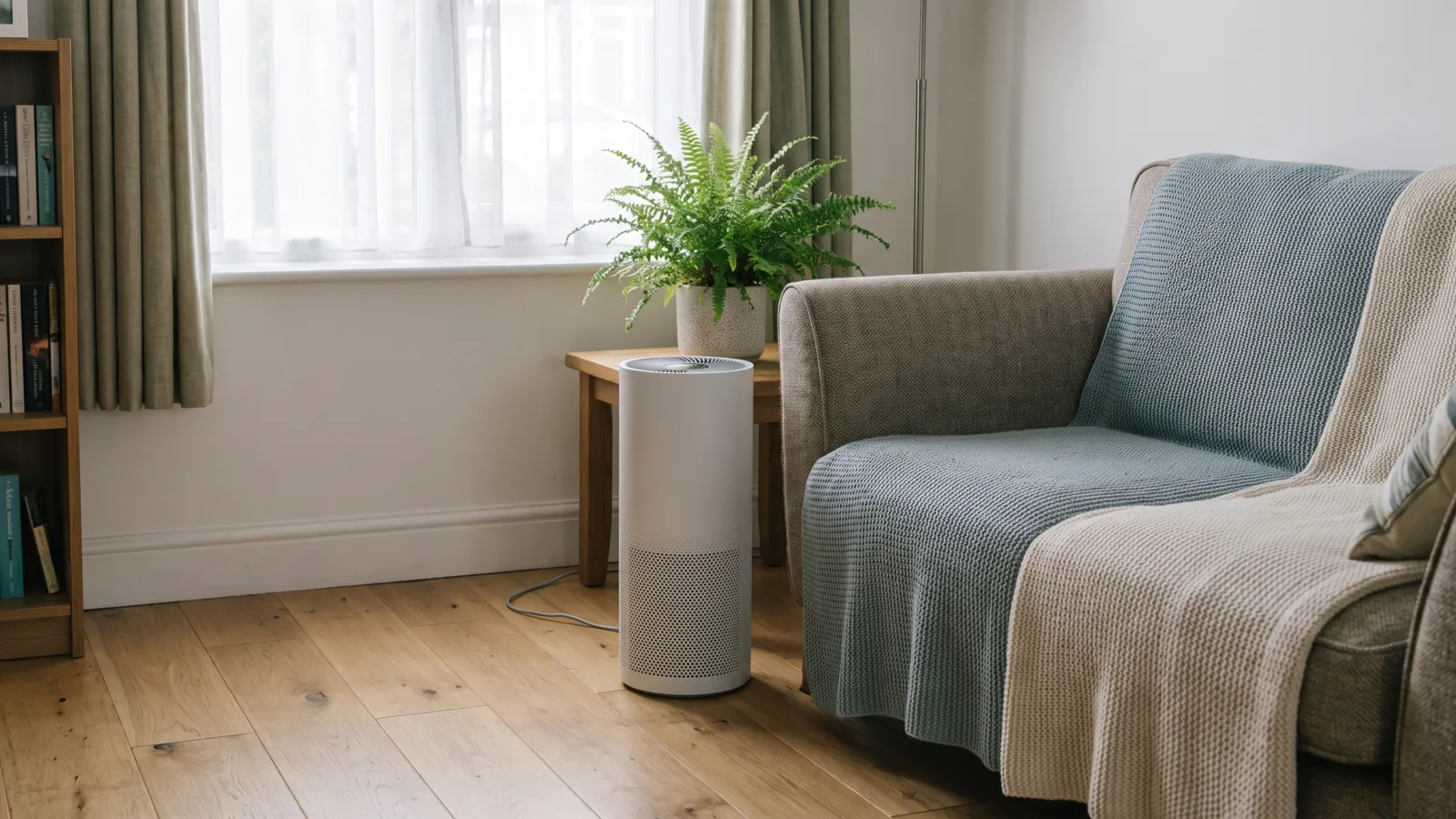
Our picks
 Photo: Amazon
Philips 2200 Series AC2210
A large living room or open-plan space where filtering speed and a quiet night setting both matter.
as of 4 Nov 2026, 23:07 GMT · Details
Product prices and availability are accurate as of the date/time indicated and are subject to change. Any price and availability information displayed on Amazon.co.uk at the time of purchase will apply to the purchase of this product.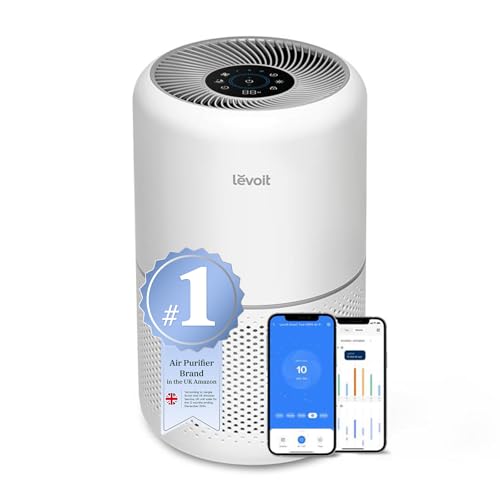 Photo: Amazon
Levoit Core 300S
A small-to-medium bedroom or home office on a budget
as of 4 Nov 2026, 23:07 GMT · Details
Product prices and availability are accurate as of the date/time indicated and are subject to change. Any price and availability information displayed on Amazon.co.uk at the time of purchase will apply to the purchase of this product. Photo: Amazon
Blueair Blue Pure 511
A small bedroom or home office on the tightest budget
as of 4 Nov 2026, 23:07 GMT · Details
Product prices and availability are accurate as of the date/time indicated and are subject to change. Any price and availability information displayed on Amazon.co.uk at the time of purchase will apply to the purchase of this product.All 5 compared
| Purifier | Room size | CADR | Filter | Noise (min) | Price |
|---|---|---|---|---|---|
109 m² · 420 m³/h · 3-layer HEPA NanoProtect filter with active carbon · 13 dB A large living room or open-plan space where filtering speed and a quiet night setting both matter. | 109 m² | 420 m³/h | 3-layer HEPA NanoProtect filter with active carbon | 13 dB | £149 at Amazon as of 4 Nov 2026, 23:07 GMT · DetailsProduct prices and availability are accurate as of the date/time indicated and are subject to change. Any price and availability information displayed on Amazon.co.uk at the time of purchase will apply to the purchase of this product.In stockCheck price → |
Our verdictOur verdictResearched The current large-room model in Philips' 2000 range, with a higher published CADR (420 m³/h) than the 2000i it replaces and a lowest setting Philips puts at 13 dB(A). The HEPA filter carries ECARF allergy certification, a genuine third-party standard rather than marketing language, and Philips rates the combined HEPA and carbon filter for up to three years, which keeps the running cost down. Best for A large living room or open-plan space where filtering speed and a quiet night setting both matter. Good
Worth knowing
Who shouldn't buy it: Don't buy it if you only need to clean a bedroom or small office — the Levoit Core 300S or Blueair 511 cover a smaller room for less. | |||||
100 m² · 258 m³/h · 3-stage: pre-filter, True HEPA, activated carbon · 22 dB A small-to-medium bedroom or home office on a budget | 100 m² | 258 m³/h | 3-stage: pre-filter, True HEPA, activated carbon | 22 dB | £127.99 at Amazon as of 4 Nov 2026, 23:07 GMT · DetailsProduct prices and availability are accurate as of the date/time indicated and are subject to change. Any price and availability information displayed on Amazon.co.uk at the time of purchase will apply to the purchase of this product.In stockCheck price → |
Our verdictOur verdictResearched The most affordable proper HEPA purifier on this list, and quiet enough at 22 dB to run overnight. Its official room-size claims vary depending on which Levoit page you read, so size it to the lower, twice-an-hour figure for a room that actually needs clearing quickly. Best for A small-to-medium bedroom or home office on a budget Good
Worth knowing
Who shouldn't buy it: Don't buy it if you need to cover a large open-plan room — step up to the Core 400S or a higher-CADR model instead. Read the full review → | |||||
38 m² · ~208 m³/h (converted from cfm, not Blueair-published) · HEPASilent combination particle and activated carbon filter · 21 dB A small bedroom or home office on the tightest budget | 38 m² | ~208 m³/h (converted from cfm, not Blueair-published) | HEPASilent combination particle and activated carbon filter | 21 dB | £89 at Amazon as of 4 Nov 2026, 23:07 GMT · DetailsProduct prices and availability are accurate as of the date/time indicated and are subject to change. Any price and availability information displayed on Amazon.co.uk at the time of purchase will apply to the purchase of this product.In stockCheck price → |
Our verdictOur verdictResearched The cheapest purifier on this list, and its 38 m² coverage suits a single small-to-medium room rather than anything bigger. Blueair replaced the older 411/411+ with this 511 model in the UK, so treat it as the current comparable rather than a downgrade. Best for A small bedroom or home office on the tightest budget Good
Worth knowing
Who shouldn't buy it: Don't buy it if you need to cover a room larger than about 38 m² — the Philips 2200 Series or Winix Zero-S are built for bigger spaces. Read the full review → | |||||
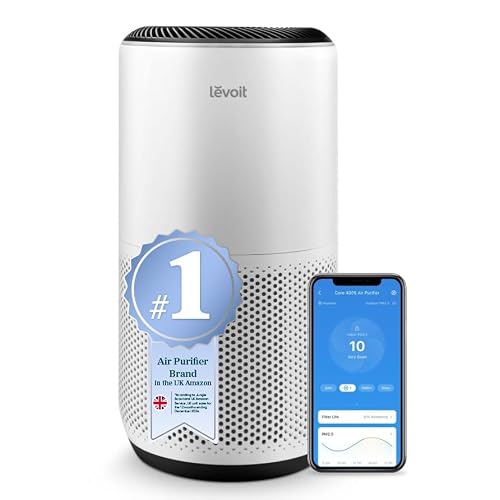 166 m² · Not published by Levoit for this model · 3-stage HEPA (pre-filter, HEPA, carbon); ~6-8mo life A large living room or open-plan space, bought direct from Levoit | 166 m² | Not published by Levoit for this model | 3-stage HEPA (pre-filter, HEPA, carbon); ~6-8mo life | — | £219.99 at Amazon as of 4 Nov 2026, 23:07 GMT · DetailsProduct prices and availability are accurate as of the date/time indicated and are subject to change. Any price and availability information displayed on Amazon.co.uk at the time of purchase will apply to the purchase of this product.In stockCheck price → |
Our verdictOur verdictResearched Levoit's biggest single-room coverage figure on this list at 166 m², with a clearly stated 6–8 month filter-replacement schedule. The catch is Levoit hasn't published CADR or noise figures for this model, so you're comparing room size alone against rivals that publish the fuller picture. Best for A large living room or open-plan space, bought direct from Levoit Good
Worth knowing
Who shouldn't buy it: Don't buy it if you want to compare purifiers strictly on CADR before buying — Levoit doesn't publish one for this model. Read the full review → | |||||
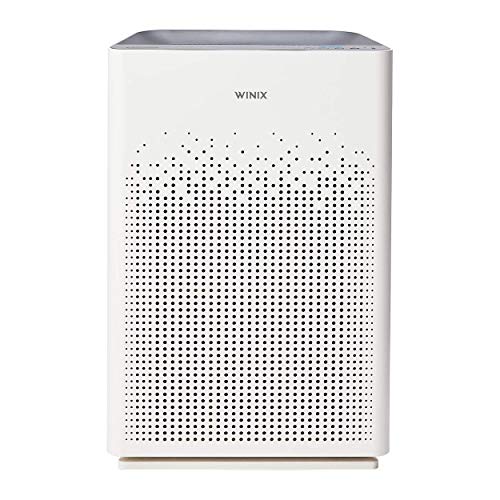 Up to 100m² m² · 410 m³/h · 4-stage: H13 HEPA, carbon, PlasmaWave · 27dB (sleep mode) dB Large bedrooms or living rooms up to 100m², and hay fever/allergy sufferers. | Up to 100m² m² | 410 m³/h | 4-stage: H13 HEPA, carbon, PlasmaWave | 27dB (sleep mode) dB | £159 at Amazon as of 4 Nov 2026, 23:07 GMT · DetailsProduct prices and availability are accurate as of the date/time indicated and are subject to change. Any price and availability information displayed on Amazon.co.uk at the time of purchase will apply to the purchase of this product.In stockCheck price → |
Our verdictOur verdictResearched A capable, quiet HEPA purifier that steps in cleanly for the discontinued original Zero — strong coverage for bigger rooms, though the front cover is fiddly if you plan to move it between rooms. Best for Large bedrooms or living rooms up to 100m², and hay fever/allergy sufferers. Good
Worth knowing
Who shouldn't buy it: Skip it if you need to shift a purifier room to room daily — the loose front panel makes that awkward; a compact model is better suited. Read the full review → | |||||
ⓘ As an Amazon Associate, PreparedBritain earns from qualifying purchases. We may earn a commission when you buy, or a fee when you request a quote, through our links. When two products are close, commission can decide which one we pick. A clearly better product always wins. Amazon prices come from Amazon's own product data and show the date and time they were retrieved. Prices at other retailers are checked by us, less often. Prices and stock can change at any time, so always check the retailer's price before you buy.
Before you buy
Two numbers do most of the work when comparing air purifiers
CADR (Clean Air Delivery Rate, in m³/h) and the manufacturer's recommended room size in m². CADR tells you how much filtered air the unit actually moves — a higher figure clears a room faster and copes better with a larger space. Room-size figures are usually quoted for two different jobs (a slower 'once an hour' air change for a big room, or a faster 'twice an hour' change for a smaller one), so always check which assumption a figure uses before comparing it against a rival brand's number, and treat any conflicting figures from third-party retailers as secondary to what the manufacturer states on their own site.
Filter type matters more than marketing language.
'True HEPA' and 'HEPA H13' both refer to genuine high-efficiency particulate filtration, typically rated to capture 99.95–99.97% of particles at a stated micron size — that's a real, testable standard, not a vague claim. An activated carbon layer on top handles odours and some gases; a small number of models add a catalytic filter aimed specifically at formaldehyde. What none of these do is treat, cure or prevent an illness. The evidence-based framing, in line with NHS and Asthma + Lung UK guidance on allergy and asthma triggers, is that reducing airborne pollen, dust and smoke particles can ease exposure to known triggers for some people — that's a filtration claim, not a medical one, and any product copy that blurs the two is worth reading with a raised eyebrow.
Noise is where manufacturer and real-world figures diverge most.
Quoted dB ratings are almost always taken on the lowest (sleep) setting under lab conditions; running a unit at full speed to actually clear a room quickly is noticeably louder than the headline number suggests, and independent measurements sometimes come in well above the manufacturer's own figures. If the purifier will run overnight in a bedroom, prioritise its lowest-setting dB rating and expect that on higher settings it will be more noticeable, whatever the spec sheet implies.
Running costs rarely make it onto the price tag.
Filters need replacing on a schedule — commonly every 6 to 8 months for a combined HEPA/carbon cartridge — and a replacement can cost a meaningful fraction of the unit's original price. Multiply the filter price by how many you'll buy over two or three years and compare that total to the purchase price before deciding a cheaper machine is actually the cheaper choice.
We verify every product's specifications against at least two independent sources, re-check its UK price and stock on a schedule where we can track it automatically, and cross-check safety-relevant claims against official guidance. Every review is labelled Researched or Used and reviewed by us: where we've bought a product, or been sent it free, and used it ourselves, its review says which; where we haven't, our verdict is a considered spec-and-evidence comparison, not a hands-on test. When two products are close, commission can decide which one we pick. A clearly better product always wins. Read our full methodology →
Related kit comparisons
Guides that go with this
What actually cools a UK home — curtains, timing, fans and water — plus the heat-health alerts to watch and wh…
The NHS symptoms of carbon monoxide poisoning, the two tells that separate it from flu, the six sources in you…
A simple, practical household emergency plan — following the government's Be Ready advice: contacts, meeting p…
Common questions
Do air purifiers help with hay fever?
They can help for some people by capturing pollen particles that are already circulating indoors, which is a recognised trigger-avoidance approach per NHS and Asthma + Lung UK guidance. They don't cure or prevent hay fever, and they only filter the air in the room they're running in.
What size air purifier do I need for my room?
Check the manufacturer's stated room-size coverage against your actual room in m², and note whether the figure assumes one air change per hour or two — a purifier rated for a large room on a slow single air-change basis will clear the air more slowly than one sized generously for a smaller room. When in doubt, size up rather than down.
What does CADR actually mean?
Clean Air Delivery Rate — a measure, in m³/h, of how much filtered air a purifier actually delivers. It's a more consistent way to compare models than room-size claims alone, though not every manufacturer publishes one, and figures should always come from the manufacturer's own spec sheet rather than a third-party estimate.
How often do I need to replace the filter?
It varies by model, but a combined HEPA and carbon filter commonly needs replacing every 6 to 8 months with regular use. Factor the replacement filter's price and frequency into the real cost of ownership before you buy, not after.
Does an air purifier remove carbon monoxide?
No. Air purifiers filter particulates such as dust, pollen and smoke — they do not remove gases like carbon monoxide. CO detection needs a dedicated carbon monoxide alarm; a purifier is not a substitute for one.
Can I just open a window instead?
Ventilation and filtration do different jobs. Opening windows and running extractor fans brings in fresh air and helps with damp — a purifier only filters particles already in the room's air. Most households benefit from both rather than treating a purifier as a replacement for ventilation.
Is a more expensive air purifier always better?
Not necessarily. Price often reflects extra features — app control, additional filter stages, larger room coverage — rather than dramatically better filtration, since genuine HEPA filtration is a defined standard rather than a sliding scale. Match the unit to your room size and buy the cheapest model that clears it, then weigh ongoing filter costs before comparing sticker prices.
