Flood alerts vs flood warnings: what each level means and what to do
What flood alerts, flood warnings and severe flood warnings mean, how much time each typically gives you, and the concrete actions to take at each stage.
By Tom Calder · Updated 12 August 2026 · Sourced to gov.uk, the Met Office, NRW, SEPA & nidirect
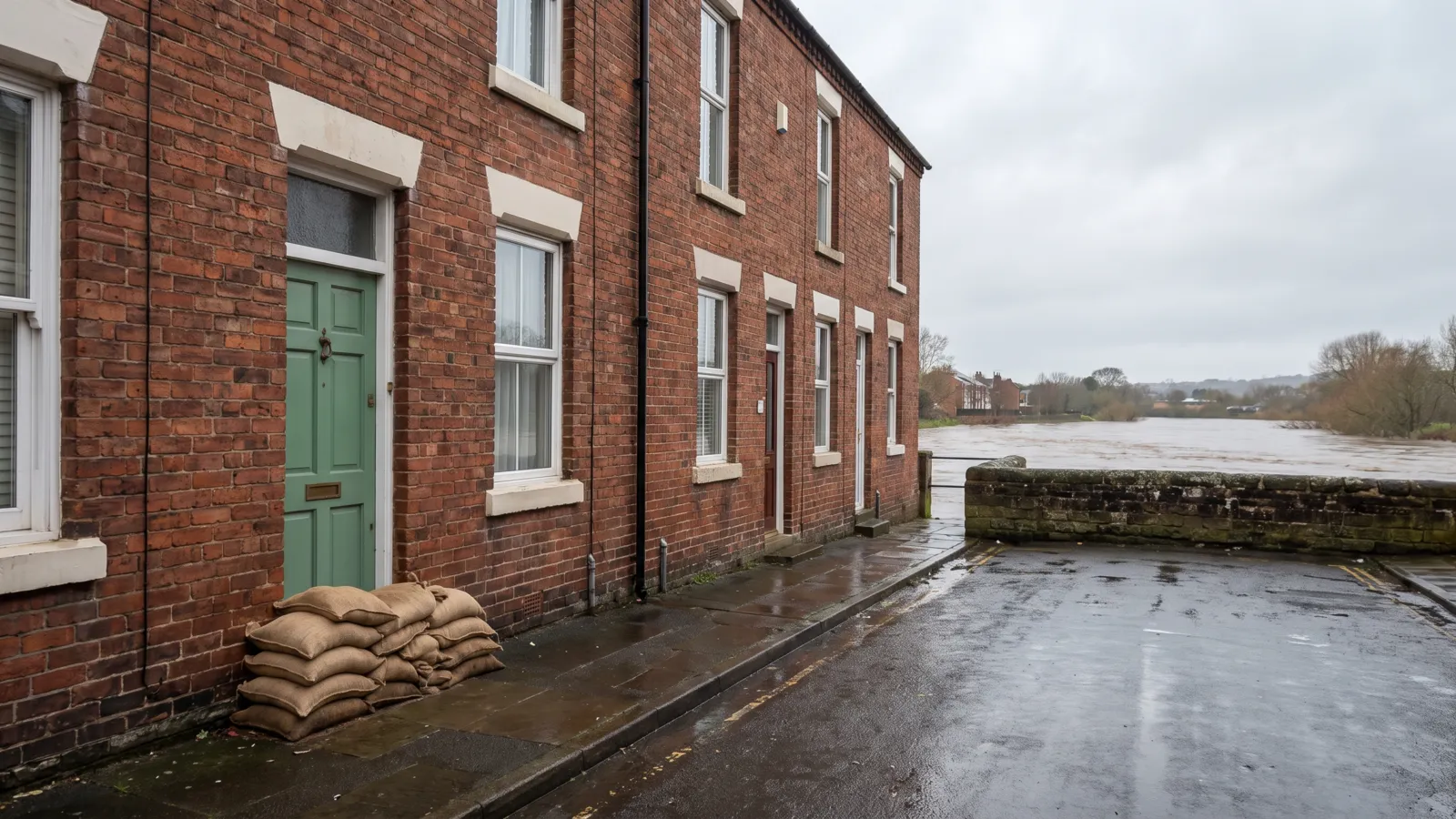
One system, three levels — and they are not interchangeable
The Environment Agency runs the flood warning service for England, and it uses exactly three levels. Each one is an instruction, not a weather mood: a flood alert means flooding is possible, so prepare; a flood warning means flooding is expected, so act; a severe flood warning means flooding could put lives in danger. The levels are sequenced deliberately — most of the useful work happens at the alert stage, when you still have hours, not at the warning stage, when you may have thirty minutes.
You can see every alert and warning currently in force on our live flood warnings tracker, which is updated from the Environment Agency's feed. If you are not sure whether any of this applies to your address, check your postcode's underlying flood risk first — the whole system only matters if you live, work or park somewhere that can actually flood.
Flood alert: flooding is possible — usually 2 to 12 hours ahead
A flood alert means low-lying land, roads and riverside paths may flood, and homes could follow if conditions worsen. GOV.UK says alerts are usually issued between 2 and 12 hours before flooding — this is the widest window you will get, so it is the stage for anything that takes time. Move your car to higher ground now, not when water is in the street. Gather medicines, glasses and insurance documents in one place, charge phones, and check on anyone nearby who would struggle to move quickly. If you keep livestock or equipment on low ground, move them.
This is also the moment to locate and check any flood protection you own — barriers, airbrick covers, non-return valves — rather than discovering a missing clip mid-deployment. Our flood preparation checklist walks the full sequence in order. One thing not to do at any level: walk, cycle or drive through flood water.
Flood warning: flooding is expected — usually 30 minutes to 2 hours
A flood warning means flooding of homes and businesses is expected. GOV.UK says warnings are usually issued 30 minutes to 2 hours before flooding starts — which is why the alert-stage preparation above matters so much. In this window: fit flood barriers and airbrick covers, move family, pets and anything valuable or irreplaceable upstairs or to safety, and turn off gas, electricity and water at the mains if it is safe to do so. Then stay off the roads.
Do not use the remaining time for a car journey through affected streets. Driving through flood water is the leading cause of death during a flood in the UK, and the Met Office warns that just 30cm of moving water can float a car — if yours is still on low ground at this point, leave it and keep people upstairs instead.
Severe flood warning: danger to life
A severe flood warning means flooding could cause danger to life and significant disruption to communities, and no typical lead time is given for it. The actions change character here: stay in a safe place, be ready to evacuate, and follow instructions from the emergency services — including leaving your home if told to. Call 999 if you are in immediate danger.
Where there is a danger to life, the government's Emergency Alerts system may also send a loud, siren-like alert — even to a phone set to silent — to every compatible phone in the affected area, separate from the Environment Agency's messages. It is worth knowing what that alert looks and sounds like before you ever receive one.
Sign up — it is free — and the Wales, Scotland and NI equivalents
In England, the Environment Agency's warning service is free and sends warnings by phone call, text or email for flooding from rivers, the sea and groundwater. Sign up through the GOV.UK Get flood warnings service at gov.uk/get-flood-warnings, or call Floodline on 0345 988 1188 (open 24 hours; textphone 0345 602 6340). Registering takes a few minutes, and the service covers organisations as well as homes.
Wales and Scotland run the same three-level system through their own agencies. Natural Resources Wales offers a free sign-up covering around 90% of properties at risk from river or sea flooding, online or via the same Floodline number. In Scotland, register with SEPA's Floodline Scotland service, which notifies you when an area you live, work or travel through is at risk. Northern Ireland has no opt-in warning service; nidirect publishes flood guidance, and the 24-hour Flooding Incident Line (0300 2000 100) takes reports of flooding — with 999 for any risk to life.
The gap in the system: surface water floods arrive unannounced
The warning service has one important limit, stated plainly on GOV.UK: you cannot get flood warnings for surface water flooding. Surface water — rain falling faster than drains can carry it away — is highly localised, forms in minutes, and is the hardest type to forecast, which is why streets can flood with no alert or warning ever issued.
The best proxy signal is the rain itself. When the Met Office issues a severe weather warning for heavy rain or thunderstorms, treat that as your flood alert if you live in a dip, near a known ponding spot, or in a basement flat: move the car, clear your gullies, and put anything precious above floor level. Our weather warnings and rainfall trackers show what is coming in one place. Act on the forecast — not on the absence of an Environment Agency warning.
Common questions
How much warning do you get before a flood in the UK?
It depends on the level. Flood alerts are usually issued between 2 and 12 hours before flooding; flood warnings usually 30 minutes to 2 hours before; severe flood warnings have no stated lead time. Surface water flooding from intense rain often comes with no warning at all, because the Environment Agency service does not cover it.
Is the flood warning service free?
Yes. In England the Environment Agency service is free and sends warnings by phone call, text or email — sign up at gov.uk/get-flood-warnings or call Floodline on 0345 988 1188 (24 hours). The Natural Resources Wales and Floodline Scotland services are free too.
What does "flood alert no longer in force" mean?
The Environment Agency has removed the alert because the immediate threat has passed. River levels can stay high and banks slippery for some time afterwards, so take care near swollen rivers, and expect standing water on low-lying roads to linger.
Do flood warnings cover flash flooding from heavy rain?
No. GOV.UK states you cannot get flood warnings for surface water flooding — the service covers rivers, the sea and groundwater only. For flash-flood risk, watch Met Office severe weather warnings for rain and thunderstorms and act on those instead.
Should I evacuate when a flood warning is issued?
Not automatically. At the flood warning level the advice is to move people, pets and valuables upstairs or to safety and turn off gas, electricity and water if safe — going upstairs is usually safer than a car journey through flooding streets. Evacuate when the emergency services tell you to, or if staying would put you in danger. Call 999 if you are at immediate risk.
What is the difference between a Met Office weather warning and an Environment Agency flood warning?
The Met Office warns about the weather — for example heavy rain — across broad areas. The Environment Agency warns about the flooding that weather may cause, for specific rivers, coastlines and communities. You can get one without the other: a rain warning with no flood warning is common, and surface water can flood streets under a rain warning alone.
Sources: GOV.UK — Flood alerts and warnings: what they are and what to do · GOV.UK — Get flood warnings by text, phone or email · GOV.UK — About Emergency Alerts · Met Office — Driving in severe weather · Natural Resources Wales — Sign up to receive flood warnings · SEPA — Floodline Scotland live flood information · nidirect — Reporting flooding (Flooding Incident Line). PreparedBritain is independent and not affiliated with HM Government.
The Emergency Kit Checklist
The GOV.UK Prepare essentials on one printable page — tick them off as you go and keep it with the kit. Free, no catch.
Download it straight away. We'll also send the occasional briefing when something genuinely matters — severe weather, live incidents, real price drops. Nothing else.
Keep reading
All weather, storms & flooding guides →How to drive through flood water — and when you must not
How to drive through flood water safely if you have no choice — the real depth limits (30cm of moving water can…
How to stay warm without turning the heating on
How to stay warm at home without turning the heating on — warm the person, then the zone, then the room, with the…
Sandbags and flood barriers: where to get them, how to use them, and what works better
Where to get sandbags in the UK, how to fill and stack them correctly, and why the Environment Agency says flood…