When is the government’s emergency preparedness campaign launching?
The government told Parliament on 14 July 2026 that a national resilience campaign would launch “later this year”, and said the same again on 21 September 2026 when asked for a date. Here is what has actually been said, what the campaign is likely to ask, and how Sweden, Finland, Germany and Ireland did theirs.
Not yet. On 14 July 2026 the government told Parliament it would launch a national resilience public awareness campaign “later this year”, and its report published the same day says the campaign will be “anchored in GOV.UK/Prepare”. Asked in Parliament for a date, it replied on 21 September 2026 only that the campaign “will launch later this year”; as of 22 September 2026 no launch date and no leaflet to every household have been announced, and Bloomberg reported on 28 August 2026 that the campaign had been delayed. The advice it is built on already exists: a small emergency kit, a written household plan and a word with your neighbours.
Tell me the day the campaign launches
One email, on the day the government’s campaign goes live, saying what it asks and linking the official page. Nothing else, and one click unsubscribes.
By Tom Calder · Updated 22 September 2026 · Sourced to the Cabinet Office, Parliament, GOV.UK Prepare, the European Commission and the governments and outlets named
Where things stand (22 September 2026)
As of 22 September 2026 the government’s national resilience campaign has not launched and no launch date has been given. The official timing is still the phrase first used in Parliament on 14 July 2026: “later this year”. Ministers have restated that timing since, including in Ministry of Defence written answers on 2 September, in the Lords on 8 September, in the Commons on 10 September and in Cabinet Office written answers on 16 and 21 September 2026. Asked on what date the campaign would launch, the Security Minister, Dan Jarvis, replied on 21 September that it “is being developed by the Cabinet Office and will launch later this year”. Nothing we have found on GOV.UK or in Parliament narrows it to a month. In the Lords on 8 September a government minister, Lord Katz, said Flood Action Week, beginning on 12 October, “coincides with national resilience week”; he did not say the campaign would launch that week.
No leaflet or booklet to every household has been announced. Asked on 16 September 2026 whether printed material would be delivered to households, the government said it is “developing resources and materials that will be hosted on GOV.UK for partners to download, adapt and distribute locally”. The Cabinet Office describes a public engagement campaign anchored in the existing GOV.UK Prepare website, supported by new household advice, and calls it a three-year campaign. Bloomberg reported in late August 2026 that the campaign had been delayed; that reporting is set out below with its source, and the government’s answers since have given no timing beyond “later this year”.
What the government has actually said
The campaign was announced on 14 July 2026 in the first Annual Statement on National Resilience, a written statement to Parliament by Darren Jones, then Chancellor of the Duchy of Lancaster: “the government will launch a national resilience public awareness campaign later this year, in order to inform the public of the small but important steps they can take to be prepared in case of emergencies and disruption”.
The Resilience Action Plan 2026 Implementation Report, published the same day, gives it shape. The government is “working in partnership with devolved and local governments, Local Resilience Forums, utilities providers, businesses, civil society organisations and other partners to design and deliver a national resilience public engagement campaign, anchored in GOV.UK/Prepare, launching later this year”. It promises new household advice “supported by a multi-year campaign later this year”, says the campaign will be “developed in collaboration with civil society organisations to reach at-risk audiences” and will include “resources for schools, colleges, and children and young people”, and says “the Prepare website will be further updated in line with the launch of the new public campaign”.
The statement sat beside the 2026 National Risk Register, published the same day and listing 95 risks in total. It also covered defence spending, accelerated home defence planning including an update of the government’s War Book, and the largest UK home defence exercise in several decades, planned for 2027, which is one reason the campaign keeps surfacing in headlines about war. The statement’s own examples of what people should be prepared for are “severe weather or a cyber attack which can impact access to power, water, phone signal or local shops to get food”.
On timing, Bloomberg reported on 28 August 2026 that the campaign had been delayed. The statement had been made under Keir Starmer; Andy Burnham succeeded him as Prime Minister on 20 July 2026, six days later. The Cabinet Office’s on-record line, quoted by Novara Media on 26 August 2026, was that it is “committed to raising awareness of simple steps households can take to make themselves more resilient, as well as driving forward the home defence programme”. An unnamed government official told the Financial Times, as reported by Novara Media on 26 August 2026, that the campaign “won’t be anything like ‘duck and cover’” and would be “common sense, not scaremongering”.
Since then ministers have restated the timing several times. On 2 September 2026 the Armed Forces Minister, Louise Sandher-Jones, answering written questions from Stuart Anderson MP, said the government “will launch a national resilience public awareness campaign later this year, aiming to educate households on preparing for emergencies alongside increased information about state-based threats”. In the Lords on 8 September 2026 Lord Katz said the campaign, “which builds on existing guidance that we already publish on GOV.UK/prepare, will launch later in the year”. In the Commons on 10 September the Security Minister, Dan Jarvis, said “we will run a public awareness campaign later this year on how households can prepare for emergencies like severe weather”. On 16 September, asked by David Reed MP whether printed material would be delivered to households, Mr Jarvis replied that “the three-year household resilience public information campaign will launch later this year” and that the government is “developing resources and materials that will be hosted on GOV.UK for partners to download, adapt and distribute locally”. And on 21 September 2026, answering a further written question from Mr Reed that asked on what date the campaign would launch, Mr Jarvis said: “The household resilience public information campaign announced through the Annual Statement on National Resilience is being developed by the Cabinet Office and will launch later this year.” That answer is the “update” in the 22 September headlines.
What already exists: GOV.UK Prepare and Emergency Alerts
GOV.UK Prepare launched on 22 May 2024, announced by the then Deputy Prime Minister, Oliver Dowden, at the London Defence Conference. It covers being prepared for emergencies, being informed about hazards such as flooding, wildfire and terrorism, and getting involved in your community, and it carries a printable household emergency plan.
GOV.UK Prepare is a UK Government site. Its campaign toolkit says the site “is designed for residents in England”, but its advice carries detail for all four nations: it links to flood-risk checks for England, Wales, Scotland and Northern Ireland, gives Northern Ireland’s separate power-cut number, and notes that Northern Ireland’s utility registers are called Customer Care Registers. It also points people in Scotland and Northern Ireland to Ready Scotland, which has its own printable emergency plan, and to nidirect’s “Be ready for emergencies” pages, which carry Northern Ireland’s Household Emergency Life-saving Plan. In Wales, the Welsh Government’s own “How to prepare for emergencies” page points to GOV.UK Prepare. The July 2026 report says the campaign is being designed “in partnership with devolved and local governments”, and that Northern Ireland’s Executive Office would launch its own “Be Ready NI” campaign “during the summer”; it does not say how the UK campaign will work in each nation. Our guide to how the UK responds to emergencies covers who does what.
Emergency Alerts is UK-wide. Its first national test was at around 3pm on Sunday 23 April 2023; the second was at around 3pm on Sunday 7 September 2025, sent to mobile phones across England, Scotland, Wales and Northern Ireland (the Cabinet Office put the number of mobile phones in the UK at about 87 million). It is used for real: the Cabinet Office says about 4.5 million people in Scotland and Northern Ireland received an alert during Storm Éowyn in January 2025, and that on 8 January 2026 it sent two alerts to about 500,000 people in the Isles of Scilly and Cornwall after red warnings for wind were issued. On 14 August 2026 an alert went to phones across England and Wales warning of a very high risk of wildfires. As of 22 September 2026 no date for a third national test has been announced.
The Emergency Kit Checklist
The GOV.UK Prepare essentials on one printable page — tick them off as you go and keep it with the kit. Free, no catch.
Download it straight away. We'll also send the occasional briefing when something genuinely matters — severe weather, live incidents, real price drops. Nothing else.
How other countries have done it
Sweden’s civil contingencies agency, then called MSB (renamed the Swedish Civil Defence and Resilience Agency on 1 January 2026), sent its booklet “If crisis or war comes” to about 4.8 million households between 28 May and 3 June 2018 (The Local, 21 May 2018), and began sending some 5.2 million copies of a revised 32-page edition on 18 November 2024 (The Local, 18 November 2024). Finland runs a standing “72 hours” message, coordinated by the national rescue association SPEK, with a National Preparedness Day first held on 7 February 2023 (Yle, 7 February 2023).
The European Commission’s Preparedness Union Strategy of 26 March 2025 committed to “develop guidelines to reach a population self-sufficiency of minimum 72 hours”, one of its 30 key actions, and marked its first year with a two-day conference in Brussels that opened on 23 March 2026. Germany’s civil protection office, the BBK, published a revised guide in October 2025 recommending three to ten days of self-sufficiency; a survey by the agency found 53 per cent of respondents had not made any emergency preparations (Euronews, 19 October 2025).
The closest and freshest example is Ireland. The Irish Times reported on 17 September 2026 that the Department of Defence’s 17-page “Be Emergency Ready” booklet would go to about 2.2 million households through An Post in a three-week distribution from Monday 21 September 2026, with three steps: be aware of the risks, make a plan for essential supplies, and stay connected with family, neighbours and trusted sources. The Department said the need had been influenced by events like Storm Éowyn, which left 768,000 households without power in January 2025. Nothing equivalent has been announced for the UK: the July 2026 documents describe a website-anchored campaign, not a mailing, and on 16 September 2026 the government said its materials would be hosted on GOV.UK for partners to distribute locally.
What the campaign is likely to ask
Nobody outside government has seen it, so the best guide is what GOV.UK Prepare already asks, since the report says the campaign is “anchored” in it. As of 22 September 2026 the Prepare site groups its advice under five headings: be informed, make a plan, prepare your home, talk to others and get emergency supplies. It asks you to find out about risks in your area and sign up for alerts and warnings; to work out your escape route in a fire and use its printable household emergency plan; to check your insurance; and to swap contact details with neighbours and ask whether they might need extra support.
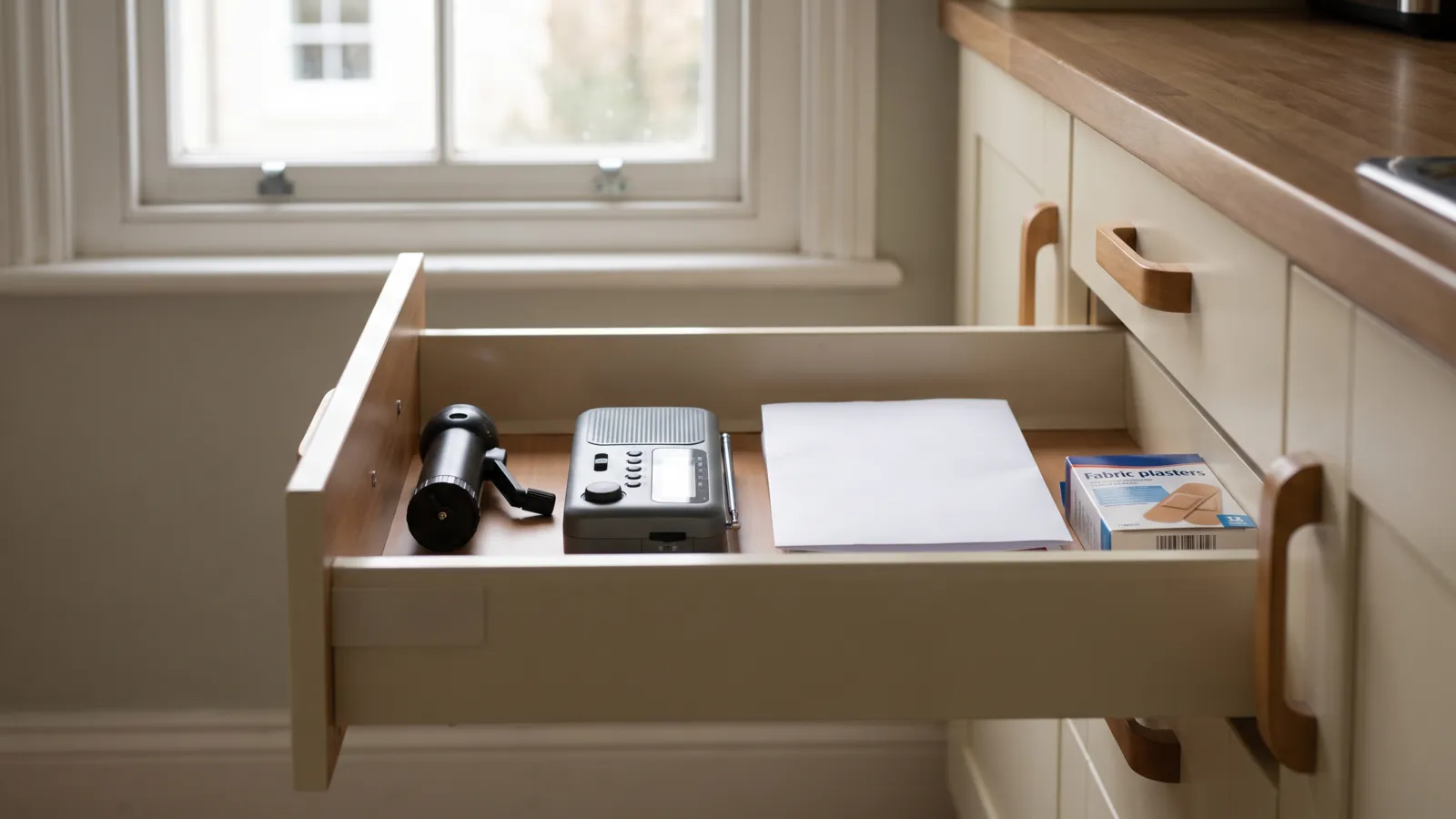
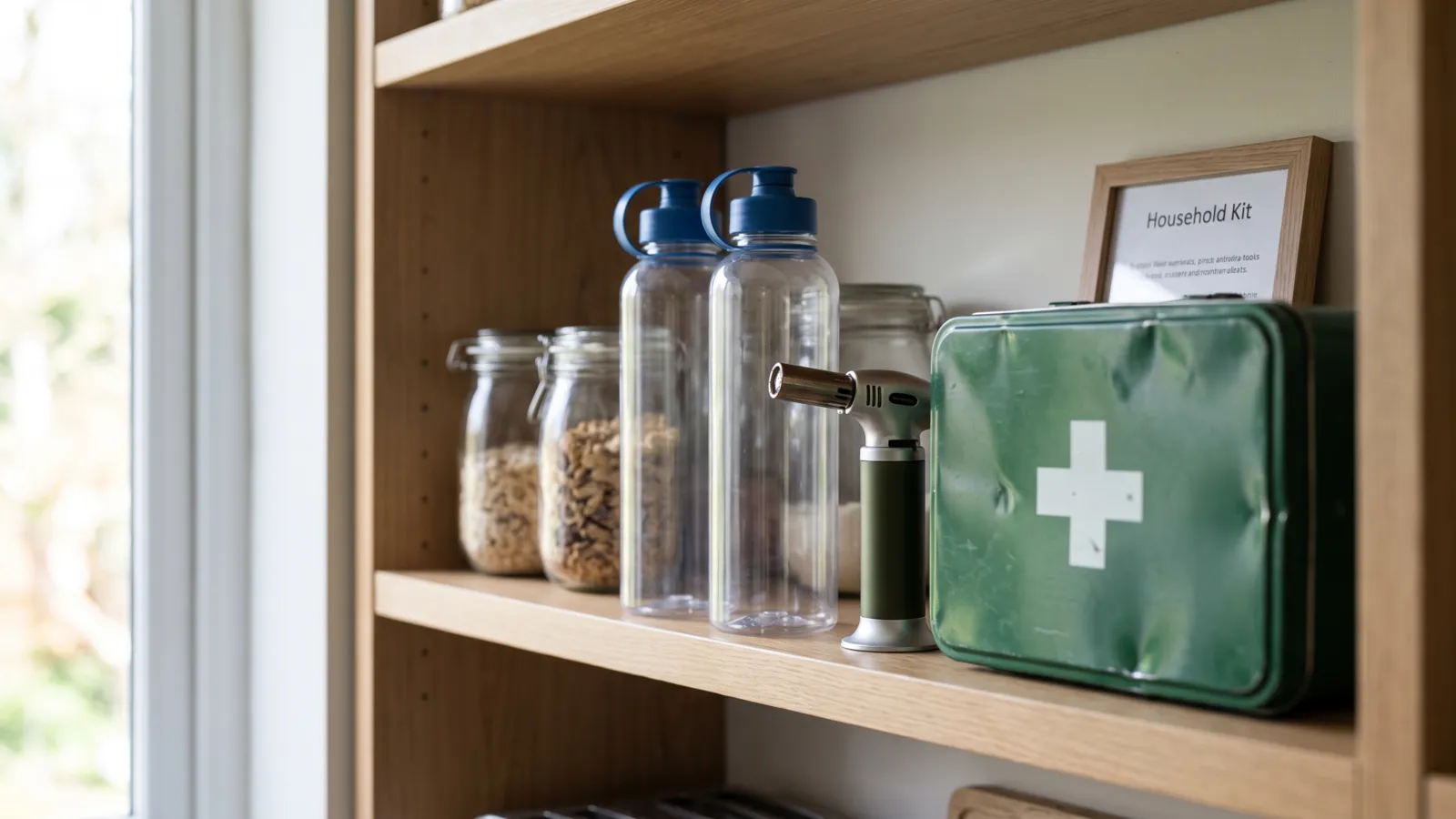
Its kit list is nine lines long and modest with it: a torch, a power bank, a radio, spare batteries, a first aid kit, hand sanitiser and wet wipes, bottled water (it says there is no standard figure, cites the World Health Organisation’s survival minimum of 2.5 to 3 litres of drinking water per person per day, and says 10 litres a day makes you more comfortable by also covering basic cooking and hygiene), non-perishable food that doesn’t need cooking (no quantity given; it says that depends on your circumstances), and baby supplies if you need them, with the note that you can add to the kit when you are able rather than buying it all at once. It points anyone who needs extra help during a gas, electricity or water interruption to the Priority Services Register in England, Scotland and Wales; in Northern Ireland the equivalent is your supplier’s Customer Care Register.
The backdrop is the government’s own UK Public Survey of Risk Perception, Resilience and Preparedness, which it says is carried out to inform public communications on preparing for emergencies. The 2026 edition, published on 19 August 2026 and based on 10,791 UK adults surveyed between 27 February and 11 May 2026, found 25 per cent thought they could meet their household’s basic needs for one day or less if a power cut also cut gas and water, down from 32 per cent in 2025, and only 13 per cent felt their household was largely or totally prepared.
What it means for your household
Nothing you would do after the launch is unavailable now. The Prepare kit list is the list behind our emergency kit guide, and the kit builder sizes it to your household rather than to a headline’s nine items. The written plan is covered in our household emergency plan guide; if you would rather have it done in one sitting, The Family File is our own version.
The government’s own 2026 survey found most households short of water: working from 3 litres per person per day, 82 per cent of respondents had less than a day’s bottled drinking water for their household. See how to store emergency water for quantities that match the figures Prepare cites, and how much food to store for food, where Prepare gives no quantity. If someone at home relies on power for medical equipment or would struggle in a cold house, the Priority Services Register (in Northern Ireland, your supplier’s Customer Care Register) is the most useful thing on this page to sign up for. And if the headlines have left you asking whether the government is preparing for war, our separate page sets out what has and has not been said.
What not to do
Do not wait for the campaign before doing the basics; the advice is published, and the launch date does not change it. Do not buy in bulk on the strength of a headline: Prepare’s own line is to add to your kit when you can, and the government’s description of the campaign is “small but important steps”.
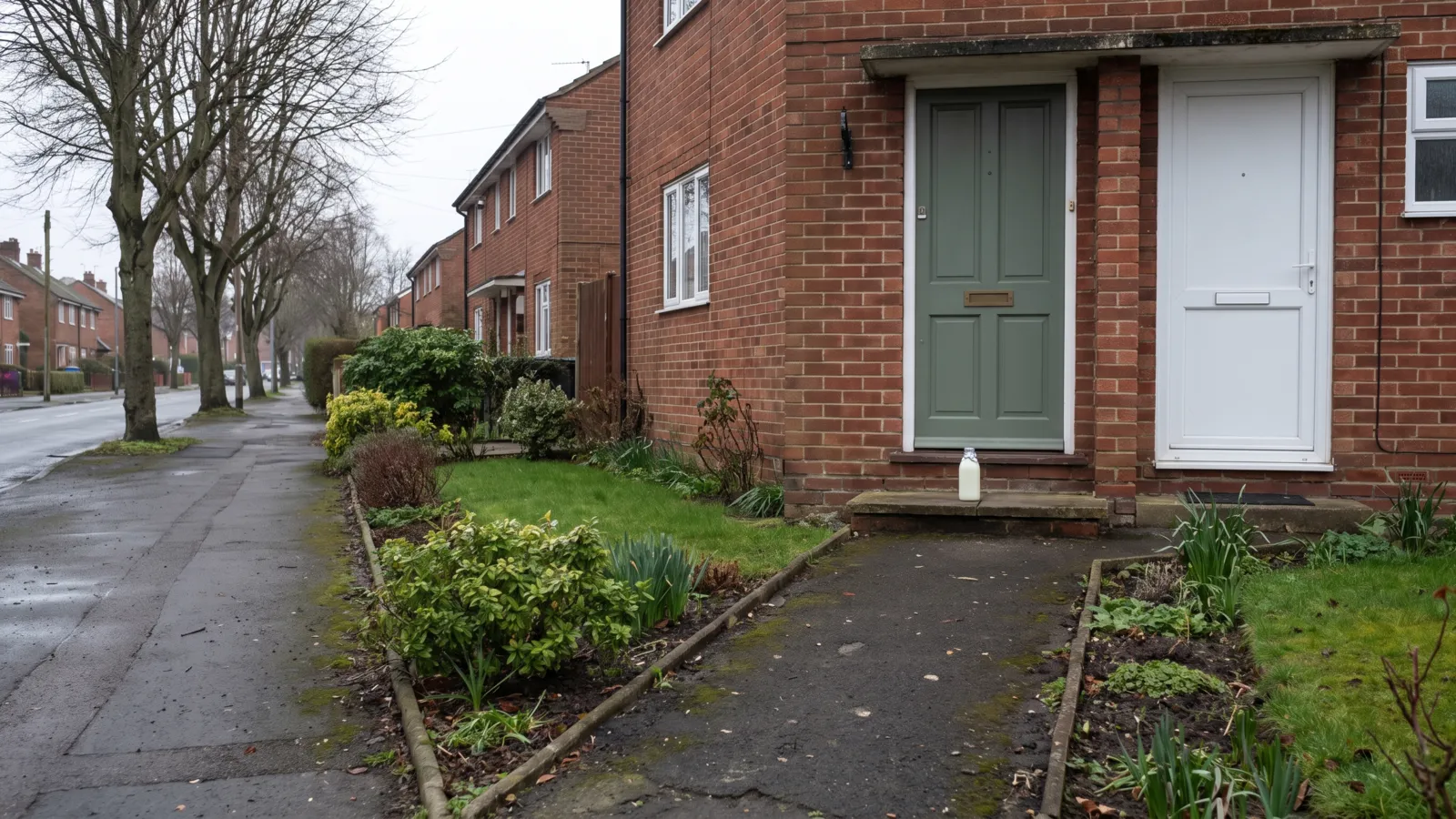
Do not expect a booklet through the door. None has been announced for the UK as of 22 September 2026, and anything that arrives asking you to sign up, pay or share personal details is not part of any announced government scheme; the same goes for invitations to join a civilian register, which does not exist. Do not read “later this year” as a date: reporting says it has already slipped once, the government’s latest answer on 21 September 2026 gave no month, and if it slips again this page will say so.
Common questions
When does the UK national resilience campaign launch?
No date has been announced as of 22 September 2026. The government told Parliament on 14 July 2026 it would launch “later this year”, and repeated that in a written answer on 21 September 2026 when asked for the date. Bloomberg reported on 28 August 2026 that the campaign had been delayed.
Will every UK household get a leaflet or booklet?
None has been announced. Asked in Parliament whether printed material would be delivered to households, the government replied on 16 September 2026 that it is developing resources and materials “that will be hosted on GOV.UK for partners to download, adapt and distribute locally”. Ireland’s Department of Defence was due to deliver a booklet to about 2.2 million households over three weeks from 21 September 2026 (The Irish Times, 17 September 2026), but that is an Irish scheme.
Is the campaign about preparing for war?
The government describes it as advice on the “small but important steps” people can take for emergencies and disruption, giving severe weather and a cyber attack as its examples. The Armed Forces Minister said on 2 September 2026 that it would also carry “increased information about state-based threats”. It was announced in the same 14 July 2026 statement as home defence work, which is one reason the two are reported together.
What does GOV.UK Prepare already ask?
To know your local risks and sign up for alerts, write a household plan, keep a small kit including bottled water (a minimum of 2.5 to 3 litres per person per day for drinking, around 10 litres with cooking and basic hygiene), check your insurance, and swap contact details with neighbours. It says to build the kit up as you are able.
Does it cover Scotland, Wales and Northern Ireland?
GOV.UK Prepare is a UK Government site. Its own toolkit says it is designed for residents in England, but its advice carries Scotland, Wales and Northern Ireland detail, and it points people in Scotland and Northern Ireland to Ready Scotland and nidirect; the Welsh Government’s own preparedness page sends people in Wales to GOV.UK Prepare. The campaign is being designed with the devolved governments, and the UK government’s July 2026 report says Northern Ireland’s Executive Office would run its own “Be Ready NI” campaign. Emergency Alerts is UK-wide.
Is another Emergency Alerts test coming?
No date has been announced as of 22 September 2026. National tests took place on 23 April 2023 and 7 September 2025; this page will carry the next date when the government publishes one.
Sources: Parliament — National Resilience: Annual Statement, written statement HCWS244 (14 July 2026) · Parliament — Written question 26832 on the campaign’s launch date, answered by the Cabinet Office (21 September 2026) · Parliament — Written question 27197 on printed material for households, answered by the Cabinet Office (16 September 2026) · Parliament — Written question 19439 on the national conversation on defence and security, answered by the Ministry of Defence (2 September 2026) · Hansard (Lords) — El Niño (8 September 2026) · Hansard (Commons) — National Resilience (10 September 2026) · Cabinet Office — UK Government Resilience Action Plan: 2026 Implementation Report (14 July 2026) · Cabinet Office — National Risk Register 2026 (14 July 2026) · GOV.UK — Ministers: current office-holders (accessed 22 September 2026) · GOV.UK — Prime Minister: role holders · GOV.UK Prepare — Get prepared for emergencies (accessed 22 September 2026) · GOV.UK Prepare — Campaign resources (accessed 22 September 2026) · Cabinet Office — Deputy Prime Minister speech on resilience, London Defence Conference (22 May 2024) · Cabinet Office — Time set for UK Emergency Alerts test (6 April 2023) · Cabinet Office — National Emergency Alert test to be held on 7th September (7 July 2025) · GOV.UK — Emergency Alerts: past alerts (accessed 22 September 2026) · Cabinet Office — UK Public Survey of Risk Perception, Resilience and Preparedness 2026: headline findings (19 August 2026) · Ready Scotland — Make an emergency plan for your home (updated 24 March 2026) · nidirect — Be ready for emergencies · Welsh Government — How to prepare for emergencies (20 June 2025) · Welsh Government — Wales Resilience Framework (May 2025) · European Commission — Preparedness Union Strategy, Joint Communication JOIN(2025) 130 final (26 March 2025) · European Commission — EU Preparedness Union Strategy to prevent and react to emerging threats and crises (26 March 2025) · European Commission — EU hosts high-level conference to mark 1 year of its Preparedness Union Strategy (23 March 2026) · SPEK — Instructions for preparing for incidents and crises have been compiled in the Suomi.fi online service (18 November 2024) · Yle — Finland’s National Preparedness Day is a reminder of what every home should have — just in case (7 February 2023) · The Local — Sweden releases updated booklet of war precautions in English (21 May 2018) · The Local — Sweden releases updated version of ‘If Crisis or War Comes’ booklet (18 November 2024) · Government Offices of Sweden — MSB blir Myndigheten för civilt försvar (MSB becomes the Swedish Civil Defence and Resilience Agency), in Swedish (19 November 2025) · Swedish Civil Defence and Resilience Agency — The brochure In case of crisis or war (accessed 22 September 2026) · Euronews — German Federal Office of Civil Protection publishes guide removing war as an ‘unlikely’ possibility (19 October 2025) · The Irish Times — Torches and battery-operated radios: New guidelines for a national emergency are in the post (17 September 2026) · Bloomberg — UK Delayed Drive to Prepare Brits for Crises Over Vibe Worries (28 August 2026) · Novara Media — Brits Told to Stockpile Water and Tinned Food in Face of Extreme Weather (26 August 2026) · UK Defence Journal — UK to launch national resilience campaign this year (5 September 2026) · Yorkshire Live — UK households issued Wes Streeting alert to stockpile 9 items for emergency kits (11 September 2026) · London Loves Business — Households urged to prepare for blackouts, Cyberattacks and widespread war (22 September 2026) · Yorkshire Live — UK households urged to stockpile 9 essential items as ministers issue update (22 September 2026). PreparedBritain is independent and not affiliated with HM Government.
Keep reading
All planning & the national picture guides →Is the UK bringing back conscription? What has actually been said, dated
Every war headline brings a wave of ‘conscription is coming’ posts. The record says otherwise: a minister ruled it…
Is the UK preparing for war? What has actually happened — and what hasn’t
Yes, in the sense that the government is planning for it — a defence review, a national security strategy that names…
Is there a new government emergency checklist? What it actually asks you to do
Headlines report a new government checklist, “5 essential items” and “6 things to check at home”. There is no new…