Is there a new government emergency checklist? What it actually asks you to do
Headlines report a new government checklist, “5 essential items” and “6 things to check at home”. There is no new checklist: it is advice that has been on GOV.UK since 2024, counted differently by each newspaper. Here is the real list.
By Tom Calder · Updated 21 September 2026 · Sourced to GOV.UK Prepare and the Cabinet Office
Is any of it new?
The advice comes from GOV.UK Prepare, the Cabinet Office’s preparedness site, which has been live since May 2024. Its household emergency plan — a form you download and fill in — was last revised in September 2025. Nothing on the site has been added this month.
Two things explain the timing. In July the Cabinet Office said a national public-awareness campaign built on Prepare would launch later in 2026; it has not launched yet, but it has put the subject in the news. And September is “30 Days, 30 Ways”, a preparedness campaign run each September by the Emergency Planning Society, which councils and local resilience forums take part in — and which generates a steady stream of local stories.
As for “5 items” and “6 things”: those numbers are the newspapers’ own. The government does not publish a list of five or a list of six. Each outlet has picked from a longer official list and counted its selection.
What the official list actually asks for
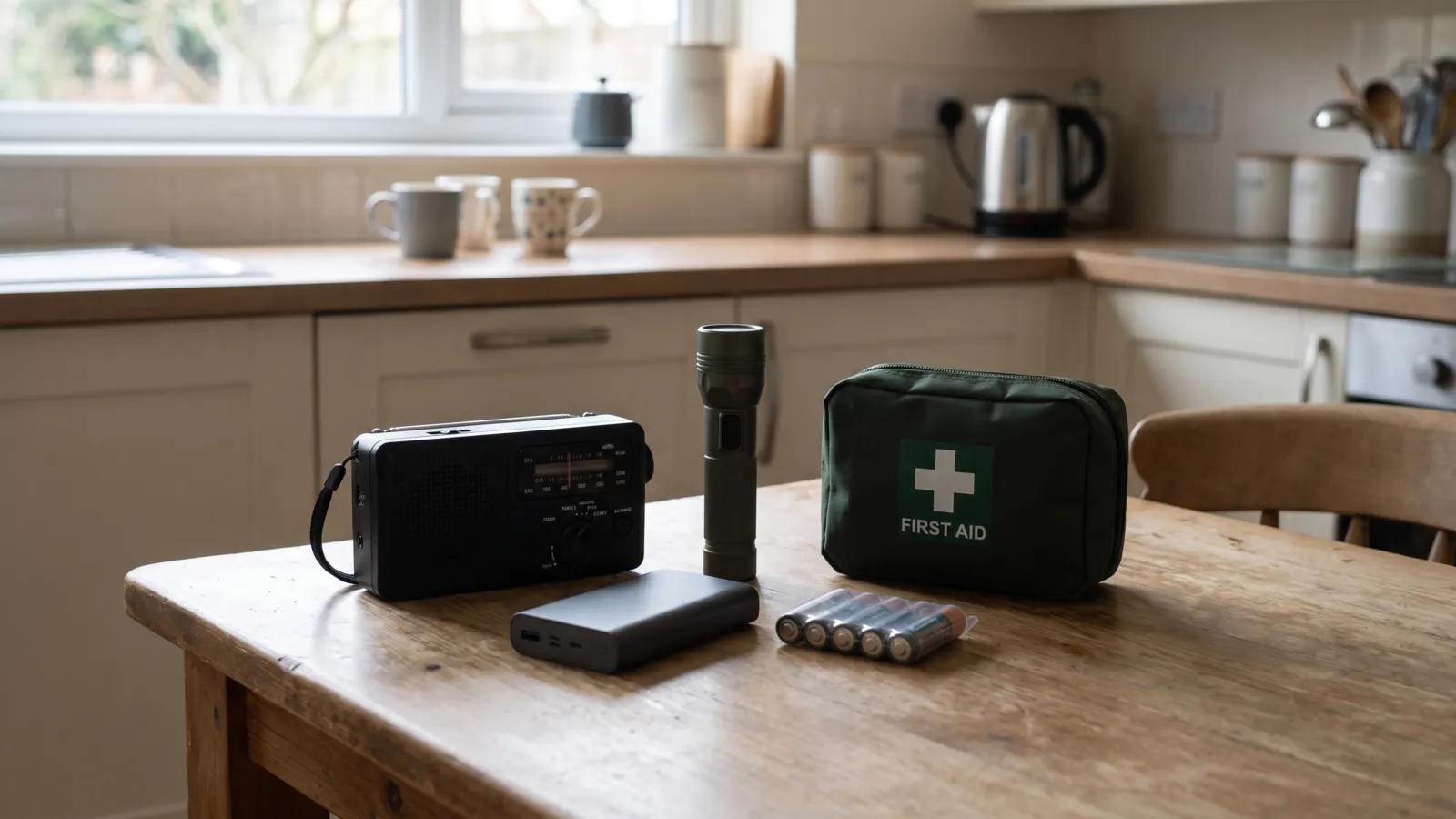
The kit list on Prepare is short and ordinary: a battery or wind-up torch, a portable power bank, a battery or wind-up radio, spare batteries, a first aid kit, hand sanitiser and wipes, bottled water, and food that keeps and needs no cooking — plus baby supplies and pet food if you need them. For water it works from a minimum of 2.5 to 3 litres per person per day for drinking, or around 10 litres to cover cooking and washing too.
Almost all of it is a normal shop. Our emergency kit list follows the official one item by item, and the kit builder sizes it for your household.
The “things to check at home” are equally plain: know how to turn off your water, gas and electricity; test your smoke alarms; check what your home insurance covers; look up your flood risk; and sign up for flood and weather warnings.
The Emergency Kit Checklist
The GOV.UK Prepare essentials on one printable page — tick them off as you go and keep it with the kit. Free, no catch.
Download it straight away. We'll also send the occasional briefing when something genuinely matters — severe weather, live incidents, real price drops. Nothing else.
What it says about neighbours
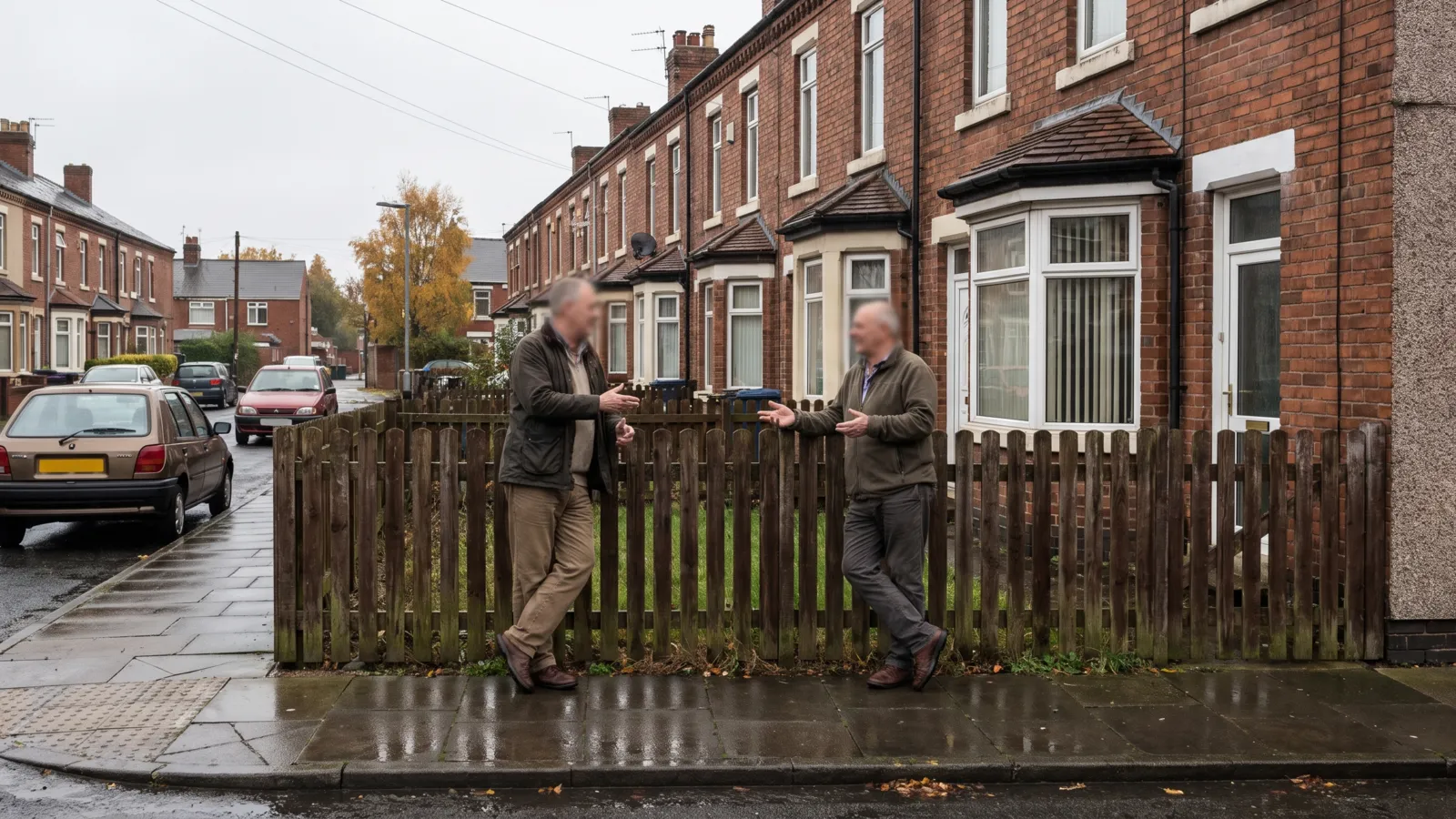
This is the part the headlines got right, and it is the most useful advice on the site. Prepare asks you to swap contact details with your neighbours, and suggests a messaging group for your street or building, because in a real emergency that is where news and help come from first.
It asks you to find out — tactfully — whether anyone nearby would need extra help: someone with medical needs, someone new to the area, someone who isn’t online, someone who doesn’t read English well. And it asks you to have a plan to check on them, particularly in a power cut.
None of that needs buying. It is three conversations over a fence.
The part everyone skips: writing it down
Prepare also asks you to write important phone numbers down on paper and keep them somewhere easy to find in a power cut: the power-cut line, the people you would ring, your regular medication, and your insurance policy details and numbers. Its household emergency plan is a free form for exactly that, and you can download it from GOV.UK Prepare.
Start there; it is free and it is good. If you want to go further than an emergency plan — where the stopcock and the fuse box are, which pension came from which job, what is insured with whom, who to ring first — that is what we made The Family File for: forty pages, UK-specific, that you fill in on screen or print.
Do it in twenty minutes
Find your stopcock, your fuse box and your gas shut-off, and show someone else in the house. Press the test button on your smoke alarms. Save 105 in your phone — it is the free power-cut line in England, Scotland and Wales (in Northern Ireland the number is 03457 643643). Look up your flood risk by postcode and sign up for warnings. Then knock next door and swap numbers.
That is the whole of the government’s ask. The rest — the torch, the water, the tins — can go on the next ordinary shop.
Common questions
Has the government published a new emergency checklist?
No. The advice being reported is on GOV.UK Prepare, which has been live since May 2024. Its household emergency plan was last revised in September 2025. A national campaign based on it is due later in 2026 but has not launched.
What are the 5 essential items the government recommends?
There is no official list of five. The GOV.UK Prepare kit list is longer: a torch, a power bank, a radio, spare batteries, a first aid kit, hand sanitiser and wipes, bottled water and food that keeps. Newspapers have chosen their own five.
What are the 6 things to check at home?
Again, the number is a newspaper’s. The official advice includes knowing how to turn off your water, gas and electricity, testing smoke alarms, checking your insurance, checking your flood risk and signing up for warnings.
What does “swap details with neighbours” mean?
GOV.UK Prepare suggests exchanging contact details with neighbours, and considering a messaging group for your street or building, so you can share information and check on each other in an emergency.
Where can I download the government’s household emergency plan?
From GOV.UK Prepare, on the “Get prepared for emergencies” page. It is a free form for recording phone numbers, medication, insurance details and emergency contacts.
Sources: GOV.UK Prepare — Get prepared for emergencies · Cabinet Office — UK Government Resilience Action Plan: 2026 Implementation Report (14 July 2026) · 30 Days 30 Ways UK — September preparedness campaign · Ready Scotland — Make an emergency plan · nidirect — Be ready for emergencies. PreparedBritain is independent and not affiliated with HM Government.
Keep reading
All planning & the national picture guides →What is the government’s War Book — and is it really being updated?
Reports say Britain is updating its War Book for the first time in decades because Russia is planning an attack. One…
Is the UK setting up a civilian ‘war register’?
Headlines say Britons are being urged to join an emergency civilian register. No such register exists. Here is who…
Are there nuclear bunkers in the UK?
No — not for the public, and there never were. Britain's Cold War bunkers were built for government, the military…