
Are UK households being urged to get 11 items right now? What the 'emergency warning' says
The ‘UK households urged to get 11 items right now’ headline of 19 November, set against the government’s 15-line Be Ready checklist: every item is on it, three lines are missing, and nothing new has been issued.
Not as a new warning. The 11 items in the 19 November headline all come from the government’s Be Ready checklist, which the Cabinet Office launched on 22 October and which asks households to be ready for 3 days. ‘Right now’ and ‘emergency warning’ are the paper’s words: Be Ready says “You don’t need to do it all at once”, and we found nothing new from the government between 15 and 21 November. By our count the 11 items cover 12 of the checklist’s 15 lines. The three left out are important phone numbers, essential medication and medical supplies, and pet food and water. The article was pegged to a House of Lords committee report of 16 November, which warns about the country’s stockpiles, not your cupboards. A separate ‘five things’ headline the next day was about scams.
The three things most homes are missing
Our top pick from each comparison
as of 21 Nov 2026, 13:07 GMT · Details
Product prices and availability are accurate as of the date/time indicated and are subject to change. Any price and availability information displayed on Amazon.co.uk at the time of purchase will apply to the purchase of this product.
as of 21 Nov 2026, 13:07 GMT · Details
Product prices and availability are accurate as of the date/time indicated and are subject to change. Any price and availability information displayed on Amazon.co.uk at the time of purchase will apply to the purchase of this product.
as of 21 Nov 2026, 13:07 GMT · Details
Product prices and availability are accurate as of the date/time indicated and are subject to change. Any price and availability information displayed on Amazon.co.uk at the time of purchase will apply to the purchase of this product.If you already have these, you're most of the way there.
By Tom Calder · Updated 21 November 2026 · Sourced to the GOV.UK Be Ready checklist, the Cabinet Office’s Be Ready launch release of 22 October 2026, the House of Lords National Resilience Committee report of 16 November 2026 and the government’s Stop! Think Fraud pages, all read on 21 November 2026. The Express article on AOL (19 November) and the Mirror article (20 November) were read the same day.
What the ‘11 items’ article says
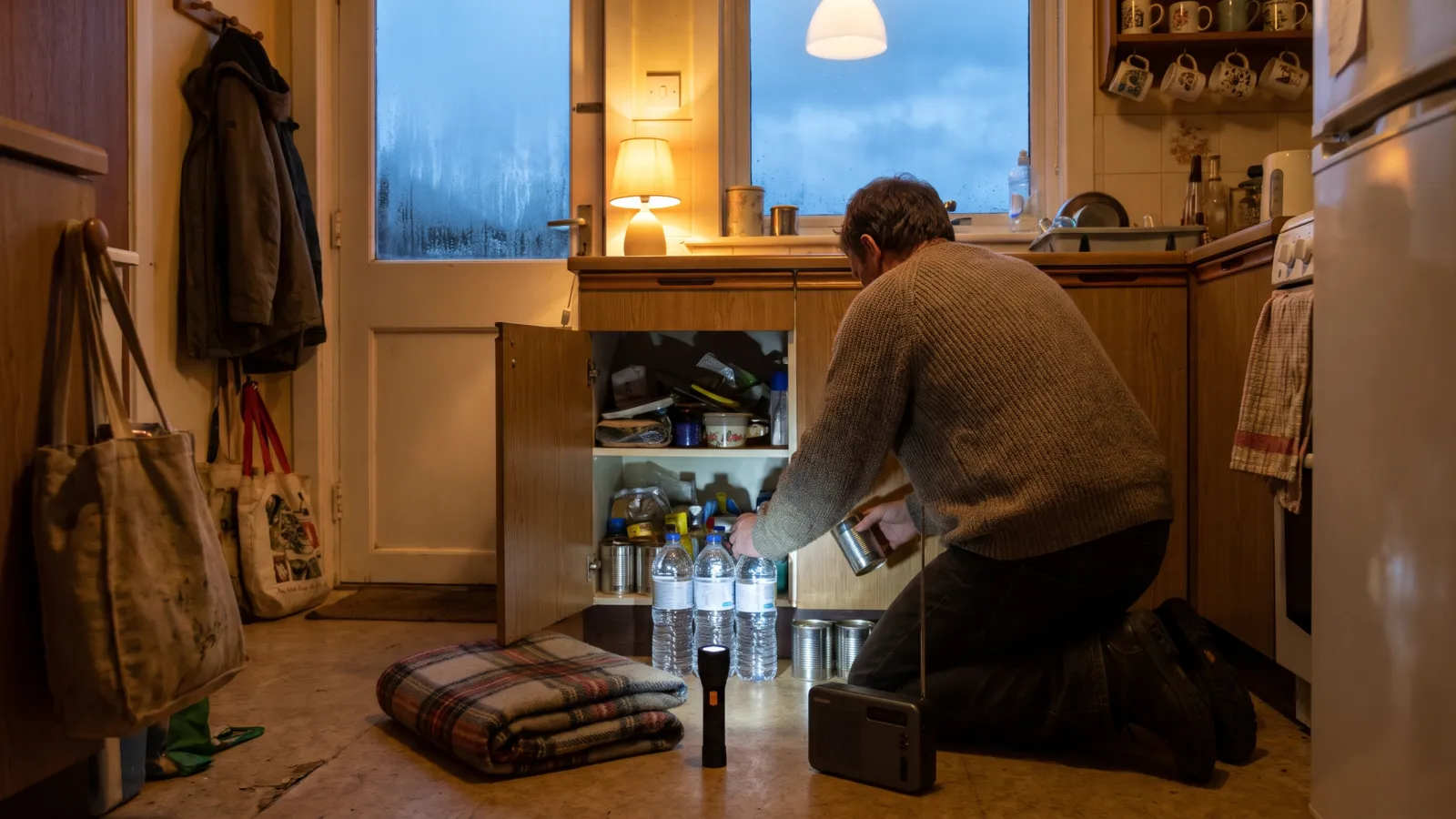
The Express article, carried on AOL on 19 November under the headline “UK households urged to get 11 items right now - emergency warning”, lists: bottled water; non-perishable food; hand sanitiser; wet wipes; a torch and spare batteries; blankets, sleeping bags and warm clothing; a portable power bank; a battery or wind-up radio; a first aid kit; baby supplies such as nappies and formula; and money and documents.
The article ties the list to the government’s Be Ready campaign and its downloadable checklist. Beyond the headline, it doesn’t point to any new government warning. Our Be Ready guide goes through the checklist line by line.
Are UK households urged to get 11 items right now?
Not right now, and not as an emergency warning. The government’s advice is Be Ready, launched by the Cabinet Office on 22 October 2026. Its release says households “are being encouraged to take a few simple steps to stay prepared if everyday services are temporarily disrupted”, and calls the advice “the first stage of a three-year campaign”. The Security Minister, Dan Jarvis, said: “Those who can follow this advice should follow this advice.”
The Be Ready checklist sets no deadline. It says “You don’t need to do it all at once” and suggests building up “gradually over time”. It also says “not everyone will be able to take all the actions in the guidance”. When we searched GOV.UK on 21 November we found no new household advice or warning published between 15 and 21 November.
The 11 items against the Be Ready checklist
Here is each item in the article next to the Be Ready line it matches. Two of the article’s items share one Be Ready line, and two of its items each cover two lines.
| The ‘11 items’ list | Be Ready checklist line |
|---|---|
| Bottled water | Bottled water for 3 days |
| Non-perishable food | Non-perishable food for 3 days |
| Hand sanitiser | Hand sanitiser, wet wipes and bathroom products |
| Wet wipes | Hand sanitiser, wet wipes and bathroom products |
| Torch and spare batteries | Torch (and spare batteries) |
| Blankets, sleeping bags and warm clothing | Blankets, sleeping bags and warm clothing |
| A portable power bank | Charged power bank |
| A battery or wind-up radio | FM radio (battery / wind up) |
| A first aid kit | First aid kit / first aid items |
| Baby supplies such as nappies and baby formula | Baby formula; Nappies and wipes |
| Money and documents | Cash (mix of coins and notes) and cards; Copies of IDs / documents |
Home Alerts members
The full picture, for your home
Each week, what's happening across Britain set against your own address: your water company, your power network, fuel for your car and the gaps in your kit. Free for your own home. Sign up in a minute.
Start free →Britain's figures from our live trackers, 21 November.
What the shorter list leaves out
Every item in the article is on the official checklist; none comes from a retailer’s list. But by our count the 11 cover 12 of the checklist’s 15 lines, and three are missing: important phone numbers and information, essential medication and medical supplies, and pet food and bottled water.
Medication is the one most worth adding back if anyone at home relies on it. Be Ready also gives detail the shorter list drops: “3 litres per person per day for drinking”, with more needed for cooking and washing, and “Torches are safer than candles.” The Red Cross’s 14-item list, which we compared with Be Ready on 16 November, does include medication.
Why it is in the news this week
The article was pegged to a House of Lords National Resilience Committee report, “Are we ready? Building a culture of resilience”, published on 16 November. It says the UK’s limited stockpiles of food and medicines leave “the country dangerously exposed to disruption in global supply chains”. Those are national stockpiles, not household ones.
The committee “warmly” welcomed Be Ready, but its summary says “the Government appears complacent and the UK is underprepared.” Headlines saying “seriously underprepared” go further than the report’s summary. Our story on why we are being told to stockpile covers the report in more detail.
The ‘five things’ headline is about scams
A headline the next day, that everyone in the UK was told to do five things to “protect yourself”, isn’t about kit. The Mirror, on 20 November, reported a GOV.UK post on X about fraud and cyber crime, listing 2-step verification, covering your PIN at cash machines, keeping software up to date, using your mobile network instead of public Wi-Fi, and stronger passwords. We didn’t read the post itself; the same advice is on the government’s Stop! Think Fraud pages.
For what to look out for this month, see our Christmas scams guide, and if it has already happened, what to do if you’ve been scammed.
What it means for your household
If you have already worked through Be Ready, this headline asks for nothing new. If you haven’t, the official checklist is the one to use, because it includes the medicines, phone numbers and pet lines the 11 leave out. Be Ready says “There are lots of suggestions here that won’t cost anything and just take a few minutes to do.”
Our kit builder sizes the official list for your household, and our water storage guide covers bottles and rotation.
Common questions
Are UK households urged to get 11 items right now?
No new instruction has been issued. The 11 items come from the government’s Be Ready checklist, launched on 22 October 2026. It asks households to be ready for 3 days and says “You don’t need to do it all at once.” ‘Right now’ and ‘emergency warning’ are the headline’s words, not the government’s.
How many items are on the official Be Ready checklist?
Fifteen lines to tick, by our count of the Be Ready page on 21 November 2026. They cover water and food for 3 days, hygiene, a torch, blankets and warm clothing, an FM radio, a charged power bank, cash and cards, copies of IDs, phone numbers, first aid, medication, baby formula, nappies and pet supplies.
What does the 11-item list leave out?
Three Be Ready lines: important phone numbers and information, essential medication and medical supplies, and pet food and bottled water. If anyone at home relies on medicines, that is the one to add back.
How much water does the government say to store?
Be Ready says 3 litres per person per day for drinking, for 3 days, and that more would be needed for cooking and washing. For two people that is 18 litres of drinking water, by our sums.
Is the ‘five things to protect yourself’ advice about emergency kits?
No. The Mirror reported a GOV.UK post about fraud and cyber crime: turn on 2-step verification, cover your PIN, keep software up to date, use your mobile network rather than public Wi-Fi, and use stronger passwords. The government’s Stop! Think Fraud pages give the same advice.
Sources (8)
- GOV.UK Be Ready, Be ready for emergencies (the Be Ready checklist)
- GOV.UK Be Ready, the Be Ready checklist (PDF)
- Cabinet Office, Households encouraged to take small, simple steps to stay prepared in an emergency (22 October 2026)
- House of Lords National Resilience Committee, Are we ready? Building a culture of resilience (HL Paper 79, 16 November 2026)
- Stop! Think Fraud, Protecting against online fraud
- Stop! Think Fraud, Protecting against fraud in public places
- Express via AOL, UK households urged to get 11 items right now - emergency warning (19 November 2026), the headline checked
- The Mirror, ‘Important’ Government alert as all Brits told to do five things (20 November 2026), the headline checked
PreparedBritain is independent and not affiliated with HM Government.
See our checks first on Google. Add PreparedBritain as a preferred source and Google will show our stories to you more often in Top Stories.

The Emergency Kit Checklist
The GOV.UK Prepare essentials on one printable page — tick them off as you go and keep it with the kit. Free, no catch.
Download it straight away. We'll also send the occasional briefing when something genuinely matters — severe weather, live incidents, real price drops. Nothing else.
Latest from our live data
All stories → News · 20 NovAre people being told to isolate for 48 hours? What UKHSA says, as flu positivity hits 11.4%
 News · 20 NovAre UK households stockpiling? What October's 0.7% retail sales rise does and doesn't show
 News · 18 NovFuel prices pushed UK inflation to 3.6% in October, but pump prices are now falling
For the children this Christmas
Keep reading
All planning & the national picture guides →Are people being told to isolate for 48 hours? What UKHSA says, as flu positivity hits 11.4%
The 48 hours is UKHSA's usual norovirus advice: stay off work, school or nursery until 48 hours after diarrhoea and…
Will tap water be turned off on a rota in the UK? What the drought data shows
No rota has been ordered in England. The tap rota in the headline is South West Water's last-resort plan for Devon…
Why are we being told to stockpile? What the 'blackouts and empty shelves' alert rests on
The 'stockpiling alert' is a House of Lords committee report, and the stockpiles it worries about are the country's…