How to cook without power: safe hot food in a power cut
Safe ways to get hot food in a power cut: the one rule (never burn fuel indoors), a what-to-use decision guide, real no-cook meal ideas and UK food-safety timings.
By Tom Calder · Updated 21 July 2026 · Sourced to the NHS, gov.uk, London Fire Brigade, Gas Safe & the FSA
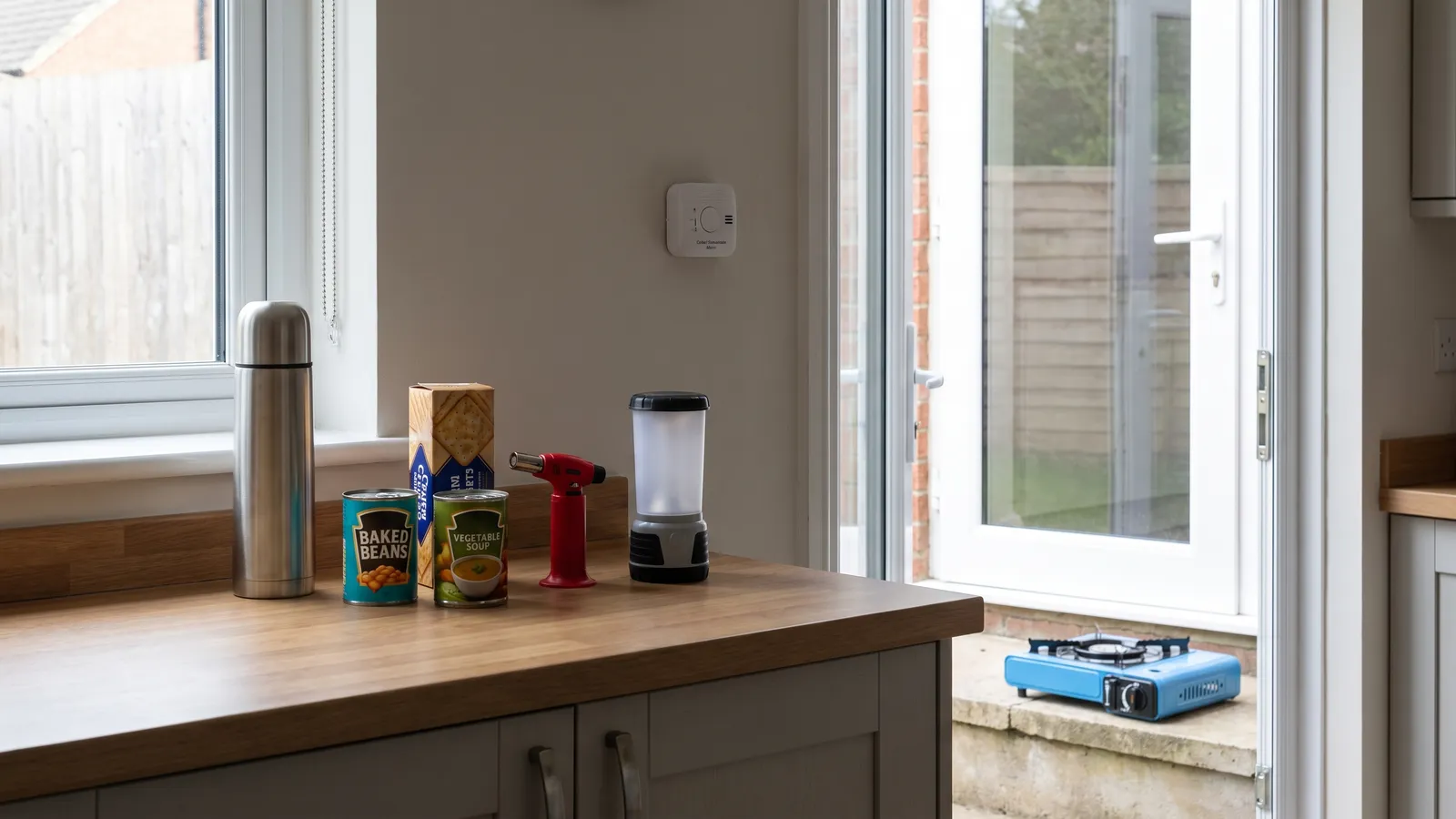
Before anything else: never burn fuel indoors
The single most important thing on this page is a safety rule, not a recipe. Anything that burns fuel to make heat — a disposable barbecue, a charcoal or gas BBQ, a gas camping stove, a patio heater or a paraffin heater — gives off carbon monoxide (CO). CO is colourless, odourless and tasteless, so you cannot tell it is there. In an enclosed space it can reach fatal levels within minutes, and a barbecue left to cool keeps releasing it for hours. Never use any of these indoors.
This includes 'half-open' spaces that feel like outside: a garage, porch, conservatory, tent or caravan awning, even with a door, window or flap open. Ventilation does not make it safe. Early CO poisoning is easy to mistake for a bug or a hangover — a headache, dizziness, nausea, breathlessness or tiredness that eases when you step outside — while higher levels cause confusion and collapse. Get everyone into fresh air, and call 999 if someone has collapsed, or 111 if you are worried but no one is seriously ill.
A battery-powered CO alarm costs little and is worth having in any home with fuel-burning appliances such as a boiler, gas hob or open fire. Fit one and test it regularly — it is the only thing that will warn you of a gas you cannot see or smell.
What's safe to use — and where
With that rule fixed, safe hot food in a power cut comes down to three routes: cook outdoors, keep heat you made earlier, or skip heating altogether. This quick guide covers what to reach for and where each thing belongs.
Camping stove or barbecue (gas or charcoal): outdoors only, in open air, well clear of doors and windows — never in a tent, awning, garage or porch. Vacuum flask or wide-mouth food flask: use anywhere, filled before the cut or from a stove used outside. No-cook tinned and packet food: anywhere, with no flame and no risk. An electric kettle or hob run from a portable power station: indoors is fine because nothing burns, but check the wattage — a kettle or hob draws far more power than most portable units can supply, so a flask is usually the better bet.
No-cook meals that need no equipment at all
The honest answer to 'how do I cook without power' is often that you don't need to. A cold meal is completely safe, quick and needs no kit, which for a short outage is the sensible choice rather than lighting anything.
Useful store-cupboard options that need no heat: tinned beans, fish, meat and soup; crackers or oatcakes with cheese, pâté or peanut butter; tinned fruit, malt loaf, flapjacks, nuts and dried fruit; UHT or long-life milk for cereal; and ready-to-eat pouches of rice, lentils or beans. Even boil-in-the-bag meals and camping ration packs are edible cold at a push. Keeping a few days of these in the cupboard means a power cut barely changes your evening.
How to get something hot without cooking
If you want warmth in the meal, the simplest and safest method is a flask. At the first sign of a planned outage — or the moment the lights go — boil the kettle while you still have power and fill a good vacuum flask. It will hold near-boiling water for many hours: enough for tea, instant soup, pot noodles, porridge or a hot water bottle. A wide-mouth food flask does the same for stew or pasta made in advance.
Self-heating meal pouches, which warm themselves with a water-activated pack and no flame, are another safe indoor option if you keep a couple in reserve. If you do use a gas camping stove, carry it outside, cook in the open air, and bring the hot food back indoors — the cooking happens outside, the eating happens in.
Keeping the rest of your food safe
While the power is off, treat your fridge and freezer as sealed cold stores. The Food Standards Agency advises that a closed fridge stays cold enough for about four hours, and a full freezer for around 48 hours (about 24 hours if it is half full) — so keep the doors shut and resist checking.
If a long cut pushes your fridge to 8°C or above, eat the high-risk foods (cooked meat, dairy, ready meals) within four hours or throw them away. Food that has fully thawed should be cooked and eaten or discarded, not refrozen. Our companion guide walks through exactly what to keep, use and bin once the power returns.
Getting set up before the next one
None of this needs a survival cupboard. A vacuum flask, a few tins and a wind-up or battery torch cover most short cuts, and a gas camping stove kept strictly for outdoor use covers longer ones. It is also worth knowing you can call 105 free from anywhere in England, Scotland and Wales to report a power cut or check whether one is planned in your area.
If you or someone in your home relies on electricity for medical equipment, or would struggle in an outage, sign up to your energy network's free Priority Services Register for extra support and advance warning of planned work.
Common questions
Can I use a disposable barbecue indoors during a power cut?
No — never, under any circumstances. A disposable BBQ gives off carbon monoxide, which is colourless and odourless and can reach fatal levels indoors within minutes. It also keeps releasing CO for hours as it cools, so bringing a 'finished' one inside is just as dangerous. Use barbecues outdoors in open air only.
Is it safe to use a gas camping stove indoors if I open a window?
No. Opening a window, door or tent flap does not clear carbon monoxide quickly enough to keep you safe, and fire services are clear that ventilation is not a substitute for cooking outside. Use a gas camping stove in the open air only, away from doors and windows, then bring the hot food indoors.
How can I make a hot drink or meal without electricity?
The safest route indoors is a vacuum flask filled with boiling water while you still had power (or from a stove used outside) — it stays hot for hours and covers tea, soup, pot noodles and porridge. Self-heating meal pouches also warm without a flame. A gas camping stove works well but must be used outdoors.
Will my gas hob still work in a power cut?
A standard gas hob usually will. If its electronic ignition is dead, you can light the burner carefully with a match or lighter — this is safe because it is a properly installed, ventilated kitchen appliance, unlike a camping stove or BBQ. Only use it to cook, never to heat the room, and keep the kitchen ventilated. Gas ovens with electronic controls may not work.
How long will food in my fridge and freezer stay safe without power?
The Food Standards Agency says a closed fridge stays cold enough for about four hours, and a full freezer for around 48 hours (roughly 24 hours if half full). Keep the doors shut. If the fridge reaches 8°C or above, eat high-risk foods within four hours or discard them; do not refreeze food that has fully thawed.
What is the safest way to warm baby formula or food in a power cut?
Stand the bottle or jar in a bowl or jug of hot water taken from a flask you filled earlier, and test the temperature before feeding. Never use a camping stove, BBQ or fuel-burning heater indoors to warm baby food. If you have no hot water at all, most formula and baby food can be given at room temperature.
Sources: NHS — Carbon monoxide poisoning · London Fire Brigade — Carbon monoxide safety · Food Standards Agency — Food safety in a power cut · Gas Safe Register — Carbon monoxide poisoning · GOV.UK — Carbon monoxide: general information · GOV.UK Prepare — Power cuts. PreparedBritain is independent and not affiliated with HM Government.
The Power Cut Action Card
One page for the kitchen drawer: what to do first, what to have ready, how long food keeps, and how to stay warm without risking carbon monoxide. Free, no catch.
Download it straight away. We'll also send the occasional briefing when something genuinely matters — severe weather, live incidents, real price drops. Nothing else.
Keep reading
All power cuts & energy guides →Running medical equipment in a power cut: CPAP, oxygen, insulin fridges and stairlifts
What CPAP machines, oxygen concentrators, insulin fridges and stairlifts draw in a power cut, when a power station…
Power station vs generator: which home backup is right for you?
Power station or generator for UK home backup? A calm, sourced guide: most short power cuts need silent indoor…
How to prepare for a power cut
The free number to save today, what to have ready, food safety, staying warm safely, and the compensation you may be…